
The United States carried out a 12th consecutive night of airstrikes on Iran on Thursday as both countries intensified attacks on civilian infrastructure amid their widening conflict.
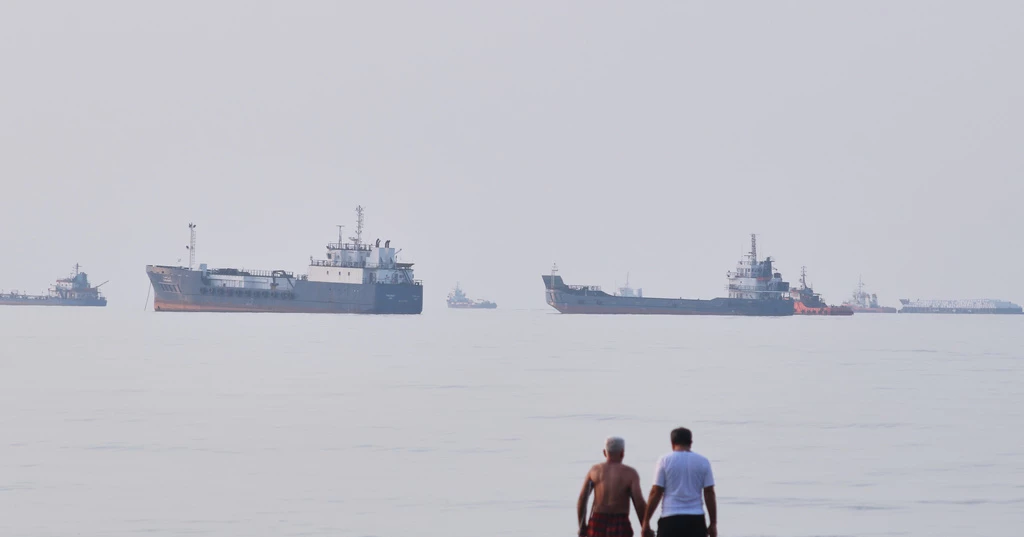
The U.S. Central Command (CENTCOM) said the latest strikes were aimed at "further degrading Iran's ability to threaten civilian mariners and commercial vessels transiting regional waters," as Washington seeks to restore the free flow of shipping through the Strait of Hormuz.
Earlier in the day, President Donald Trump warned that the U.S. would target one Iranian bridge or power plant every time Iran attacks a ship in the strategic waterway.
"From this point forward, any time the Islamic Republic of Iran shoots at a ship in the Strait of Hormuz, whether it be by missile, rocket, drone or any other weapon, the United States will bomb and destroy ONE BRIDGE OR POWER PLANT," Trump wrote on social media.
The latest U.S. strikes came as diplomatic efforts showed little visible progress, with both sides maintaining firm positions over the Strait of Hormuz, a key global energy route that remains largely closed. The conflict has raised concerns over further disruption to the global economy and pushed fuel prices higher ahead of the U.S. midterm elections later this year.
Iranian Foreign Minister Seyed Abbas Araghchi said Tehran would follow an "eye for an eye" approach.
"Any aggression against Iran, including our infrastructure, will compel a powerful and decisive response," he wrote on X.
Iranian state media reported that U.S. missiles struck areas near the western cities of Ahvaz, Ramshir and Andimeshk late Wednesday. It also said two people were killed in a U.S. missile strike in the border town of Shalamcheh near Iraq early Thursday.
Meanwhile, Kuwait's military said on social media that its air defence systems were intercepting hostile drones following what it described as Iranian attacks.
Iran has responded to U.S. operations by targeting energy facilities and desalination plants that supply drinking water in neighbouring Gulf states. Under international law, attacks on civilian infrastructure are generally prohibited unless such facilities are being used for military purposes.
War's economic impact grows
The continued closure of the Strait of Hormuz, through which about one-fifth of the world's traded oil and gas passed during peacetime, has rattled the global economy. Adding to concerns, Yemen's Iran-backed Houthi rebels have threatened to target Saudi shipping in the Red Sea, placing another major trade route at risk.
Trump travelled to Dover Air Force Base on Wednesday to receive the remains of four U.S. service members. A day earlier, Defence Secretary Pete Hegseth told a Senate hearing that the war had already cost the United States an estimated $37.5 billion.
Brent crude oil climbed above $93 a barrel, compared with less than $72 earlier this month before the conflict intensified. Gasoline prices have also continued to rise.
Iran maintains that it has the right to regulate traffic through the Strait of Hormuz and potentially charge transit fees. It has attacked vessels using a shipping lane monitored by U.S. forces and intended to remain outside Tehran's control.
Parliament Speaker Mohammad Bagher Qalibaf said the situation in the strait would not return to prewar conditions.
"We have repeatedly said that the situation of the strait will not return to prewar conditions," he wrote on social media.
Diplomatic efforts remain stalled
Before the latest strikes, Iranian Interior Minister Eskandar Momeni visited Pakistan, which has been acting as a mediator, in an effort to revive diplomatic talks. However, there was no indication of any breakthrough in efforts to end the conflict.
Iranian Interior Ministry spokesman Ali Zeinivand said diplomacy was continuing and messages were still being exchanged, according to the state-run IRNA news agency.
An Arab diplomat, speaking on condition of anonymity, said Gulf countries were becoming increasingly pessimistic about prospects for de-escalation despite continued mediation efforts by Pakistan and Turkey.
Speaking at a regional summit in the Philippines, U.S. Secretary of State Marco Rubio criticised Iran's actions in the Strait of Hormuz.
He said allowing any country to control an international waterway, impose tolls and attack ships that refuse to pay would set a dangerous global precedent.
Rubio added that Washington remained open to negotiations, but said Iran did not appear serious about talks at this stage, leaving the U.S. focused on protecting international shipping.
Following Iran's attacks, the United States also reimposed a blockade on Iranian ports.
Trump hints at strike on nuclear facility
Speaking from the Oval Office on Tuesday, Trump said the U.S. had "no interest in meeting" Iran for talks at present.
He also indicated that the U.S. could target Pickaxe Mountain, an underground Iranian nuclear facility under construction near the Natanz enrichment site. While the nearby Natanz complex was bombed during the 12-day Iran-Israel war in 2025, Pickaxe Mountain has remained untouched as Iran continues work there.
Iran has consistently maintained that its nuclear programme is peaceful, despite resuming uranium enrichment to near weapons-grade levels after Trump withdrew the U.S. from the 2015 nuclear agreement during his first term.