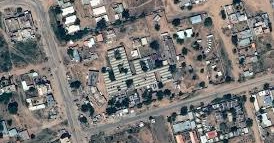
Armed groups who reportedly massacred at least 460 people at a hospital in Sudan’s Darfur region launched their attack in several waves, abducting medical workers and later killing patients, staff, and civilians sheltering inside, the World Health Organization (WHO) said Friday.
The assault on Tuesday targeted Saudi Hospital in el-Fasher, a city that had been under siege for 18 months before being captured by the Rapid Support Forces (RSF), a powerful paramilitary group. Witnesses described fighters moving house to house, killing civilians and committing sexual assaults.
Details from the city remain limited, as communications are down and humanitarian access has been cut off. The total death toll from the fighting remains unclear.
El-Fasher’s fall marks a new phase in Sudan’s devastating two-year civil war between the RSF and the national army. The conflict has already killed more than 40,000 people, though aid agencies believe the true toll is far higher. It has displaced over 14 million people, triggered deadly disease outbreaks, and caused famine in several parts of Darfur and beyond.
Survivors Flee Amid Chaos
Located about 800 kilometers (500 miles) southwest of Khartoum, el-Fasher is now largely cut off. Aid organizations operating there have mostly withdrawn.
According to the U.N. migration agency, more than 62,000 people fled the city between Sunday and Wednesday, though only about 5,000 have reached the refugee camp in Tawila, 40 miles away, according to the Norwegian Refugee Council (NRC). The fate of tens of thousands of others remains unknown.
Among the displaced is Fatima Abdulrahim, 70, who fled el-Fasher with her grandchildren. She told the Associated Press she spent five days escaping through gunfire and shelling, often hiding in trenches or behind walls.
“Thirst almost killed us,” she said. “We ate grass from the roadside. The dead on the streets were countless.”
She said militiamen robbed her group, beat children, and shot young men trying to bring food into the city.
At least 450 wounded people have been admitted to Tawila Hospital, many suffering from malnutrition or sexual violence, said Adam Rojal, a local spokesperson for displaced communities. The NRC reported that new arrivals included people with untreated fractures and gunshot wounds, while Doctors Without Borders said 40 of 70 children under five arriving Monday were severely malnourished.
WHO Details the Hospital Massacre
WHO spokesperson Christian Lindmeier provided new information about the killings at Saudi Hospital, which had been the only functioning medical facility in el-Fasher during the siege.
He said gunmen attacked the hospital at least three times. On their first assault, they abducted several doctors and nurses — six of whom remain missing. When they returned, they opened fire on those inside, and during a third visit “finished off what was still standing,” Lindmeier said.
Videos circulating online show bodies strewn across hospital wards and a fighter shooting a man, though the Associated Press could not independently verify them.
The RSF has denied carrying out the massacre, posting a video Thursday that appeared to show its fighters providing care to patients inside the hospital. The timing and authenticity of the footage remain unconfirmed.
Dr. Teresa Zakaria, WHO’s head of humanitarian operations, said the hospital is now offering only “limited services.” Since the city’s capture, “there is no longer any humanitarian health presence in el-Fasher, and access remains blocked,” she said.
RSF Accused of Atrocities
El-Fasher was the Sudanese army’s last major stronghold in Darfur. Its capture gives the RSF near-total control over the vast western region and raises fears that Sudan could fracture further, with the military holding Khartoum and the country’s north and east.
The RSF and allied militias have been repeatedly accused of massacres and mass rapes during their campaigns in Khartoum and across Darfur, often targeting civilians from non-Arab African communities.
The RSF’s roots lie in the Arab Janjaweed militias, responsible for atrocities in Darfur in the 2000s that killed an estimated 300,000 people. Once armed and supported by Sudan’s military to crush rebel uprisings, the Janjaweed were later reorganized into the RSF as an official force.
After jointly toppling longtime ruler Omar al-Bashir in 2019, the RSF and the army briefly shared power before clashing in 2023, igniting the current war.