
Global leaders have urged restraint and a return to negotiations following military strikes by the United States and Israel that killed Iran’s Supreme Leader Ali Khamenei, raising fears of wider regional conflict.
A massive explosion shook Tehran on Sunday morning as the Israeli military said it targeted the “heart” of the city after clearing a path to the capital the previous day. Meanwhile, Iran continued its retaliatory campaign, with Qatar, Kuwait, and Bahrain reporting interceptions of missile attacks.
Oman reported that an oil tanker in the strategic Strait of Hormuz came under attack, and its port at Duqm, used by the U.S. Navy as a logistical hub, was targeted in a drone strike. The sudden death of Khamenei, who had no designated successor, has added to uncertainty over Iran’s future and the potential for broader regional escalation.
Top diplomats from the 27 European Union nations convened an emergency meeting Sunday to assess the situation, while the U.N. Security Council met late Saturday. While some countries refrained from direct comment to avoid worsening tensions, others expressed clear positions: Australia and Canada supported the U.S. strikes, while Russia and China criticized them.
U.S. President Donald Trump called on the Iranian public to “seize control of your destiny” and challenge the Islamic regime that has ruled Iran since 1979.
Calls for dialogue and de-escalation
During the U.N. Security Council session, Secretary-General António Guterres and representatives from several countries called for an immediate halt to hostilities and a return to negotiations to prevent further escalation.
“The alternative is a potential wider conflict with grave consequences for civilians and regional stability,” Guterres warned. He condemned both the U.S. and Israeli airstrikes for violating international law and Iran’s retaliatory attacks for breaching the sovereignty of Bahrain, Iraq, Jordan, Kuwait, Qatar, Saudi Arabia, and the UAE.
Regional leaders also called for calm. UAE presidential adviser Anwar Gargash urged Iran to act responsibly and avoid further escalation. The 22-member Arab League criticized Iranian attacks as violations of the sovereignty of nations committed to peace and stability.
EU foreign policy chief Kaja Kallas said Iran’s indiscriminate strikes risk dragging the region into a wider war, calling on the regime to make measured choices. British Prime Minister Keir Starmer, French President Emmanuel Macron, and German Chancellor Friedrich Merz also urged the U.S. and Iran to return to talks, emphasizing that a negotiated settlement is essential and that the Iranian people must be allowed to determine their future.
Protests and reactions worldwide
Clashes erupted in Pakistan’s Karachi, where at least six people were killed after protesters stormed the U.S. Consulate. In Indian-administered Kashmir, tens of thousands demonstrated against Khamenei’s killing.
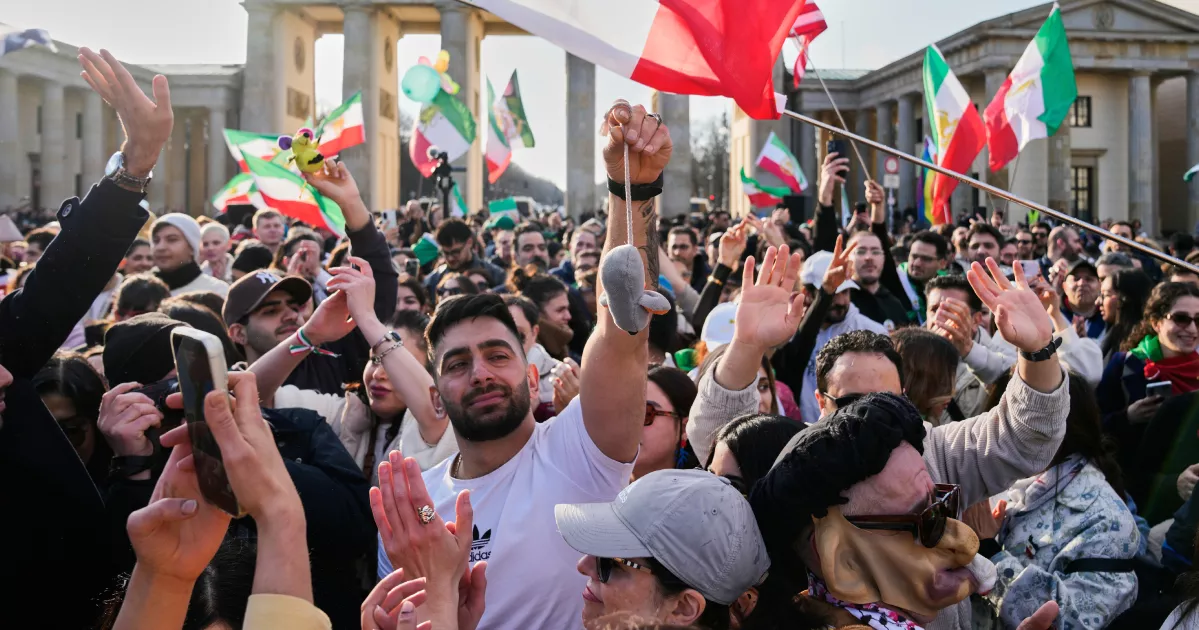
Members of the Iranian diaspora and supporters staged rallies from New York to Berlin, with some celebrating the end of Khamenei’s rule. In Berlin, demonstrators waved flags of the Iranian monarchy along with German, Israeli, and U.S. flags, while cheering and dancing in the streets.
The events highlight the deep regional and global concern over the potential fallout from the strikes and the urgent calls for diplomatic solutions to prevent further conflict.