Zambians began voting Thursday in a presidential election that is expected to gauge whether President Hakainde Hichilema’s economic reforms have eased widespread concerns over the rising cost of living.
About 8 million of Zambia’s 22 million people are registered to vote in the one-day election. Voters are also electing members of Parliament and local government councilors. The electoral commission said results are expected Monday.
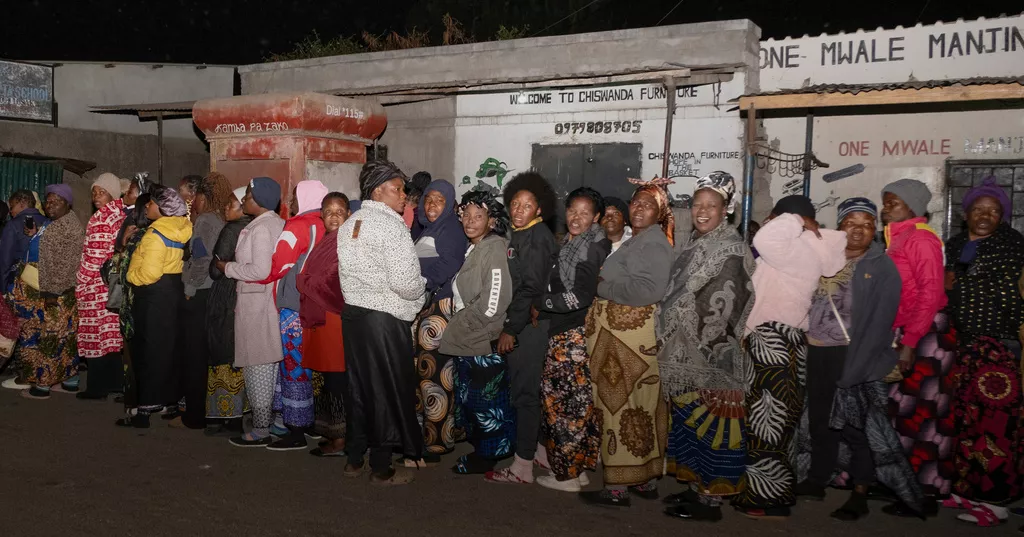
Before dawn, voters wearing thick jackets against the morning cold formed long lines outside polling stations across Lusaka.
Some gathered around small fires to keep warm as election officials set up ballot boxes, checked voter rolls and prepared polling stations. European Union election observers were present at one polling station in the capital.
Hichilema is facing 13 other presidential candidates, with Brian Mundubile of an opposition alliance expected to pose the strongest challenge.
The election is widely viewed as a referendum on Hichilema’s economic performance. He took office in 2021 and is seeking a second term, arguing that he inherited an economy in crisis.
His government has overseen the restructuring of Zambia’s large foreign debt, maintained economic growth and attracted investment, Hichilema says.
But many Zambians say they have yet to see the benefits of those measures, as unemployment, high food prices and unreliable electricity continue to put pressure on household finances.
Hichilema says he needs another five-year term to create jobs, develop infrastructure and expand public services.
The election is also being closely followed internationally because Zambia is a major copper producer and plans to significantly increase output of the metal, which is vital for electric vehicles, renewable energy systems and power grids.
China is Zambia’s largest foreign investor and has extensive interests in the country’s mining sector. The United States, meanwhile, has been seeking a larger role as it works to diversify supplies of critical minerals and reduce dependence on China.
Hichilema has sought investment from both China and Western countries, including the United States, as he aims to raise Zambia’s annual copper production to 3 million metric tons by 2031.
Security concerns and political tensions increased during the final days of the campaign. Police deployed additional personnel and warned against violence, disruptions at polling stations and the spread of fabricated election results.
Opposition parties have accused Hichilema’s government of using state institutions to target political opponents, allegations rejected by the government.
The Tonse Alliance said a police raid on its offices days before the election was politically motivated.
Hichilema himself spent four months in prison on treason charges when he was an opposition leader under former President Edgar Lungu, whom he defeated in the 2021 election.
Lungu remained a major political figure until his death in South Africa last year. A lengthy dispute between his family and the government over his funeral and burial further heightened tensions ahead of Thursday’s vote.
A presidential candidate must secure more than 50% of the vote to win outright and avoid a runoff.
Zambia has long been considered one of southern Africa’s more stable democracies, with a record of largely peaceful transfers of power. Hichilema’s 2021 victory marked the country’s third transfer of power to an opposition candidate since multiparty democracy was restored in 1991.