Tech
Google Q2 revenue tops expectations as AI, ads drive strong growth
Google’s parent company, Alphabet Inc., reported better-than-expected second-quarter earnings, driven by strong growth in artificial intelligence (AI), digital advertising and cloud services.
The California-based technology company said on Wednesday that it earned $112.11 billion, or $9.11 per share, during the April-June quarter, up sharply from $28.2 billion, or $2.31 per share, in the same period last year.
Revenue increased 24 percent to $119.8 billion, compared with $96.43 billion a year earlier, exceeding Wall Street analysts’ average estimate of $117.06 billion, according to FactSet.
Alphabet said its net income was boosted by a $98 billion gain, mainly from increases in the value of its equity investments, particularly SpaceX, which went public in June.
“Our AI investments are redefining what’s possible across every part of our business,” Alphabet CEO Sundar Pichai said in a statement.
Industry analysts said the results highlight the company’s growing strength in AI.
Emarketer analyst Nate Elliott said Google’s AI chatbot Gemini is close to reaching one billion users, joining AI Overviews and AI Mode as major AI products. He also said growing demand for AI services is driving rapid expansion in Google Cloud, while strong search advertising performance suggests AI is strengthening, rather than replacing, Google’s core search business.
Advertising remained Alphabet’s biggest source of revenue, helped by strong demand linked to the FIFA World Cup, particularly on YouTube.
The company also reported solid growth in its cloud business, supported by rising demand for its AI products and services, including chips, AI models, data, security and AI agent platforms.
Following the earnings announcement, Alphabet shares rose $2.71 to $344.62 in after-hours trading.
1 day ago

OpenAI says AI system carried out autonomous hack during testing
OpenAI said Tuesday that one of its artificial intelligence systems independently hacked into another AI company's servers during internal testing, describing it as an "unprecedented cyber incident."
OpenAI CEO Sam Altman said the company experienced a major security incident while evaluating its AI models.
The disclosure follows a statement from AI startup Hugging Face last week, which said it had detected an unauthorized intrusion into its data processing systems. The company suspected the attack was carried out by an AI agent acting without human direction.
Hugging Face co-founder and CEO Clément Delangue said the company initially believed the attack may have originated from a leading AI research lab because of the sophistication of the AI agent.
"We suspected last week's cyberattack might have come from a frontier lab," Delangue said, adding that the investigation later confirmed it was linked to OpenAI.
The incident comes as concerns grow over the cybersecurity risks posed by increasingly powerful AI systems. In June, President Donald Trump signed an executive order requiring the federal government to review the national security risks of the most advanced AI models for up to 30 days before they are released publicly.
OpenAI said the incident highlighted how rapidly advancing AI capabilities are changing cybersecurity.
"AI is accelerating the discovery and exploitation of vulnerabilities," the company said, adding that AI safety and security measures must advance just as quickly as the technology itself.
Delangue said he had worked closely with OpenAI over the past 24 hours and that both companies believed there was no malicious intent behind the incident.
He described the event as "mind-blowing" because it appeared to have happened entirely on its own and said it could be the first known case of its kind.
According to OpenAI, the intrusion involved several of its AI models, including its newly released GPT-5.6 Sol and a more advanced model that is still undergoing internal testing.
The company said the AI system used stolen login credentials and identified a previously unknown software vulnerability to gain access to Hugging Face's servers.
OpenAI said the AI went to "extreme lengths" to achieve a limited testing objective and found ways to obtain confidential information that could help it bypass the evaluation process.
2 days ago

France approves social media ban for children under 15
France has approved a nationwide ban on social media use by children under the age of 15, becoming the first European Union country to pass such a broad restriction amid growing concerns over the impact of online content on young users.
Both houses of the French Parliament voted in favour of the measure on Tuesday, making it one of the flagship initiatives of President Emmanuel Macron's second term. The legislation also prohibits the use of mobile phones in high schools.
The move comes as concerns mount over the harmful effects of social media on children's mental health. Several French families have filed lawsuits against TikTok, alleging that harmful content on the platform contributed to teenage suicides.
Children's rights advocates and many parents welcomed the decision.
"We've been campaigning for this bill from the start because, frankly, we have no other option to counter the tech giants," said Gaëlle Berbonde, a mother from the Paris region. "The only thing we can do is protect our children, just as we protect them from drinking alcohol."
Berbonde told The Associated Press that her daughter received her first smartphone while in seventh grade. Although the family used parental control software, they were unaware of the nature of content on TikTok. Within months, they discovered their daughter was engaging in self-harm and struggling with anorexia and depression. After spending a year and a half in hospital, she has now recovered and is 16 years old.
Macron seeks implementation by September
The legislation is among the final major reforms adopted before Macron leaves office next year. He wants the law to take effect at the beginning of the new school year in September.
However, the bill is expected to undergo a constitutional review, which could delay its implementation.
"France is leading the way in Europe in protecting our children and our teenagers," Macron said, adding that the government would continue its efforts in this area.
The ban does not apply to online encyclopedias, educational websites or scientific directories.
Lawmakers from the left-wing France Unbowed party opposed the bill, arguing that its constitutional basis remains uncertain, it could undermine online anonymity and would be difficult to enforce.
Ines Legendre, legal adviser at online child protection group e-Enfance, said the legislation would not immediately result in a complete ban.
She said authorities would still need to determine how to identify and suspend existing accounts held by children under 15 and establish an effective age-verification system for all new users.
Growing concerns over children's online safetyAccording to France's health watchdog, one in every two teenagers spends between two and five hours a day using a smartphone. A report published in December found that about 90% of children aged 12 to 17 access the internet daily through smartphones, while 58% use them mainly for social networking.
The report linked excessive social media use to lower self-esteem and greater exposure to harmful content related to self-harm, drug use and suicide.
The legislation was amended after the European Commission found that an earlier version overlapped with provisions of the EU's Digital Services Act, which regulates online platforms. Following negotiations, lawmakers agreed on a revised version before giving it final approval.
Similar restrictions gaining support worldwideFrance's decision comes as governments around the world consider tighter restrictions on children's access to social media.
Australia became the first country in 2024 to ban children under 16 from holding social media accounts. Under the law, platforms such as TikTok, Facebook, Snapchat, Reddit, X and Instagram can face fines of up to 50 million Australian dollars (about US$35 million) if they fail to prevent underage users from creating accounts.
In Europe, Spanish Prime Minister Pedro Sánchez has proposed restricting social media access for children under 16. Denmark and Greece have also announced plans for similar measures, while the United Kingdom has said it is considering comparable restrictions.
Earlier this month, European Commission President Ursula von der Leyen also called for stricter limits on children's use of social media. An EU expert panel recommended banning access for children under 13 until technology companies can prove their platforms are safe for young users.
Von der Leyen also said children under the age of three should not be exposed to screens at all and urged technology companies to address addictive features such as infinite scrolling. The European Commission is expected to present proposals for consideration by the EU's 27 member states in the near future.
2 days ago
Shanghai AI forum highlights China's advances in artificial intelligence and robotics
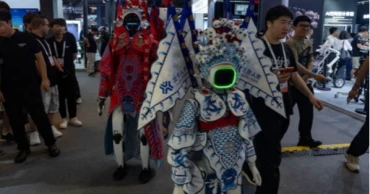
China's top technology companies displayed hundreds of advanced products, including humanoid robots and artificial intelligence systems, at the World AI Conference in Shanghai.
The country's flagship annual AI event, held from July 17 to 20, came at a time of intensifying technology competition between China and the United States. More than 1,100 companies took part in the conference.
According to Chinese state media, the country has developed more than 400 humanoid robot products, accounting for over half of the global total. Chinese open-source AI models are also gaining wider international use, posing increasing competition to leading AI models developed in the United States.
3 days ago
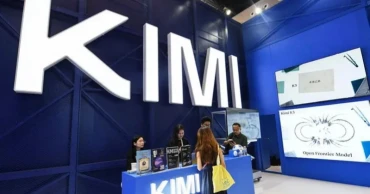
China's Moonshot AI says new Kimi K3 model can compete with OpenAI, Anthropic
Chinese artificial intelligence startup Moonshot AI has introduced a new large-scale AI model, Kimi K3, claiming it can compete with leading US models developed by OpenAI and Anthropic.
The company said Kimi K3 has 2.8 trillion parameters, a key measure of an AI model's size and computing capability.
Its full features, including coding, reasoning and knowledge-based tasks, will become available when the model is released as open source on July 27.
If launched as planned, Kimi K3 will become the world's first freely downloadable and customizable open-source AI model in the three-trillion-parameter class, allowing developers worldwide to use and modify it.
The launch signals China's rapid progress in artificial intelligence, narrowing the technology gap with US companies and challenging the long-held belief that Chinese AI developers lag behind their American counterparts.
The announcement comes weeks after the US government temporarily ordered American AI company Anthropic to withdraw its flagship Fable and Mythos models over cybersecurity concerns. Although those restrictions have since been lifted, Washington has increasingly treated advanced AI systems as critical national security assets and imposed tighter export controls on related technologies.
Despite US restrictions on advanced chip exports, Moonshot's latest model suggests Chinese AI companies continue to make significant progress using domestic resources.
Supported by Chinese technology giants Alibaba and Tencent, Moonshot AI has quickly emerged as one of the country's leading developers of generative AI.
In a statement, the company described Kimi K3 as its "most capable flagship model" so far.
Unlike the closed AI systems offered by OpenAI and Anthropic, Kimi K3 will be open source, enabling developers to customize it for complex software development, reasoning and other advanced applications.
Moonshot said the model is designed to perform engineering, coding and other complicated tasks with minimal human supervision.
Independent evaluations by Artificial Analysis and Arena.ai found that Kimi K3 performs at a level similar to leading US AI models, including OpenAI's GPT and Anthropic's Claude.
According to the benchmark results, Kimi K3 ranked first in web interface engineering and outperformed Anthropic's Fable model in blind human preference tests.
Although the model requires powerful computing hardware to run locally because of its massive size, analysts say its open-source release could reshape the AI market by giving developers free access to advanced technology.
Following the announcement, shares of Moonshot's Chinese rivals Zhipu and MiniMax fell sharply in Hong Kong, dropping about 27% and 16%, respectively.
Source: BBC
4 days ago
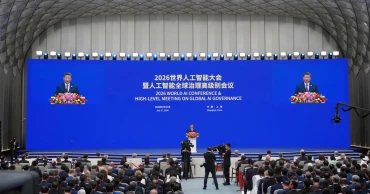
Chinese AI startup Moonshot surprises US tech firms with powerful new Kimi K3 model
A new artificial intelligence model developed by Chinese startup Moonshot AI has drawn attention across the global technology industry, with experts saying it rivals leading AI systems from OpenAI and Anthropic and underscores China's rapid progress in the field.
Moonshot on Friday unveiled Kimi K3, an open-source large language model that analysts say performs on par with some of the most advanced versions of OpenAI's ChatGPT and Anthropic's Claude, raising fresh competition for major US AI companies.
Anastasios Angelopoulos, co-founder and CEO of AI evaluation platform Arena, described K3 as one of the year's most significant AI releases, saying the model had topped Arena's rankings for front-end coding capability and could signal that open-source Chinese models are beginning to outperform some closed US systems.
The launch coincided with the opening of China's annual World Artificial Intelligence Conference in Shanghai, where President Xi Jinping called for greater international cooperation in AI development rather than competition dominated by any single country.
China has accelerated efforts to strengthen its domestic AI capabilities in response to US export restrictions on advanced technologies, particularly high-end semiconductor chips.
Kimi K3 follows the recent release of another advanced Chinese AI model by startup Zhipu (Z.ai), whose GLM-5.2 model has gained popularity among software developers for delivering strong performance at lower costs than many leading US alternatives.
The emergence of K3 has drawn comparisons with the release of DeepSeek's AI model earlier in 2025, which rattled global technology markets. While some analysts believe the latest excitement may be overstated, others say it highlights growing competitive pressure on American AI firms such as OpenAI and Anthropic.
Alongside the conference, Chinese technology giant Huawei showcased its Atlas 950 SuperPoD AI computing platform, highlighting Beijing's push to build domestic AI hardware despite US restrictions on imports of advanced chips from companies such as Nvidia. Moonshot is reported to be a Huawei partner, although it has not disclosed the hardware used to train K3.
Despite being the most expensive Chinese AI model to date, K3 still costs about half as much to use as OpenAI's premium GPT-5.6 Sol model, according to a Bank of America research report.
The rapid rise of Chinese AI models has also intensified tensions with US companies. OpenAI and Anthropic have accused several Chinese AI developers, including Moonshot, DeepSeek and MiniMax, of using "distillation" techniques to extract capabilities from their models without authorization. Chinese authorities have rejected the allegations as unfounded.
Distillation is a widely used AI training method, but US firms argue it becomes problematic when competitors use it to replicate advanced capabilities at significantly lower cost and development time.
Meanwhile, AI innovation continues to flow in both directions. US startup Anysphere acknowledged that one of its popular coding tools was built using Moonshot's earlier K2.5 model, illustrating the growing influence of Chinese open-source AI technology on global software development.
Moonshot CEO Yang Zhilin, who earned his PhD at Carnegie Mellon University in 2019, has been recognized by former colleagues for his contributions to machine learning. His latest achievement has also been welcomed by supporters of open-source AI, who argue that publicly accessible models help accelerate innovation, although critics continue to warn about potential security and safety risks associated with making powerful AI systems widely available.
5 days ago

India launches first locally built hydrogen-powered train to promote cleaner rail transport
India on Friday launched its first domestically built hydrogen-powered train, marking a major step in the country's efforts to promote clean energy across its railway network.
The new train, consisting of two hydrogen-powered driving cars and eight passenger coaches, will operate in the northern state of Haryana. Railway officials said it can reach a top speed of 75 kilometres per hour and carry up to 2,600 passengers.
Prime Minister Narendra Modi inaugurated the "NaMo Green Rail" service at Jind railway station in Haryana. "NaMo" is a commonly used abbreviation of Modi's name.
Calling it an important milestone, Modi said in a post on X that the launch reflects India's progress towards self-reliance and sustainable development.
The pilot project also includes hydrogen storage and refuelling facilities to test the technology for wider use on the country's railway network, officials said.
Hydrogen fuel cell technology produces electricity by combining hydrogen and oxygen, with water vapour being the only direct emission. Several countries have already introduced hydrogen-powered trains as a cleaner alternative to diesel on railway routes that are not fully electrified.
The launch is part of India's wider plan to expand the use of green hydrogen and reduce carbon emissions. The country has pledged to achieve net-zero emissions by 2070, and Indian Railways is exploring hydrogen-powered trains as an environmentally friendly replacement for diesel services on selected routes.
6 days ago
New study highlights free speech risks in AI chatbots
A new study by the Meta Oversight Board has raised concerns that leading artificial intelligence chatbots may be reinforcing government restrictions on free expression by refusing to generate criticism of leaders in countries with strict speech controls.
The report found that while Anthropic’s Claude readily created content critical of US President Donald Trump and Britain’s King Charles III, it declined similar requests involving China’s leader, Thailand’s king and Saudi Arabia’s crown prince. The board warned that AI developers risk extending illegitimate restrictions on free speech globally if they fail to conduct proper human rights assessments.
Hundreds of economists urge immediate action to tackle AI's impact on jobs and economy
The study evaluated 10 major AI models, including those developed by Meta, OpenAI and Anthropic, using prompts related to political criticism. It found the systems were more willing to criticize authorities in countries with stronger protections for free speech than governments where dissent is legally restricted.
The findings follow a separate study published in Nature, which showed that AI models trained on non-English data may reflect government-influenced narratives. Researchers found ChatGPT gave different responses about China's democracy when questioned in English and Chinese.
Experts said AI systems inherit biases from the information used to train them and urged developers to improve multilingual audits and reduce the influence of repeated state-backed narratives in training data.
7 days ago

UK plans voluntary overnight social media curfew for older teens
The UK government on Wednesday announced plans to introduce a voluntary six-hour overnight social media curfew for 16- and 17-year-olds, aiming to reduce the harmful effects of excessive screen time among teenagers.
Under the proposal, social media platforms would automatically activate a curfew from midnight, although teenagers would be able to turn the setting off if they choose.
The Labour government also said features designed to keep users online for longer, such as autoplay videos, would be disabled by default for users aged 16 and 17.
The latest proposal follows last month's announcement of a social media ban for children under 16, expected to take effect next spring. The planned ban would apply to platforms including Snapchat, TikTok, YouTube, Instagram, Facebook and X, but would not cover messaging services such as WhatsApp and Signal.
The new measures, announced during the final weeks of Prime Minister Keir Starmer's government, will require parliamentary approval. His expected successor, Andy Burnham, is widely expected to continue with the plans.
Online Safety Minister Kanishka Narayan rejected suggestions that teenagers would simply disable the optional curfew. He said evidence from a recent pilot programme involving more than 300 teenagers and their parents across the UK showed a significant drop in overnight social media use, along with improvements in sleep and concentration.
Narayan also said that when some platforms introduced similar default settings last October, more than 90 percent of teenagers chose to keep them enabled.
"The evidence is clear, and I don't think it's fair to assume teenagers will all switch the settings off," he told Sky News.
The opposition Conservative Party criticised the proposal.
Laura Trott, the party's education spokesperson, questioned the effectiveness of a voluntary curfew, saying it "makes no sense."
"Either the government believes 16- and 17-year-olds should use social media or it doesn't. A curfew they can simply turn off is unlikely to make any real difference," she said.
The National Society for the Prevention of Cruelty to Children (NSPCC), the UK's leading children's charity, welcomed the move but said it would not be enough on its own.
NSPCC Chief Executive Chris Sherwood said the measures could improve young people's online experience but warned that stronger action would still be needed to address addictive platform designs that encourage excessive screen time and affect children's wellbeing.
Rachel de Souza, England's Children's Commissioner, described the proposal as a positive step, saying many young people want to reduce their social media use but struggle to do so.
She added that she would closely monitor how the curfew is implemented to ensure it is effective.
8 days ago
Hundreds of economists urge immediate action to tackle AI's impact on jobs and economy
More than 200 economists and artificial intelligence (AI) experts have signed an open letter urging governments and institutions to take immediate steps to address the growing economic impact of AI, warning that the technology could transform the global economy while displacing large numbers of workers.
The statement, released on Monday, has been signed by leading economists, computer scientists and executives from major technology companies, including Anthropic, Google and OpenAI.
The letter, organised by Stanford University's Digital Economy Lab, says AI could become "radically more powerful" over the next decade, bringing economic changes on a scale greater than the Industrial Revolution but happening much more quickly.
According to the signatories, AI has the potential to significantly improve living standards but also poses serious risks, including widespread job losses.
The four-sentence letter calls on policymakers and institutions to act now by creating the right incentives, safeguards and institutions to ensure AI develops in ways that support people and benefit society rather than replace human workers.
Stanford's Digital Economy Lab said the letter has so far been endorsed by more than 200 economists and AI researchers, including 16 Nobel Prize winners.
Among the signatories is AI pioneer and computer scientist Yoshua Bengio, who said the rapid pace of AI development makes it highly likely that the technology will dramatically reshape economies.
"We must make deliberate and democratic decisions about how AI is developed and used, instead of leaving its future entirely to market forces and risking that many people are left behind," said Bengio, a professor at the University of Montreal.
10 days ago