Environment

Heavy rainfall likely in 3 divisions
The Bangladesh Meteorological Department (BMD) has forecast heavy to very heavy rainfall at places over Khulna, Barishal and Chattogram divisions in the next 24 hours from 9:00am on Friday.
Light to moderate rain or thundershowers accompanied by temporary gusty winds are likely to occur at most places over Dhaka, Khulna, Barishal and Chattogram divisions and at many places over Rangpur, Rajshahi, Mymensingh and Sylhet divisions, it said in a bulletin.
Cox's Bazar recorded the highest rainfall in the country, with 83mm in the 24 hours until 6:00am on Friday.
Day and night temperatures may remain nearly unchanged across the country.
The monsoon trough extends from Rajasthan, Madhya Pradesh, Uttar Pradesh, Bihar and West Bengal to Assam across the southern part of Bangladesh. One of its associated troughs extends up to the Northwest Bay.
The BMD said the monsoon is active over the southern part of Bangladesh, fairly active elsewhere in the country and moderate over the North Bay.
9 hours ago

Dhaka sees moderate air quality on Friday morning
Dhaka, the capital of Bangladesh, recorded moderate air quality on Friday morning, ranking 41st among cities with the worst air pollution worldwide.
At 9:50am, the city's Air Quality Index (AQI) stood at 66, indicating moderate air quality, according to air quality monitoring platform IQAir.
A moderate AQI means the air quality is generally acceptable. However, people who are unusually sensitive to air pollution may experience minor to moderate health effects if exposed for prolonged periods.
Kinshasa in the Democratic Republic of the Congo topped the list of the world's most polluted cities with an AQI score of 166, followed by Kampala, Uganda, with a score of 164.
Both cities recorded air quality classified as "unhealthy."
The AQI is calculated based on the concentration of major air pollutants, including particulate matter (PM2.5 and PM10), nitrogen dioxide (NO₂), carbon monoxide (CO), sulphur dioxide (SO₂) and ozone (O₃).
According to the AQI scale, a score between 51 and 100 is considered moderate, while 101–150 is deemed unhealthy for sensitive groups, 151–200 is unhealthy, 201–300 is very unhealthy, and 301 or above is classified as hazardous, posing serious health risks to the entire population.
Dhaka has long struggled with air pollution, with air quality typically deteriorating during the dry winter months and improving during the monsoon season due to rainfall and stronger winds.
The World Health Organization estimates that air pollution causes around seven million deaths globally each year, mainly due to stroke, heart disease, chronic obstructive pulmonary disease, lung cancer and acute respiratory infections.
10 hours ago
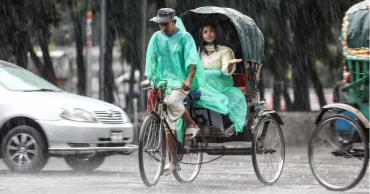
Rain likely across country, heavy falls forecast in four divisions
Bangladesh Meteorological Department (BMD) has forecast rain across all eight divisions in 24 hours commencing 9 am on Thursday.
According to the BMD forecast, light to moderately heavy rain or thunder showers accompanied by temporary gusty wind is likely to occur at most places over Dhaka, Khulna, Barishal & Chattogram divisions and at many places over Rangpur, Rajshahi, Mymensingh & Sylhet divisions.
The Met Office also predicted heavy to very heavy rainfall at places in Dhaka, Khulna, Barishal and Chattogram divisions.
Day and night temperatures may fall slightly across the country, the forecast said.
1 day ago

Dhaka's air quality remains moderate, ranks 22nd globally
Dhaka ranked 22nd among the world's most polluted cities on Thursday morning, recording an Air Quality Index (AQI) score of 82 at 9:35 am.
According to the AQI scale, the city's air quality was classified as ‘Moderate', poses moderate health concern for a very small number of unusually sensitive individuals (such as people with asthma, heart disease, or older adults).
Kinshasa of DR Congo topped the global pollution list with an AQI score of 157, followed by Kamapala in Uganda with 149 and Johannesburg in South Africa with 137.
According to AQI standards, a reading between 101 and 150 is considered ‘unhealthy for sensitive groups’, 151 to 200 ‘unhealthy’, 201 to 300 ‘very unhealthy’, while levels above 301 are deemed ‘hazardous’, posing serious health risks.
The AQI, which provides daily updates on air quality, indicates how clean or polluted the air is and highlights potential health impacts.
In Bangladesh, the AQI is calculated based on five major pollutants: particulate matter (PM10 and PM2.5), nitrogen dioxide (NO2), carbon monoxide (CO), sulfur dioxide (SO2), and ozone.
Dhaka has long struggled with air pollution, with air quality typically worsening in winter and improving during the monsoon season.
The World Health Organization estimates that air pollution causes around seven million deaths globally each year, mainly due to stroke, heart disease, chronic obstructive pulmonary disease, lung cancer and acute respiratory infections.
1 day ago

Rain likely across country: BMD
Bangladesh Meteorological Department (BMD) has forecast rains in all the divisions in 24 hours commencing 9 am on Wednesday.
According to the BMD forecast, light to moderately heavy rain or thunder showers accompanied by temporary gusty wind is likely to occur at most places over Barishal & Chattogram divisions and at many places over Rangpur, Rajshahi, Mymensingh, Dhaka, Khulna & Sylhet divisions.
The weather office also predicted heavy to very heavy rainfall at places in Barishal and Chattogram divisions.
Day and night temperatures are expected to remain nearly unchanged across the country, the forecast said.
2 days ago

Dhaka records moderate air quality, ranks 26th globally
Dhaka ranked 26th among the world's most polluted cities on Wednesday morning, recording an Air Quality Index (AQI) score of 75 at 9:10 am.
According to the AQI scale, the city's air quality was classified as ‘Moderate', poses moderate health concern for a very small number of unusually sensitive individuals (such as people with asthma, heart disease, or older adults).
Kinshasa of DR Congo topped the global pollution list with an AQI score of 187, followed by Hanoi in Vietnam with 154 and Riyadh in Saudia Arabia with 134.
According to AQI standards, a reading between 101 and 150 is considered ‘unhealthy for sensitive groups’, 151 to 200 ‘unhealthy’, 201 to 300 ‘very unhealthy’, while levels above 301 are deemed ‘hazardous’, posing serious health risks.
The AQI, which provides daily updates on air quality, indicates how clean or polluted the air is and highlights potential health impacts.
In Bangladesh, the AQI is calculated based on five major pollutants: particulate matter (PM10 and PM2.5), nitrogen dioxide (NO2), carbon monoxide (CO), sulfur dioxide (SO2), and ozone.
Dhaka has long struggled with air pollution, with air quality typically worsening in winter and improving during the monsoon season.
The World Health Organization estimates that air pollution causes around seven million deaths globally each year, mainly due to stroke, heart disease, chronic obstructive pulmonary disease, lung cancer and acute respiratory infections.
2 days ago

Dhaka ranks 7th among world's most polluted cities
Dhaka ranked 7th among the world's most polluted cities on Tuesday morning, recording an Air Quality Index (AQI) score of 128 at 9:30 am.
According to the AQI scale, the city's air quality was classified as 'Unhealthy for Sensitive Group', poses minor health risks to vulnerable people.
Kampala of Uganda topped the global pollution list with an AQI score of 266, followed by Kinshasa of the Democratic republic of Congo with 171 and Manama of Bahrain with 165.
According to AQI standards, a reading between 101 and 150 is considered ‘unhealthy for sensitive groups’, 151 to 200 ‘unhealthy’, 201 to 300 ‘very unhealthy’, while levels above 301 are deemed ‘hazardous’, posing serious health risks.
The AQI, which provides daily updates on air quality, indicates how clean or polluted the air is and highlights potential health impacts.
In Bangladesh, the AQI is calculated based on five major pollutants: particulate matter (PM10 and PM2.5), nitrogen dioxide (NO2), carbon monoxide (CO), sulfur dioxide (SO2), and ozone.
Dhaka has long struggled with air pollution, with air quality typically worsening in winter and improving during the monsoon season.
The World Health Organization estimates that air pollution causes around seven million deaths globally each year, mainly due to stroke, heart disease, chronic obstructive pulmonary disease, lung cancer and acute respiratory infections.
3 days ago

Dhaka sees moderate air quality on Monday morning
Dhaka, the capital of Bangladesh, witnessed moderate air quality on Monday morning, ranking 17th among cities with the worst air pollution worldwide.
At 9:45 am, the capital recorded an Air Quality Index (AQI) score of 90, indicating moderate air quality, according to the air quality monitoring platform IQAir.
A moderate AQI indicates that air quality is generally acceptable. However, people who are unusually sensitive to air pollution may experience minor to moderate health effects if exposed for prolonged periods.
Kampala, Uganda, topped the list of the world's most polluted cities with an AQI score of 159, followed by Kinshasa, Democratic Republic of the Congo, at 158.
Both cities recorded air quality classified as "unhealthy."
The AQI is calculated based on the concentration of major air pollutants, including particulate matter (PM2.5 and PM10), nitrogen dioxide (NO₂), carbon monoxide (CO), sulphur dioxide (SO₂) and ozone (O₃).
According to the AQI scale, a score between 51 and 100 is considered moderate, while 101–150 is deemed unhealthy for sensitive groups, 151–200 is unhealthy, 201–300 is very unhealthy, and 301 or above is classified as hazardous, posing serious health risks to the entire population.
Dhaka has long struggled with air pollution, with air quality typically deteriorating during the dry winter months and improving during the monsoon season due to rainfall and stronger winds.
The World Health Organization estimates that air pollution causes around seven million deaths globally each year, mainly due to stroke, heart disease, chronic obstructive pulmonary disease, lung cancer and acute respiratory infections.
4 days ago

Dhaka’s air quality remains ‘moderate’ on Sunday morning
Dhaka's air quality was in the moderate level on Sunday morning, ranking 21st among cities with the worst air pollution worldwide.
At 9:20 am, the capital recorded an Air Quality Index (AQI) score of 76, indicating moderate air quality, according to the AQI monitoring platform IQAir.
A moderate AQI suggests that air quality is generally acceptable. However, people who are unusually sensitive to air pollution may experience minor to moderate health concerns if exposed for prolonged periods.
Kampala, Uganda, topped the list of the world's most polluted cities with an AQI score of 198, followed by Kinshasa, Democratic Republic of the Congo, with a score of 182. Both cities recorded air quality classified as unhealthy.
The AQI is calculated based on the concentration of major air pollutants, including particulate matter (PM2.5 and PM10), nitrogen dioxide (NO₂), carbon monoxide (CO), sulphur dioxide (SO₂) and ozone (O₃).
According to the AQI scale, a score between 51 and 100 is considered moderate, while 101–150 is deemed unhealthy for sensitive groups, 151–200 is unhealthy, 201–300 is very unhealthy, and 301 or above is classified as hazardous, posing serious health risks to the entire population.
Dhaka has long struggled with air pollution, with air quality typically deteriorating during the dry winter months and improving during the monsoon season due to rainfall and stronger winds.
The World Health Organization estimates that air pollution causes around seven million deaths globally each year, mainly due to stroke, heart disease, chronic obstructive pulmonary disease, lung cancer and acute respiratory infections.
5 days ago

Early summer heat wave in Europe may have caused more than 10,000 extra deaths
An unusually early and intense heat wave across Europe this year may have caused more than 10,000 additional deaths, according to early data collected from several countries.
Researchers say deaths rose sharply in late June, when many parts of Europe experienced record-breaking temperatures. Scientists measure this using "excess mortality"—the number of deaths above what would normally be expected during a given period.
Experts caution that the actual toll may be even higher because many heat-related deaths are never officially recorded as being caused by extreme heat. For example, a heart attack triggered by high temperatures may simply be listed as a heart attack on a death certificate.
The figures raise fresh concerns as Europe enters the summer season. The continent has experienced several deadly heat waves in recent years, although the 2003 heat wave remains the worst on record, with around 70,000 deaths. Scientists say climate change, driven largely by the burning of fossil fuels, is making heat waves more frequent and more severe.
Sharp rise in deaths during one week
EuroMOMO, a European mortality monitoring network that collects data from two dozen countries, estimated 14,260 excess deaths from all causes during the week ending June 28. More than 12,000 of those deaths were among people aged 65 and above. A total of 84,583 deaths were recorded that week, while excess mortality was much lower in the weeks before and after.
Lasse Vestergaard of Denmark's Statens Serum Institut, which coordinates EuroMOMO, said the spike was most likely linked to the widespread heat wave because there was no other clear explanation for such a large increase in deaths.
He described such a high number of excess deaths in a single week as "highly unusual."
According to EuroMOMO, France, Belgium and Germany recorded the highest rates of excess mortality during the period.
Individual countries have also released their own estimates, although the methods used vary.
Germany
Germany's Robert Koch Institute estimated that 6,830 people died from heat-related causes through early July, including 6,470 people aged 65 or older.
Late June temperatures reached 41.7 degrees Celsius, the highest ever recorded in the country, according to the German Weather Service.
United Kingdom
Britain's Met Office estimated that about 2,700 people died from heat-related causes during heat waves in England and Wales in May and June.
Around 550 of those deaths occurred during a late-May heat wave, while about 2,200 were linked to the late-June heat wave.
The UK also recorded its hottest May and June on record.
France
France's public health agency reported at least 2,000 more deaths during the week of June 22-28 compared with the previous week.
The country experienced its hottest days on record on June 24 and 25, with more than 40% of France recording temperatures above 40 degrees Celsius.
Spain
Spain's Carlos III Health Institute estimated that 937 deaths in June were linked to extreme heat.
According to the national weather agency AEMET, June was the country's second-hottest on record, with average temperatures 3.2 degrees Celsius above normal. Temperatures exceeded 40 degrees Celsius during a five-day heat wave.
Belgium
Belgium's public health institute Sciensano estimated 1,747 excess deaths between June 18 and July 1.
The institute said higher mortality is expected during heat waves, but described the June 2026 event as exceptional because of its intensity and widespread impact.
The country's highest temperature during the heat wave reached 35.5 degrees Celsius on June 26.
Netherlands
Dutch public health authorities estimated 480 more deaths than expected during the June heat wave.
The increase was greatest in the eastern and southern parts of the country, where temperatures were highest.
The Netherlands also recorded its hottest June temperature on record at 36.8 degrees Celsius, breaking a record that had stood since 1947.
6 days ago