NEWS ON DATE - 24-07-2026
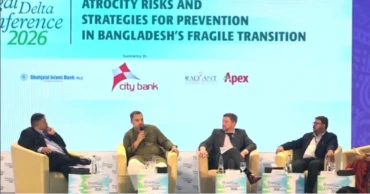
People are the source of government's power: Mahdi Amin
Prime Minister's Adviser and spokesperson Mahdi Amin on Friday said the government's authority is derived from the people and that protecting human rights, the rule of law and freedom of expression under the leadership of Prime Minister Tarique Rahman remains its foremost priority.
Speaking at the Bengal Delta Conference-2026 at Hotel InterContinental in the capital, Mahdi said the current government assumed office through a free, fair and credible election and is committed to strengthening democratic institutions and safeguarding citizens' rights.
Govt to build skilled workforce around youth aspirations: Mahdi Amin
The conference was organised by the Dhaka Institute of Research and Analytics (DIRA).
Mahdi alleged that the BNP was the principal victim of political repression during the previous 16 years of what he described as authoritarian rule, citing enforced disappearances, extrajudicial killings, custodial deaths and politically motivated cases.
However, he said the crackdown was not limited to a single political party, claiming that all pro-democracy political forces and many citizens from different walks of life who spoke out against the then government were subjected to repression.
Referring to enforced disappearances, Mahdi said not only political leaders but also individuals with no political affiliation had fallen victim to such incidents. While some victims eventually returned, he noted that many others remain missing.
He claimed that thousands of people had been killed in alleged extrajudicial incidents or died in custody over the years, adding that more than 700 victims of enforced disappearance have yet to return.
Mahdi said the government recognises the suffering of families who lost loved ones and is committed to ensuring justice for victims.
He also referred to the personal experiences of Prime Minister Tarique Rahman, saying his family had endured political persecution and human rights violations, which, according to him, gives the prime minister a deep understanding of the pain experienced by victims' families.
The adviser further claimed that the current Home Minister and many members of the cabinet, lawmakers and political activists had themselves experienced enforced disappearance, arbitrary detention or politically motivated legal cases.
According to Mahdi, the present administration represents a major departure from the governance system of the past decade and a half, arguing that state institutions previously functioned to sustain an authoritarian regime rather than protect citizens' rights.
He said the government had effectively pressed a "reset button" following the political transition and adopted a clear reform agenda centred on empowering citizens, restoring the rule of law, protecting human rights and ensuring freedom of expression.
Mahdi asserted that during the government's first five months in office, there had been no incidents of human rights violations, political repression, custodial deaths or enforced disappearances to the best of the government's knowledge, expressing hope that this record would continue.
He said the government seeks to end the culture of political vengeance while ensuring accountability for those responsible for serious human rights violations committed under the previous administration.
"Our objective is clear—no perpetrator should escape justice, while no innocent person should be deprived of the right to live freely in a democratic country," he said.
Mahdi also said the government is pursuing a policy of reconciliation and social harmony following the fall of the previous administration, recalling that democratic political parties led by the BNP had worked to maintain peace and order during the period when the country remained without a government from August 5 to August 8.
Looking ahead, he said the government under Prime Minister Tarique Rahman's leadership will continue to prioritise the protection of human rights, the rule of law and freedom of expression, alongside efforts to empower women and young people and promote inclusive and balanced development that benefits all citizens.
16 minutes ago

Israeli forces kill 4 Palestinians after settler dies in West Bank
Israeli forces shot dead four Palestinians in the village of Tell in the northern occupied West Bank on Friday, the Palestinian Health Ministry said, after an Israeli settler was killed during a confrontation with local residents.
The incident also left two Israelis and four Palestinians injured, according to health officials. The Israeli military said it was preparing an “extensive” counterterrorism operation in the West Bank and had surrounded the city of Nablus.
Israeli Prime Minister Benjamin Netanyahu and Defence Minister Israel Katz called for deploying more troops, demolishing the homes of the suspects in Tell, confiscating weapons and revoking work permits for villagers. Finance Minister Bezalel Smotrich urged tougher military action and said the villages of Tell, Iraq Burin and Beit Furik should face measures similar to those imposed on refugee camps in Nablus and Tulkarm, including evacuating residents and dismantling what he described as terrorist infrastructure.
The Palestinian news agency WAFA reported that Israeli settlers attacked five Palestinian villages around Nablus on Friday. The area has witnessed frequent settler attacks, army raids and violent confrontations in recent years.
According to the Israeli military, a Palestinian resident seized a settler's weapon and fatally shot 32-year-old settlement security guard Benayahu Mellet. Videos verified by the military showed armed civilians and soldiers confronting Palestinians before gunfire erupted. Another verified video showed Israeli troops firing repeatedly at Palestinians already lying on the ground. The military said the suspected gunman was among those killed but did not explain why the other three, all relatives, were also shot. Army chief Eyal Zamir later announced additional troop deployments to the West Bank.
40 minutes ago

Bangladesh earn direct quarter-final spot at Asian Games cricket
Bangladesh, India, Pakistan and Sri Lanka have received direct entry into the men's cricket quarter-finals at the 2026 Asian Games.
The men's T20 tournament begins on September 24 in Nagoya with a six-team preliminary round to decide the remaining four quarter-finalists.
Afghanistan, Japan and Nepal were drawn in Group A, while Hong Kong, Malaysia and Oman will compete in Group B. The top two teams from each group will progress to the knockout stage, where they will join the four seeded sides.
The women's competition, scheduled for September 17-22, will start at the quarter-final stage.
Bangladesh will open their campaign against China, while defending champions India face hosts Japan. Sri Lanka meet Malaysia, and Pakistan take on Thailand.
All matches in both competitions will be played in the T20 format.
At the previous Asian Games in Hangzhou, delayed until 2023 because of the Covid-19 pandemic, India won both the men's and women's cricket titles. The men's final against Afghanistan was washed out by rain, with India awarded the gold medal as the higher-seeded team. India's women defeated Sri Lanka in the final.
Bangladesh's men's team finished fourth after losing to Pakistan in the bronze-medal match. The women's side also fell short of a medal, losing to Pakistan in the third-place playoff.
1 hour ago

BNP, Democracy International review progress on organisational strengthening
A review meeting between a Bangladesh Nationalist Party (BNP) delegation and Democracy International (DI) was held in the Capital on Friday to assess progress on activities aimed at strengthening the party's organisational capacity and internal democratic practices.
The meeting reviewed the progress of initiatives related to enhancing the party's organisational capabilities and internal democracy, while participants also discussed future plans in detail.
BNP submits annual financial report to EC; reports Tk 6.93 crore surplus
At the outset, Democracy International presented an update on the implementation of the BNP's central strategic action plan formulated in April 2023, as well as the outcomes of strategic plans implemented in 20 local organisational units.
According to DI, significant progress has been achieved in institutionalising training programmes, increasing women's participation in party committees, resolving internal conflicts and expanding public engagement activities.
The participants held an open discussion and reached a conceptual consensus on future priorities, including conducting a needs assessment, updating the existing strategic action plan and ensuring its effective implementation.
The BNP delegation was led by Prime Minister's Adviser on Public Administration (with the status of a minister) Md Ismail Zabiullah.
Other members of the delegation included Mymensingh Zila Parishad Administrator and BNP National Executive Committee Joint Secretary General Syed Emran Saleh Prince, and the party's Training Affairs Secretary ABM Mosharraf Hossain, MP.
Representing Democracy International at the meeting were Chief of Party Aminul Ehsan, Senior Director Lipika Biswas and Senior Manager Md Rabiul Islam.
Democracy International has been providing technical assistance to strengthen democratic practices and the organisational capacity of democratic institutions in Bangladesh with support from the UK Foreign, Commonwealth and Development Office (FCDO).
1 hour ago

Two criminals held with firearm, ammunition in Khulna
Members of Rapid Action Battalion (RAB)-6 arrested two criminals and recovered a foreign-made pistol, ammunition and a magazine during a raid in Khulna's Labanchara area on Friday.
The arrests were made around 11:50 am from Islampara under Labanchara Police Station, according to a RAB press release.
The arrestees were identified as Nazim alias Nadim, 30, son of Shahjahan of Amtala area under Labanchara Police Station, and his associate Md Masud Rana, 37, son of
Abdur Rahman Miaji of Islampara.
RAB said Nadim was arrested first. Based on his information, a search was conducted at his residence, where the elite force recovered a foreign-made pistol, four rounds of live ammunition, one spent bullet casing and a magazine from a location he identified.
According to the press release, Nadim is a listed criminal in the area and has multiple cases filed against him at the local police station.
RAB said he had been under surveillance for a long time before the operation.
Legal action against the two is underway at the concerned police station.
1 hour ago
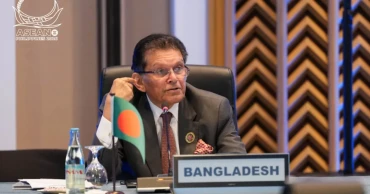
Dhaka pledges to work with ASEAN, its partners to strengthen cooperation in addressing emerging threats
Foreign Minister Dr Khalilur Rahman on Friday reaffirmed that Bangladesh would work with the Association of Southeast Asian Nations (ASEAN) and all parties to the Treaty of Amity and Cooperation in Southeast Asia (TAC) to address emerging threats.
He said global resilience against pandemics, climate shocks, cyber incidents and supply chain disruptions could be strengthened through practical, coordinated initiatives such as joint early warning systems, shared risk assessments, and regional crisis response mechanisms.
Dr Khalilur made the observations during the commemorative ceremony marking the 50th anniversary of the TAC in Manila.
The TAC is an agreement signed five decades ago to establish norms ensuring mutual respect for sovereignty and territorial integrity, and non-interference across the ASEAN region, said the Ministry of Foreign Affairs.
2 hours ago

Two held with Indian liquor in BGB drives along Sherpur border
Border Guard Bangladesh (BGB) arrested two smugglers and seized 60 bottles of Indian liquor in separate anti-smuggling drives along the Sherpur border on Friday.
The arrestees were identified as Jewel Rana, 25, son of Abu Salam, and Samiul, 18, son of Abdus Samad. Both are residents of Nowkuchi village in Jhenaigati upazila.
The information was confirmed in a press release issued by Mymensingh Battalion (39 BGB).
According to the release, a BGB patrol team conducted a special drive in the Nowkuchi border area of Jhenaigati early Friday and arrested the two with 12 bottles of Indian liquor.
A case has been filed against them under the Narcotics Control Act with Jhenaigati Police Station.
In another anti-smuggling operation on the same day, BGB members recovered 48 bottles of Indian liquor abandoned in the Kuchpara border area of Nalitabari upazila.
In total, 60 bottles of Indian liquor, with an estimated market value of around Tk 90,000, were seized in the two drives, the press release said.
Lt Col Md Nurul Azim Bayezid, commanding officer of Mymensingh Battalion (39 BGB), said the border force is conducting regular drives under its "zero tolerance" policy against drug trafficking and smuggling.
2 hours ago

BAU food safety expert weighs in on Khulna's green meat scare
A curious case of beef turning green while being cooked in Paikgacha municipality of Khulna has set off a wave of speculation across the country, with a food safety expert cautioning against both panic and complacency until proper tests are done.
The episode unfolded last Wednesday afternoon when a group of employees at Modern Bakery in Paikgacha were cooking beef bought for a picnic. Midway through cooking, they noticed the meat had inexplicably turned green. Startled and unnerved, they carried the pot straight to the local police station.
Days later, no one has been able to say for certain what caused the change and in the absence of answers, theories have run wild on social media, from spoiled meat to chemical contamination at the bakery.
Speaking to UNB on Friday, Dr. Mst. Minara Khatun, professor at the Department of Microbiology and Hygiene at Bangladesh Agricultural University (BAU) and a specialist in food safety and public health, said the explanation was not as simple as it might seem.
"The claim that the meat was a day old is not, by itself, a sufficient explanation for it turning green," she said. "People should neither panic over a photo circulating online nor brush off such an unusual change. In matters of food safety, scientific evidence must take precedence.
If meat shows an unnatural green colour, foul smell, sliminess or any other abnormality, it should not be eaten, the sample should be sent for laboratory testing."
Dr. Khatun said that meat stored for a single day after slaughter, at the correct temperature of 0-4 degrees Celsius, would not normally develop a green tinge. It might darken slightly or turn brownish, she said, but that is different from a distinct green colour, which is not a typical sign of ageing meat.
Many have pointed to the red-coloured broth as evidence the meat could not have been unsafe. Dr. Khatun called this an interesting but misleading observation. I
f the greenish discolouration is limited to certain parts of the meat, she explained, the broth can still take on its usual red or reddish hue since its colour comes largely from blood pigments, spices, and chemical reactions during cooking, not uniformly from the meat tissue itself. "A red broth does not scientifically confirm that the meat was safe," she said.
The butcher who sold the meat has claimed that other customers who bought from the same animal faced no problems. Some online have instead pointed fingers at chemicals allegedly used at the bakery.
She said neither claim stands on solid ground. Different cuts from the same animal can be exposed to different storage conditions, temperatures, humidity, and levels of contamination meaning one portion could turn while another does not. "Other people not falling sick is not scientific proof that the meat was safe," she said.
Equally, she added, there is no specific evidence to support the chemical-exposure theory either, since most chemicals commonly used in food settings do not turn meat green upon heating.According to Dr. Khatun, similar instances of meat turning green have been recorded in various countries before, and science offers several possible explanations.
Chemical changes in myoglobin, the pigment that gives meat its red colour, can be one cause, as can storage at improper temperatures.
Certain hydrogen sulphide-producing bacteria can lead to the formation of sulfmyoglobin, which imparts a greenish tint.
Contact with copper or other metallic compounds may also cause similar discolouration in rare cases, though this is uncommon in typical retail settings.
Growth of pigment-producing bacteria, particularly Pseudomonas species, linked to lapses in post-slaughter handling and transport, is another possible culprit.
In some instances, she noted, the effect can even come down to how light reflects off the structure of the muscle fibres, producing a green, blue, or rainbow-like sheen with no spoilage involved at all.Dr. Khatun called for an unbroken cold chain maintained safely from slaughter all the way to the consumer's kitchen.
She stressed the need for hygienic slaughtering and processing practices, clean environments, safe water, and trained workers throughout the supply chain.
Refrigerator and freezer temperatures should be checked regularly, she said, and consumers should stay alert to any unusual change in the meat they buy.
She also recommended keeping records of where meat comes from, when the animal was slaughtered, and how it has been stored along the way.
2 hours ago

Schoolboy, microbus driver killed in separate road accidents in Kishoreganj
A schoolboy and a microbus driver were killed in two separate road accidents in Kishoreganj on Friday, while six others were injured.
According to police and locals, a student of Janata School, identified as Tuhin, 10, was killed after being hit by a cement-laden truck on Janata School Road in Gaital area of Kishoreganj town around 11 am.
Sexagenarian man found dead in Gazipur fish farm
Locals rescued the critically injured boy and rushed him to a hospital, where he died before receiving treatment. His father is a member of the Bangladesh Police, according to local sources.
In another accident around the same time, microbus driver AK Mostafizur Rahman was killed in a head-on collision between a bus and a microbus on the Dhaka-Kishoreganj highway near Moulvibari in Chilakanda area of Pakundia upazila.
Mostafizur was a resident of the Kafrul area in Mirpur, Dhaka.
Police said an Ananya Classic bus travelling from Kishoreganj collided head-on with a microbus that was heading from Dhaka to Nikli Haor. Following the crash, both vehicles plunged into a roadside ditch.
The microbus driver died on the spot, while six other people were injured in the accident.
Officer-in-Charge of Pakundia Police Station SM Arifur Rahman said legal proceedings are underway.
2 hours ago
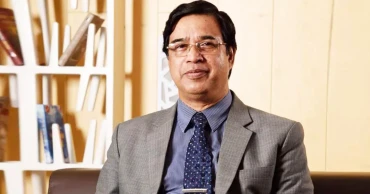
BERC Chairman for securing energy security by achieving renewable targets with aggressive natural gas exploration
Bangladesh Energy Regulatory Commission (BERC) Chairman Jalal Ahmed has said the expected expansion of renewable energy will help reduce the overall cost of power generation, support the country’s environmental commitments, and strengthen the country's ability to achieve its export objectives in the European Union market.
"At this moment, we do not require any new power plants based on traditional energy sources. Instead, the immediate priority should be to achieve the 10,000 MW renewable energy target, primarily from solar power, announced by the Prime Minister," he told UNB.
Sharing ten steps that are required to achieve the renewable energy target, the BERC Chairman said he understands that the Ministry of Power and Energy is already taking rapid steps toward achieving this objective.
Jalal Ahmed laid emphasised on formulating a time-bound roadmap to achieve the renewable energy target.
He suggested establishing a dedicated task force within the Power Division to monitor implementation and progress.
The BERC Chairman highlighted the importance of ensuring the effective implementation of the policy incentives provided under the Finance Act 2026, including duty-free imports of renewable energy equipment and storage batteries.
Jalal Ahmed talked about developing multiple commercially viable rooftop solar business models for privately owned buildings through expert consultation, and encouraging all apartment buildings in Dhaka to adopt them.
He laid emphasis on learning from the experiences of India and Pakistan in grid management and renewable energy integration; strengthening SREDA's (Sustainable and Renewable Energy Development Authority) institutional capacity to enable it to effectively fulfill its responsibilities.
Other steps that he mentioned include allowing merchant power plants to operate under the existing tariff structure; protecting merchant power plants from compensation liabilities by applying only standard distribution charges; and enabling merchant power plants to supply electricity directly to consumers, either through the transmission network or via distribution companies.
"In the case of rooftop solar installations on privately owned buildings, allow consumers to make their own decisions," said Jalal Ahmed.
Although Bangladesh possesses limited economically recoverable coal reserves, he said natural gas has remained its principal primary energy source.
The country's natural gas industry began with the discovery of the Haripur Gas Field in the 1950s, followed by the Titas Gas Field in the 1960s.
Daily natural gas production has declined to 1,711 million cubic feet per day in 2025-26, from 31 million cubic feet per day in 1971-72 and 2,671 million cubic feet per day in 2016-17.
"As domestic production continues to decline, Bangladesh has been importing liquefied natural gas (LNG) since 2018-19 and currently imports approximately 1,000 million cubic feet of gas in the form of LNG every day," he said.
Although some progress has been made under Petrobangla's (Bangladesh Oil, Gas & Mineral Corporation) plan to drill 150 wells to increase domestic natural gas production, the results have not been encouraging, Jalal Ahmed said.
"Urgent and decisive initiatives are required to make offshore bidding successful. At the same time, aggressive onshore exploration activities must be accelerated," he said.
The liquid fuel sector has given us a number of bad experiences over the past eight months.
Especially since November 2025, the country has witnessed instability in the liquefied petroleum gas (LPG) market, uncertainty over the Strait of Hormuz shipping route due to the US-Iran war, soaring shipping and insurance costs, expensive spot purchases resulting from disruptions in LNG supply chains, and market instability caused by reduced fuel oil reserves.
"Although the Strait of Hormuz was reopened for a period, it has once again been blocked. During this time, efforts were made to procure energy from alternative sources, but these alternatives remain limited," Jalal Ahmed said.
He, however, said LPG imports from the United States have increased significantly.
"To strengthen energy security, Bangladesh must rapidly expand its storage capacity, implement the second refinery project, and increase the government's participation in the LPG market," said the BERC Chairman.
"We currently have excess generation capacity in the power sector. Unfortunately, this surplus has become a burden rather than an asset. Including captive generation, the country's installed capacity is approximately 34,000 MW, which is nearly 100% higher than peak demand, although demand could have been met with only a 20% additional reserve capacity," he mentioned.
The capacity payments associated with this excess generation have imposed a substantial financial burden on both the government and consumers.
In addition, 2,400 MW will be added from the Rooppur Nuclear Power Plant, along with the future renewable energy capacity announced by the government.
"Bangladesh must now carefully plan the phased decommissioning of high-cost thermal power plants. The country's future integrated power mix should consist of natural gas, coal, renewable energy, and imported electricity," Jalal Ahmed said.
With careful planning, existing Power Purchase Agreements (PPAs) for liquid fuel-fired power plants should be renegotiated to enable a timely transition away from these costly facilities, he said.
The biggest game changer at this moment is the Budget 2026-27, Jalal Ahmed said, noting that just as Finance Minister Amir Khosru Mahmud Chowdhury emphasised the current government's commitment to renewable energy in the budget speech, the Finance Act 2026 has provided policy support for the renewable energy sector beyond expectations.
"I firmly believe that the decision to exempt all key components of solar power generation from import duty and taxes until June 2031 will significantly accelerate the growth of the sector. Considering the breadth of these policy measures, the budget can rightly be described as a green budget," he said.
2 hours ago