Asia
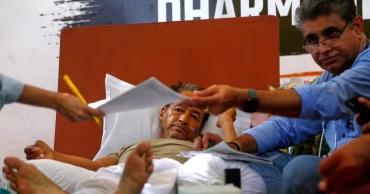
Indian activist Wangchuk ends 26-day hunger strike as 'Cockroach' protesters vow to press on
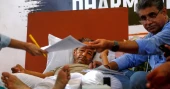
Indian activist Sonam Wangchuk ended a 26-day hunger strike on Friday that helped galvanize a youth movement that's become one of India’s largest protests in recent years, but demonstrators vowed to continue until the education minister resigns.
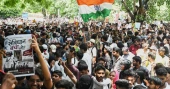
Wangchuk’s fast became a rallying point for India’s “Cockroach” protests, which began more than a month ago demanding education reforms after alleged leaks in some of the country’s most competitive entrance exams. Since then, the movement has tapped into broader public anger over unemployment, government accountability and economic opportunity, drawing professionals, families and activists to demonstrations in New Delhi and cities across the country.
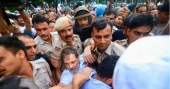
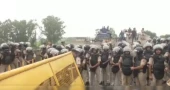
The demonstrations have become one of the most sustained waves of public dissent against Modi’s government in recent years, with thousands returning to the streets even after police used tear gas and batons this week to disperse marchers trying to reach Parliament.
In a post on X, Wangchuk said he ended his fast in the presence of two federal ministers after appeals from dozens of members of parliament and following “a long negotiation on various conditions and in view of possible violence in the country.” He did not elaborate on the talks.
Protest organizers said demonstrations would continue until Education Minister Dharmendra Pradhan resigned. They have called for demonstrations across the country on Friday in solidarity with students who were beaten by police during a march to Parliament on Monday that drew thousands of people.
“We won’t let Sonam sir’s sacrifice go in vain,” said Abhijeet Dipke, the founder of Cockroach Janta Party, a satirical group that has spearheaded the movement, named in reference to a remark by the country's supreme court chief justice that compared some unemployed young people to cockroaches.
The nationwide protests come a day after Modi publicly addressed the protests for the first time, announcing fast-track courts to prosecute cases involving examination paper leaks. In a separate video message, Modi also said his government would introduce a legislation in Parliament to crack down on exam paper leaks.
The announcements did little to calm the movement, as protesters said they failed to address their demands for government accountability, examination reforms and compensation for the families of students who died by suicide after exam paper leaks.
9 hours ago
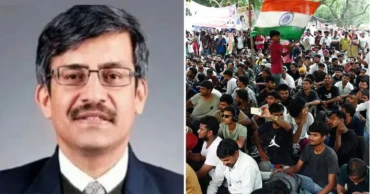
Education Secretary replaced amid protests over exam paper leaks in India
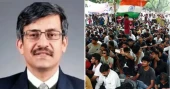
The Indian government has replaced Education Secretary Vineet Joshi in a major bureaucratic reshuffle amid growing protests over alleged examination paper leaks, including the controversy surrounding the NEET exam.
According to an official government notification issued late Thursday, Joshi has been transferred as Secretary in the Ministry of Panchayati Raj. He has been succeeded by Naresh Pal Gangwar, who was serving as Secretary in the Department of Animal Husbandry and Dairying under the Ministry of Fisheries, Animal Husbandry and Dairying.
The reshuffle also saw TK Anil Kumar, currently Additional Secretary in the Department of Rural Development, appointed as Secretary in the Department of School Education and Literacy.
Joshi had taken charge as Secretary of the Department of Higher Education in January 2025. The latest administrative changes were part of a wider reshuffle involving 13 appointments and four in-situ upgrades.
The move comes as protests continue over alleged examination paper leaks, with the satirical political outfit Cockroach Janta Party (CJP) and opposition parties demanding greater accountability from the government.
BJP MP Nishikant Dubey linked Joshi's transfer to the government's response to the controversy, saying Prime Minister Narendra Modi had acted against officials accused of negligence over the issue.
"Prime Minister Modi has replaced the Education Secretary for showing apathy regarding the paper leak issue. Strict action will be taken against those responsible for the paper leak, as well as those who displayed negligence or apathy," Dubey said.
Joshi, a 1992-batch Indian Administrative Service (IAS) officer of the Manipur cadre, previously served as the state's Chief Secretary. He was also the founding Director General of the National Testing Agency (NTA), which conducts major entrance examinations, including NEET and JEE.
His previous assignments also include serving as Chairman of the Central Board of Secondary Education (CBSE) and Additional Secretary in the Ministry of Education. Joshi holds a degree in mechanical engineering from IIT Kanpur and an MBA from the Indian Institute of Foreign Trade (IIFT).
Gangwar, who succeeds him, is a 1994-batch IAS officer of the West Bengal cadre and has been serving as Secretary in the Department of Animal Husbandry and Dairying before his latest appointment.
Source: NDTV
19 hours ago
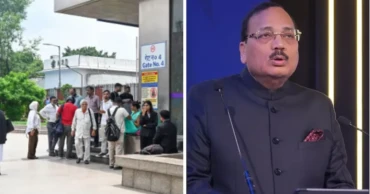
Closure of Delhi Metro stations amid protests reaches Supreme Court
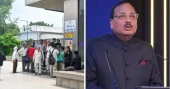
The closure of several Metro stations in the Indian capital due to ongoing student protests reached the Supreme Court on Thursday, as lawyers complained of difficulties in accessing the court.
Several Metro stations in central Delhi have remained closed for the past few days as protests at Jantar Mantar, led by the social media platform Cockroach Janta Party (CJP), intensified.
At least 16 Metro stations remained shut on Thursday, including the Supreme Court Metro station.
The issue was raised before the apex court by Supreme Court Bar Association President Vikas Singh.
Referring to the closure of key Metro stations around the Supreme Court, Singh said many lawyers and court staff were facing difficulties and were unable to reach the court on time.
He urged Chief Justice of India Surya Kant to intervene. In response, the Chief Justice said he would step in if the issue was not resolved by lunchtime.
Singh suggested that people holding valid Supreme Court entry passes, along with Registry staff, should be allowed to exit at the Supreme Court Metro station after appropriate security screening.
"In the metro, there is one advantage that when they come out of the train, there is an exit point. There they can be screened. People having proximity cards, and Registry staff, can be permitted to come out, and the rest can be told to take the other train and go. So people will be able to use the train also," Singh submitted.
Responding to the concern, the Chief Justice said the Supreme Court administration had already taken up the matter with Metro authorities.
He also assured the Bar that if the issue remained unresolved, he would personally intervene.
"If by lunchtime something does not happen to open the Metro station, I will intervene. We have directed that no adverse orders should be passed today for non-appearance of lawyers etc," the Chief Justice said.
The Delhi Metro on Thursday morning announced that 16 Metro stations, including the Supreme Court station, would remain closed until further orders. #Source: NDTV
1 day ago
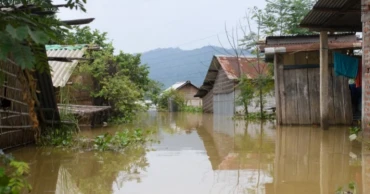
Assam flood death toll rises to 31
The death toll from the ongoing floods in India's northeastern state of Assam has risen to 31, Indian media says on Wednesday.
According to the Assam State Disaster Management Authority, more than half a million people remain affected across 16 flood-hit districts.
The authority said floodwaters have inundated 872 villages and damaged over 24,210 hectares of cropland in the affected areas.
1 day ago
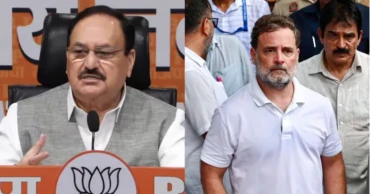
Nadda questions Rahul Gandhi's paper leak claims, calls for parliamentary debate
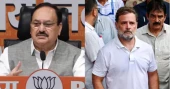
The Indian government on Wednesday rejected Congress leader Rahul Gandhi’s allegations over recurring examination paper leaks, accusing the Leader of the Opposition of being selective and attempting to derive political benefit from the issue.
Union Health Minister and BJP President J P Nadda said Gandhi had highlighted paper leaks during the BJP’s tenure at the Centre but failed to mention similar incidents in states governed by the Congress and its allies.
Citing examples from Jammu and Kashmir, Himachal Pradesh and Jharkhand, Nadda said examination paper leaks had also occurred in those states, questioning why Gandhi had not raised those cases.
“Why are you so selective?” Nadda asked, alleging that the Congress leader was more interested in political gains than in addressing students’ concerns or improving the education system.
The exchange came hours after Gandhi claimed that more than 150 examination paper leaks had occurred during the BJP-led government's decade in power, as protests over the NEET examination continued.
Nadda reiterated the Centre’s willingness to hold a detailed discussion on the NEET issue in Parliament, saying the government was prepared to allocate as much time as the Opposition required.
He said Parliament was the appropriate forum to examine the causes of paper leaks, identify those responsible, review the Centre’s response and discuss measures that all governments could adopt to prevent such incidents in the future.
Calling for cooperation across party lines, Nadda urged the Opposition to work with the government to develop a lasting solution that would protect the interests of millions of students across the country.
Source: NDTV
1 day ago
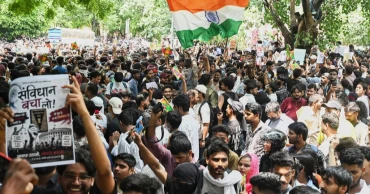
India's 'Cockroaches' movement emerges as major youth-led challenge to Modi government
A youth-led protest movement that began as an online response to a controversial court remark has grown into one of the most significant public challenges to India's ruling government, expanding from demands for education reforms to broader calls for accountability and institutional change.
The movement, known as the "Cockroaches," was sparked by widespread anger over alleged leaks of highly competitive entrance examinations for medical colleges and government jobs, which are seen as critical pathways to employment and social mobility for millions of Indians.
The protests gained momentum in May after India's Supreme Court Chief Justice Surya Kant, during an unrelated court hearing, reportedly compared some unemployed young people to "cockroaches." The remark triggered a backlash on social media, leading Boston University student Abhijeet Dipke to launch the Cockroach Janta Party, or Cockroach People's Party.
Many young people embraced the label as a symbol of resilience, rapidly turning the movement into a social media phenomenon. Supporters shared satirical content criticizing the government over unemployment, limited job opportunities and economic challenges.
The campaign moved from online platforms to the streets in June when Dipke returned to India and organized demonstrations in several cities and university campuses. Protesters are demanding the resignation of Education Minister Dharmendra Pradhan, reforms to the examination system and compensation for families of students who died by suicide following alleged exam paper leaks.
Initially drawing only a few hundred participants, the protests have since attracted thousands. The movement gained further attention after activist Sonam Wangchuk joined the demonstrations and launched a hunger strike lasting more than three weeks before police transferred him to a hospital.
As the campaign has expanded, it has evolved beyond student concerns to reflect wider public frustration over government accountability, unemployment and confidence in institutions, including the education system, political leadership, judiciary and media.
The protests have also drawn support from professionals, families and volunteers across the country, many of whom have contributed through donations and social media campaigns rather than traditional political organizations.
The Indian government initially dismissed the protesters' demands. Education Minister Dharmendra Pradhan said authorities had addressed the examination controversy by ordering fresh tests and accused demonstrators of acting against national interests.
However, the government's stance softened after police used tear gas and batons to disperse protesters attempting to march to Parliament earlier this week. The crackdown triggered public criticism and prompted government representatives to hold talks with protest leaders, although no breakthrough was reported.
The movement has also received backing from opposition leader Rahul Gandhi and several rights groups, who describe it as a broader campaign for democratic accountability and the right to peaceful protest.
Political observers say the decentralized youth movement presents an unusual challenge for Prime Minister Narendra Modi's government, particularly as India's large population of young voters could play a decisive role in future elections.
2 days ago
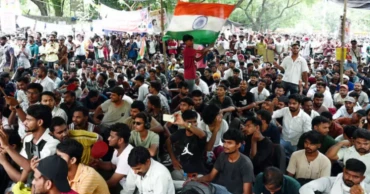
"Don't waste time": India’a top court declines urgent hearing on CJP protest case
India's Supreme Court on Tuesday declined to entertain an urgent plea alleging police brutality against students protesting in New Delhi under the banner of the Cockroach Janta Party (CJP), asking the petitioner's lawyer not to "waste" the court's time.
"Don't waste our time and yours," Chief Justice Surya Kant told the lawyer, who sought the court's intervention over alleged police action against students protesting at Jantar Mantar.
The chief justice also declined to view videos purportedly showing the police action, saying, "We don't want to watch any videos."
The remarks came a day after thousands of students took to the streets of New Delhi demanding the resignation of Education Minister Dharmendra Pradhan following a call by the CJP online movement.
Police used batons to disperse demonstrators as they attempted to march towards Parliament, escalating protests over alleged irregularities in major examinations. Protesters were seen running for safety as riot police moved in near the protest site.
Organisers of the demonstration condemned what they described as the authorities' heavy-handed response, claiming that hundreds of protesters were injured.
"It's a shameful day in the history of Indian democracy that people, honest students, who had come for a genuine issue were brutally beaten by the Delhi police," a CJP spokesperson said.
Meanwhile, the Delhi High Court on Tuesday declined to urgently hear a petition challenging the alleged use of excessive force by Delhi Police against students participating in the CJP's protest march to Parliament.
"Don't drag the court into all this," a bench comprising Chief Justice D K Upadhyaya and Justice Tejas Karia told the petitioner while scheduling the matter for hearing on Wednesday.
2 days ago
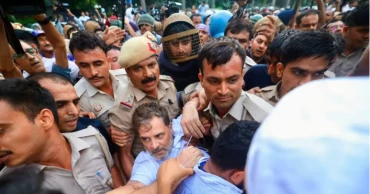
Rahul, Priyanka Gandhi detained during protest outside Modi's residence
Congress leader Rahul Gandhi and party MP Priyanka Gandhi Vadra were detained by Delhi Police on Tuesday during a protest outside Prime Minister Narendra Modi's residence in New Delhi, according to NDTV.
Samajwadi Party chief Akhilesh Yadav was also detained and removed from the protest site.
The Congress intensified its campaign against the Centre by marching towards the Prime Minister's residence at Lok Kalyan Marg, a day after the Cockroach Janta Party (CJP)-led demonstration over alleged NEET and other examination paper leaks. The march was led by Congress president Mallikarjun Kharge, Leader of the Opposition Rahul Gandhi and Priyanka Gandhi Vadra.
The leaders marched from Kharge's residence on Rajaji Marg, demanding accountability for the police action against protesters during Monday's CJP march to Parliament. Police later detained Rahul Gandhi, Priyanka Gandhi and several opposition leaders around 6:40 pm after Gandhi reportedly refused to leave the protest site.
Before his detention, Rahul Gandhi appealed to people to join the protest, describing the police action against students as "an attack on every Indian family." He accused the government of avoiding accountability and demanded justice for the students.
The protest took an unexpected turn when Union Minister Jitendra Singh visited the site and held talks with Rahul Gandhi.
According to Congress leaders, the discussions ended without any breakthrough. Singh later claimed Gandhi had initially agreed to call off the protest if the government allowed a parliamentary discussion on the NEET and other examination paper leaks, but later added a new demand seeking the resignation of Union Education Minister Dharmendra Pradhan. The Congress did not immediately respond publicly to Singh's claim before police dispersed the protest.
Rahul Gandhi later stepped up his criticism of the government, demanding the resignations of both Prime Minister Narendra Modi and Home Minister Amit Shah. He alleged that the Centre was unwilling to discuss the issue in Parliament or take responsibility for the police action against students.
The Congress protest came a day after the CJP's march to Parliament, during which protesters, mainly students and young people, were baton-charged and tear-gassed by police and the Rapid Action Force.
The CJP claimed several protesters were injured, while Delhi Police alleged that demonstrators turned violent, attacked security personnel with stones, vandalised police vehicles and injured 118 police personnel, including senior officers.
The ruling BJP accused the Congress of compromising the Prime Minister's security by attempting to march towards his residence. Congress leaders, however, maintained that the protest was peaceful and said they had no alternative venue to press their demands.
Samajwadi Party chief Akhilesh Yadav and NCP (Sharadchandra Pawar) leader Supriya Sule joined the protest in solidarity, while the Aam Aadmi Party stayed away, alleging that the Congress demonstration diverted attention from the CJP's agitation, highlighting differences within the opposition over its strategy to challenge the government. Source: NDTV Profit
3 days ago
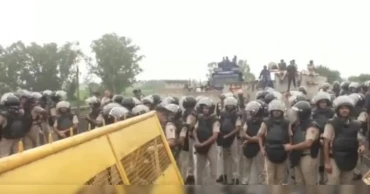
Farmers’ march to Delhi halted at Haryana border over proposed India-US trade deal
Hundreds of farmers from Punjab heading towards New Delhi to join a Kisan Mahapanchayat against the proposed India-US trade agreement were stopped by Haryana Police at the Shambhu border on Tuesday.
The Shambhu border, a key entry point between Punjab and Haryana, witnessed scenes similar to the February 2024 “Delhi Chalo-2” farmers’ protest, with authorities setting up barricades using concrete blocks, iron spikes and multiple layers of security barriers to prevent the farmers from moving towards the Indian capital.
After being denied entry, the protesting farmers turned the border area into a demonstration site, accusing the Haryana and Punjab governments of curbing their democratic right to hold a gathering in Delhi.
BKU Shaheed Bhagat Singh leader Tezveer Singh alleged that Haryana Police had placed barricades inside Punjab territory and criticised the Punjab government for allegedly remaining inactive instead of opposing the move.
While Punjab-based farmer groups were stopped at the border, farmers from Haryana districts, including Ambala and Kurukshetra, continued their journey towards Delhi.
The Mahapanchayat was organised under the banner of Desh Bachao Morcha, bringing together farmer organisations from Punjab, Haryana and Himachal Pradesh to demand that the central government withdraw from negotiations on the proposed India-US trade agreement.
Kisan Mazdoor Sangharsh Committee (KMSC) leader Sarwan Singh Pandher said groups including KMSC, Kisan Mazdoor Morcha’s Punjab unit, Azaad Kisan Morcha and BKU Ekta Sangharsh had started their marches from different parts of Punjab before being stopped at Shambhu.
Pandher said a joint statement issued by India and the United States in February 2026 included a commitment to negotiate the first phase of a multi-sector bilateral trade agreement by autumn 2026.
He argued that the proposed agreement went beyond a traditional trade pact as it could cover areas including agriculture, dairy, industry, digital trade, e-commerce, investment, government procurement, intellectual property rights and services.
Farmer leaders expressed concerns that previous US trade positions had sought greater access to India’s agriculture and dairy markets through reduced tariffs and fewer restrictions on products such as soybeans, maize, cotton, ethanol, apples, almonds, dairy items, poultry and fisheries.
They warned that allowing subsidised American agricultural and dairy products into the Indian market could severely affect millions of small and marginal farmers who may struggle to compete.
The protesters also raised concerns over what they described as a lack of transparency in the trade negotiations, saying important details of the proposed agreement had not been made public.
Farmer organisations said India’s dairy sector supports nearly 80 million rural families and warned that any negative impact on the sector would affect producers, small traders, food processors, agro-based industries and micro enterprises.
The Desh Bachao Morcha demanded that the government make all documents related to the proposed India-US trade agreement public and avoid signing any deal without detailed consultations with farmers, workers, dairy producers, small businesses and other stakeholders.
Source: NDTV
3 days ago
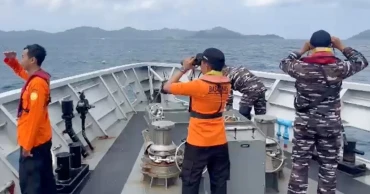
Rescuers find five survivors, continue search for 20 missing after Indonesia boat sinking
Indonesian rescuers have found five more survivors, including a seven-year-old girl, from a passenger boat that sank off the country's eastern coast earlier this week, while search operations continue for 20 people who remain missing.
The KM Nurul Salsa, carrying 78 passengers and crew, suffered engine failure before sinking on Wednesday about 43 nautical miles (79 kilometres) from a port in the Selayar Islands of South Sulawesi province.
Makassar Search and Rescue Office chief Muhammad Arif Anwar said the five survivors — one man and four women — were discovered late Saturday clinging to a floating fish trap owned by a local fisherman. They were spotted before nightfall and rescued by a passing fishing boat near Matallang Island before being transferred to a search and rescue vessel.
The survivors were later taken to Benteng port for medical examinations and to provide information to investigators, Anwar said.
Authorities have confirmed one death from the incident so far, while efforts are continuing to locate the remaining missing passengers.
Officials also revised the number of people on board, saying the vessel had been carrying 78 passengers and crew, up from an earlier estimate of 74.
Passenger boats remain a vital means of transport across Indonesia, an archipelago of more than 17,000 islands. However, marine accidents are relatively common due to overcrowding, poor safety standards and inadequate enforcement of maritime regulations.
5 days ago