Others

BAU food safety expert weighs in on Khulna's green meat scare
A curious case of beef turning green while being cooked in Paikgacha municipality of Khulna has set off a wave of speculation across the country, with a food safety expert cautioning against both panic and complacency until proper tests are done.
The episode unfolded last Wednesday afternoon when a group of employees at Modern Bakery in Paikgacha were cooking beef bought for a picnic. Midway through cooking, they noticed the meat had inexplicably turned green. Startled and unnerved, they carried the pot straight to the local police station.
Days later, no one has been able to say for certain what caused the change and in the absence of answers, theories have run wild on social media, from spoiled meat to chemical contamination at the bakery.
Speaking to UNB on Friday, Dr. Mst. Minara Khatun, professor at the Department of Microbiology and Hygiene at Bangladesh Agricultural University (BAU) and a specialist in food safety and public health, said the explanation was not as simple as it might seem.
"The claim that the meat was a day old is not, by itself, a sufficient explanation for it turning green," she said. "People should neither panic over a photo circulating online nor brush off such an unusual change. In matters of food safety, scientific evidence must take precedence.
If meat shows an unnatural green colour, foul smell, sliminess or any other abnormality, it should not be eaten, the sample should be sent for laboratory testing."
Dr. Khatun said that meat stored for a single day after slaughter, at the correct temperature of 0-4 degrees Celsius, would not normally develop a green tinge. It might darken slightly or turn brownish, she said, but that is different from a distinct green colour, which is not a typical sign of ageing meat.
Many have pointed to the red-coloured broth as evidence the meat could not have been unsafe. Dr. Khatun called this an interesting but misleading observation. I
f the greenish discolouration is limited to certain parts of the meat, she explained, the broth can still take on its usual red or reddish hue since its colour comes largely from blood pigments, spices, and chemical reactions during cooking, not uniformly from the meat tissue itself. "A red broth does not scientifically confirm that the meat was safe," she said.
The butcher who sold the meat has claimed that other customers who bought from the same animal faced no problems. Some online have instead pointed fingers at chemicals allegedly used at the bakery.
She said neither claim stands on solid ground. Different cuts from the same animal can be exposed to different storage conditions, temperatures, humidity, and levels of contamination meaning one portion could turn while another does not. "Other people not falling sick is not scientific proof that the meat was safe," she said.
Equally, she added, there is no specific evidence to support the chemical-exposure theory either, since most chemicals commonly used in food settings do not turn meat green upon heating.According to Dr. Khatun, similar instances of meat turning green have been recorded in various countries before, and science offers several possible explanations.
Chemical changes in myoglobin, the pigment that gives meat its red colour, can be one cause, as can storage at improper temperatures.
Certain hydrogen sulphide-producing bacteria can lead to the formation of sulfmyoglobin, which imparts a greenish tint.
Contact with copper or other metallic compounds may also cause similar discolouration in rare cases, though this is uncommon in typical retail settings.
Growth of pigment-producing bacteria, particularly Pseudomonas species, linked to lapses in post-slaughter handling and transport, is another possible culprit.
In some instances, she noted, the effect can even come down to how light reflects off the structure of the muscle fibres, producing a green, blue, or rainbow-like sheen with no spoilage involved at all.Dr. Khatun called for an unbroken cold chain maintained safely from slaughter all the way to the consumer's kitchen.
She stressed the need for hygienic slaughtering and processing practices, clean environments, safe water, and trained workers throughout the supply chain.
Refrigerator and freezer temperatures should be checked regularly, she said, and consumers should stay alert to any unusual change in the meat they buy.
She also recommended keeping records of where meat comes from, when the animal was slaughtered, and how it has been stored along the way.
2 hours ago
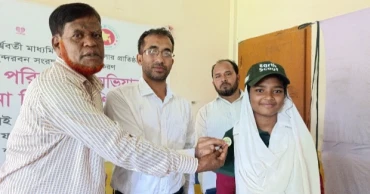
Building young environmental leaders through waste management training
Waste is emerging as one of Bangladesh’s most pressing environmental challenges, with improper disposal threatening communities, ecosystems and biodiversity.
From household waste and plastic pollution to hazardous materials, unmanaged waste is contaminating rivers, degrading soil and placing fragile ecosystems like the Sundarbans at risk.
As coastal communities continue to expand, effective waste management has become essential not only for public health but also for protecting the world's largest mangrove forest.
Recognising that lasting environmental change begins with awareness and action at the community level, WildTeam has been working to equip young people with the knowledge and practical skills needed to become environmental stewards.
Through its EarthScout programme, students are encouraged to understand local conservation challenges and take meaningful action within their schools and communities.
4 hours ago

Productivity, institutional reforms key to creating jobs, boosting competitiveness: Speakers
Productivity growth, stronger institutions and performance-based policy support are essential for creating sustainable jobs and improving Bangladesh's global competitiveness, speakers said at a panel discussion on Friday.
They stressed that enhancing organisational capability, attracting investment, strengthening industry-academia collaboration and pursuing balanced regional development will be critical for sustaining economic growth, particularly after Bangladesh graduates from the Least Developed Country (LDC) status.
The discussion, titled "Productivity, Competitiveness & Trade for Jobs," was held as part of the two-day Bengal Delta Conference 2026 organised by the Dacca Institute of Research and Analytics (DAIRA) at InterContinental Dhaka on the opening day.
The segment, moderated by DAIRA Research Director Mohammad Asaduzzaman, featured Prime Minister’s Adviser on Finance and Planning Dr Rashed Al Mahmud Titumir, Professor of Economics at SOAS University of London Dr Mushtaq Khan, Panam Institute Chairman Jyoti Rahman and President of Bangladesh Apparel Youth Leaders Alliance Abrar Hossain Sayem as panellists.
Outlining the government's economic strategy, Dr Titumir said Bangladesh needs an investment-driven development model tailored to domestic realities and changing global geoeconomic conditions.
"We need to pursue a model where investment leads to production, production creates employment, employment increases revenue without raising tax rates, and that revenue finances education, health and social security," he said.
The adviser reiterated the government's goal of gradually increasing spending on education, healthcare and social protection while moving towards a democratic welfare state.
Prof Mushtaq Khan said productivity is determined not only by capital investment and skilled labour but also by organisational capability.
He noted that enterprises with similar resources often produce vastly different outcomes depending on the quality of management and institutional capacity.
Prof Mushtaq Khan also stressed that government incentives and policy support should be linked to measurable performance requirements to encourage improvements in productivity and competitiveness.
Jyoti Rahman said organisational effectiveness and management play a more decisive role in productivity growth than machinery or conventional factors of production alone.
He urged policymakers and business leaders to adopt an experimental approach by testing innovative ideas, learning from unsuccessful initiatives and expanding those that deliver positive results.
Sayem highlighted the challenges Bangladesh is likely to face after graduating from the LDC status, saying higher productivity, increased foreign investment and stronger backward linkages will be crucial to maintaining the competitiveness of the country's export industries.
He also underscored the importance of technology transfer, skills development and stronger partnerships between industry, technical and vocational institutions, and universities to build a future-ready workforce.
The speakers agreed that sustainable job creation and long-term economic growth will depend on higher productivity, stronger institutional capacity, closer collaboration between industry and academia, balanced regional development and performance-based policy support.
5 hours ago

Speaker returns early from Thailand amid speculation over President's resignation
Speaker Hafiz Uddin Ahmad returned home on Friday after cutting short his visit to Thailand amid speculation over the possible resignation of President Mohammed Shahabuddin.
He arrived at Hazrat Shahjalal International Airport in Dhaka around 12:15pm, according to a release issued by the Parliament Secretariat.
The Speaker left Dhaka for Thailand on July 19.
Although he was originally scheduled to return on July 26, he arrived early, cutting short his trip amid speculation over the President’s possible resignation.
6 hours ago

Vatara gas explosion: Man, niece succumb to burn injuries
Two of the three members of a family, who suffered burn injuries in a gas explosion at a house in the capital’s Vatara area on July 21, have died in a span of six hours while undergoing treatment.
The deceased were identified as Md Shaheen, 24, and his niece Hafsa, 8.
Hafsa and Shaheen died at the Intensive Care Unit (ICU) of the National Institute of Burn and Plastic Surgery around 12:00am and 6:00am, respectively, on Friday, said Dr Shawon Bin Rahman, a resident surgeon at the institute.
He said Shaheen suffered burns on 50 percent of his body, while Hafsa sustained 40 percent burns.
Shaheen’s wife Fahima Akter, 21, who suffered 45 percent burns, is in critical condition and undergoing treatment at the ICU, the physician added.
The explosion occurred at a house on the 100-Foot Road in the Notun Bazar area under Vatara Police Station in the early hours of July 21, leaving the trio injured. They were later taken to the burn institute.
Shaheen’s brother-in-law Jasim said Shaheen worked at a shop and lived with his family on the ground floor of a six-storey building in the area.
He said the family members were asleep when a sudden explosion occurred due to a gas line leak, triggering a fire inside the house.
6 hours ago

Investment-led production with job creation holds key to Bangladesh's next growth phase: PM's Adviser
Outlining the government's economic strategy, Prime Minister's Finance and Planning Adviser Dr Rashed Al Mahmud Titumir on Friday said Bangladesh needs an investment-driven development model tailored to domestic realities and changing global geoeconomic conditions.
"We need to pursue a model where investment leads to production, production creates employment, employment increases revenue without raising tax rates, and that revenue finances education, health and social security," he said.
The economist made the remarks during a session at the Bengal Delta Conference 2026 (BDC 2026) moderated by Mushtaq Khan, a Professor of Economics at SOAS University of London.
The Bengal Delta Conference 2026 (BDC 2026), themed “Bangladesh and a Changing World: Uncharted Times, Emerging Orders, and The Politics of Care,” comes at a moment of transition for both Bangladesh and the global order
Dr Titumir reiterated the government's goal of gradually increasing spending on education, healthcare and social protection while moving towards a democratic welfare state.
The Adviser said the government is working to introduce a universal lifecycle-based social security system to protect vulnerable people from falling into poverty during economic shocks.
He also stressed reforms in education and healthcare, saying the focus would be on skills development, citizenship education, innovation and building a national health system reaching grassroots communities.
Highlighting governance reforms, Dr Titumir said legitimacy, accountability and transparency are central to the government's approach.
"If you have a government with legitimacy, you have accountability," he said, adding, "The delivery is about legitimacy. The delivery is accountability. The delivery is transparency."
He said the government inherited a fragile fiscal situation but now has both the political mandate and responsibility to pursue transformative reforms.
"We all are aware of what we inherited. The fiscal condition we inherited was fragile," he said. "There is an overwhelming majority in Parliament, which means that we have more responsibility, and we have to have a transformative change."
Responding to questions on revenue mobilisation, Dr Titumir said the government is prioritising institutional reforms over higher tax rates.
"The equation that the current government is working on has two additional elements which were ignored for years - the constant and the error term," he said, explaining that the "constant" represents institutional strength while the "error term" includes corruption, rent-seeking and tax exemptions.
He said reducing leakages and improving enforcement had already produced encouraging results.
"For the first time in the history of Bangladesh, Chattogram Customs House made a huge contribution," he said, adding that three task forces had been formed to strengthen revenue collection.
Acknowledging existing challenges, Dr Titumir said the government is not claiming to have solved every problem.
"We are not fully equipped yet to deal with tax evasion. That requires capabilities," he said.
On the financial sector, he said authorities are addressing long-standing issues, including non-performing loans and bank recapitalisation.
"We are not hiding anything under the carpet. We are aware of the issues, and we are dealing with them," he said.
Dr Titumir said the government is committed to ending what he described as the "auction market" for Statutory Regulatory Orders (SROs), strengthening accountability and pursuing a production-led economic model to achieve sustainable growth.
"We have inherited what is known as an auction market for SROs. If you are powerful, you get an issuance of an SRO, and you get all those resources," Titumir said while outlining the government's reform agenda.
Referring to tax concessions granted in the past, he said, "These arbitrary concessions, we are working on them, and we are making sure that this SRO culture is not there."
The adviser said decisions on taxation and public expenditure must be guided by Parliament rather than discretionary executive actions.
"It is the sovereign Parliament that would decide where and how the money would be collected and where the money would be spent. This is the key essence of the reform of the government," he said.
Calling industrialisation critical for long-term resilience, Dr Titumir said Bangladesh has revived discussions on industrial policy after years of neglect.
"Industrial policy is back in Bangladesh," he said, adding that expanding productive capacity, ensuring energy security, improving competitiveness and diversifying exports would be essential as the country prepares for graduation from the Least Developed Country (LDC) category in 2029.
Expressing optimism about the government's reform agenda, Titumir said the administration expects to deliver tangible results during the current fiscal year.
"This fiscal year, you would get the early harvest," he said. "We are hopeful that Bangladesh, what we have promised, we would deliver."
Referring to external economic pressures, he said Bangladesh had to spend about $3.46 billion to absorb the impact of the Middle East crisis and global energy price shocks despite having no role in creating those challenges.
"We had to spend $3.46 billion for nothing to do with us," he said, noting that the government had to balance fiscal management with protecting agriculture and consumers from higher fuel costs.
7 hours ago
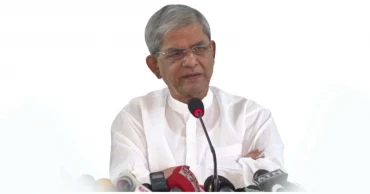
Fakhrul urges people to ignore ‘rumours’ over President's resignation
BNP Secretary General Mirza Fakhrul Islam Alamgir on Friday urged people not to pay heed to “rumours” surrounding the possible resignation of President Mohammed Shahabuddin.
While speaking to journalists after attending the inaugural session of the two-day Bengal Delta Conference 2026 at InterContinental Dhaka, he dismissed the speculation and called on the public not to be misled by unverified information.
His comments came amid widespread speculation that the President may step down in a day or two, citing ill health.
"The entire world is facing challenges to democracy in one way or another. But we have always believed in the democratic process," Fakhrul, also the local government, rural development and co-operatives minister, said.
He said the current government remains accountable to the people and is committed to upholding democratic values and public accountability.
8 hours ago

Fakhrul vows democratic reforms, economic recovery
Local Government, Rural Development and Co-operatives Minister Mirza Fakhrul Islam Alamgir on Friday said the government is committed to restoring democratic institutions, rebuilding the economy and implementing the commitments outlined in the July National Charter.
"Democracy is under pressure across the world, and Bangladesh is no exception. Our responsibility is to practise democracy, nurture democratic values and build a liberal, non-communal and humane society," he said.
Speaking at the inaugural session of the two-day Bengal Delta Conference 2026 organised by the Dacca Institute of Research and Analytics (DAIRA) at a city hotel, Fakhrul paid tribute to the martyrs of the 1971 War of Liberation and those who lost their lives during the 2024 student-led mass uprising, describing their sacrifices as the foundation for a democratic and inclusive Bangladesh.
"I salute the young people who created history through their movement and made it possible to remove fascism," he said, also remembering those who sacrificed their lives for democracy.
Describing himself as "a political activist" rather than an academic, Fakhrul, also BNP secretary general, said his experience in movements against dictatorship and authoritarianism shaped his belief in democratic governance.
He said Bangladesh is passing through a critical period marked by economic and political challenges, aggravated by global conflicts, including the Russia-Ukraine war and tensions in the Middle East, as well as the impacts of economic mismanagement and money laundering.
"We are fighting for a comeback," the minister said, adding that the government inherited a difficult economic situation characterised by unemployment, weak investment and a fragile banking sector.
He said the current government is working to restore economic stability while rebuilding democratic institutions, noting that political parties had reached broad consensus on constitutional reforms through the July Charter, aimed at creating a more stable and development-oriented political framework.
"Our leader Tarique Rahman is committed to implementing the July Charter, and we are equally committed to fulfilling the promises made to the people through our election manifesto," Fakhrul said.
Highlighting the government's priorities, he said programmes such as Family Card, Farmers’ Card, social safety allowances, support for religious leaders, canal excavation projects and incentives for agriculture are beginning to generate positive economic impacts.
The BNP leader also said the latest national budget reduced taxes and tariffs in several sectors to encourage industrial growth, while giving greater emphasis to agriculture and the creative economy by integrating ethnic communities and local innovators into mainstream economic development.
On political reforms, he said a parliamentary committee has already been formed to work on constitutional amendments, reaffirming the government's commitment to strengthening democratic institutions.
Fakhrul also stressed the government's commitment to inclusivity, noting that members of ethnic communities, including the Santal, Marma and Chakma, have been nominated to Parliament.
He further emphasised regional cooperation, saying Prime Minister Tarique Rahman has pledged to attract greater international participation in Bangladesh's economic development.
Expressing optimism about the country's future, the minister said Bangladesh's resilient people will overcome current challenges and build "a new Bangladesh free from exploitation, where people will enjoy a better life."
The Bengal Delta Conference under the theme "Bangladesh and a Changing World: Uncharted Times, Emerging Orders, and the Politics of Care" brings together scholars, policymakers, diplomats, civil society representatives and young researchers to discuss governance, the economy, regional affairs and Bangladesh's evolving role in a rapidly changing global order.
The two-day conference will conclude on Saturday.
8 hours ago
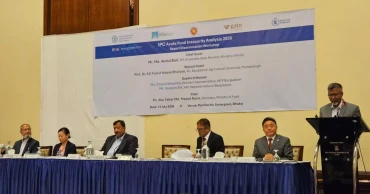
Over 15 million people facing acute food insecurity in Bangladesh
Approximately 15.3 million people in Bangladesh - around 15 percent of the analysed population - are experiencing high levels of acute food insecurity between May and August 2026, including about 483,000 people facing emergency conditions, according to a new analysis shared on Thursday.
The situation is projected to deteriorate further between September and December 2026, when the number of people facing acute food insecurity is expected to rise to 18.1 million, including 787,000 people in emergency conditions.
The Ministry of Food, together with the Food and Agriculture Organization of the United Nations (FAO), the United Nations World Food Programme (WFP), Action Against Hunger, Save the Children and the Global Alliance for Improved Nutrition (GAIN), recently convened a high-level dissemination workshop in Dhaka to launch and discuss the findings of the latest Integrated Food Security Phase Classification (IPC) Acute Food Insecurity Analysis for Bangladesh.
The workshop was organized under the leadership of the Food Planning and Monitoring Unit (FPMU) of the Ministry of Food and brought together senior government officials, development and humanitarian partners, academia and civil society representatives.
The analysis identified some of the highest levels of acute food insecurity in the Chittagong Hill Tracts, the Haor region, selected coastal districts, and among the displaced Rohingya population living in Cox's Bazar and Bhasan Char.
"Bangladesh is committed to using evidence-based analysis to guide policies and investments that protect food security and strengthen resilience. The IPC findings will help us target resources more effectively and reinforce our collective efforts to support vulnerable communities facing increasing climate and economic pressures," said State Minister for Food Md. Abdul Bari.
Food Secretary Abu Taher Md. Masud Rana said evidence-based and data-driven decision-making is essential for effective policymaking.
"I hope the findings of this IPC report will serve as a valuable resource for policymakers, development partners, and humanitarian agencies in designing targeted interventions, strengthening food and nutrition security, and enhancing the resilience of vulnerable populations in Bangladesh,” he said.
Secretary (Director General), NGO Affairs Bureau, Prime Minister’s Office Dr. Mohammed Jakaria said food security cannot be achieved by one institution alone and it requires a whole-of-government and whole-of-society approach.
"The NGO Affairs Bureau remains committed to supporting constructive partnerships with NGOs, development partners, UN agencies, research institutions, and government bodies to advance food security, nutrition, resilience, and sustainable development in Bangladesh,” Jakaria said.
The report highlights a range of drivers behind the worsening food security situation, including adverse climatic conditions, floods, inflation, rising fuel and food prices, global supply chain disruptions and broader economic challenges affecting household purchasing power.
Without timely interventions, these pressures are likely to further reduce access to sufficient and nutritious food for millions of people.
Participants discussed key recommendations from the analysis, including scaling up life-saving food assistance, expanding shock-responsive social protection, strengthening climate-resilient agriculture, supporting livelihood recovery, and investing in disaster preparedness and early warning systems.
"The findings highlight the urgent need to strengthen the resilience of agriculture and food systems, particularly in areas exposed to recurrent floods, cyclones and other climate-related shocks. Emphasizing on emergency agriculture strategy and investing in climate-smart agriculture, sustainable livelihoods and local food production is critical not only to address immediate food insecurity, but also to protect vulnerable communities from future crises," said Dr Jiaoqun Shi, Representative, FAO.
"The IPC analysis is particularly valuable because it helps us identify the communities most vulnerable to food insecurity before shocks deepen their impact. Many of the areas highlighted in this analysis are the same areas currently facing heavy rainfall and flooding, particularly in the Chittagong Hill Tracts, where WFP has activated anticipatory action and supported the Government's shock-responsive social protection response," said Coco Ushiyama, Representative and Country Director, WFP.
"Beyond informing emergency response, the IPC strengthens the systems we rely on to anticipate crises, target assistance more effectively, and build resilience among vulnerable communities."
The Ministry of Food and its partners reaffirmed their commitment to continued collaboration to address immediate food insecurity needs, strengthen resilience to future shocks, and support Bangladesh's efforts to achieve sustainable food security for all.
20 hours ago

Riyadh road crash kills 3 members of Faridpur family
Three members of a Bangladeshi family were killed and two others injured in a road accident in Saudi Arabia on Thursday.
The deceased were identified as Tania Tahmina Rina, 45, her son Tasbik, 20, and daughter Zara, 15. The injured are Tania’s husband Shafiqul Islam Khokon and their elder son Nabil.
The accident occurred in Riyadh after 3:00pm (Bangladesh time) while the family was travelling from Riyadh to Makkah to perform Umrah, said Tania’s brother Touhid Murad.
Tania was the daughter of late Nazimuddin Mollah, former chairman of Atghar Union Parishad in Saltha upazila of Faridpur, while her husband Khokon was a resident of Bhairab upazila in Kishoreganj.
Murad said his sister, brother-in-law and their three children were travelling to Makkah when a vehicle hit their car from behind. "My sister, younger nephew and niece died on the spot, while my brother-in-law and another nephew were taken to the hospital with injuries," he said.
He urged the government to look into the matter seriously and take necessary steps in this regard.
22 hours ago