Foreign-Affairs
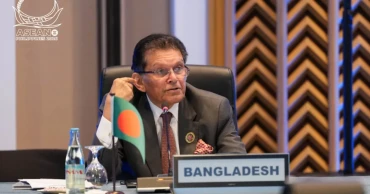
Dhaka pledges to work with ASEAN, its partners to strengthen cooperation in addressing emerging threats
Foreign Minister Dr Khalilur Rahman on Friday reaffirmed that Bangladesh would work with the Association of Southeast Asian Nations (ASEAN) and all parties to the Treaty of Amity and Cooperation in Southeast Asia (TAC) to address emerging threats.
He said global resilience against pandemics, climate shocks, cyber incidents and supply chain disruptions could be strengthened through practical, coordinated initiatives such as joint early warning systems, shared risk assessments, and regional crisis response mechanisms.
Dr Khalilur made the observations during the commemorative ceremony marking the 50th anniversary of the TAC in Manila.
The TAC is an agreement signed five decades ago to establish norms ensuring mutual respect for sovereignty and territorial integrity, and non-interference across the ASEAN region, said the Ministry of Foreign Affairs.
2 hours ago
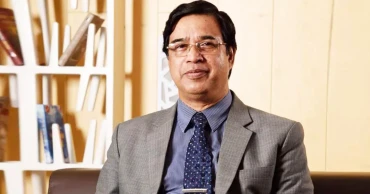
BERC Chairman for securing energy security by achieving renewable targets with aggressive natural gas exploration
Bangladesh Energy Regulatory Commission (BERC) Chairman Jalal Ahmed has said the expected expansion of renewable energy will help reduce the overall cost of power generation, support the country’s environmental commitments, and strengthen the country's ability to achieve its export objectives in the European Union market.
"At this moment, we do not require any new power plants based on traditional energy sources. Instead, the immediate priority should be to achieve the 10,000 MW renewable energy target, primarily from solar power, announced by the Prime Minister," he told UNB.
Sharing ten steps that are required to achieve the renewable energy target, the BERC Chairman said he understands that the Ministry of Power and Energy is already taking rapid steps toward achieving this objective.
Jalal Ahmed laid emphasised on formulating a time-bound roadmap to achieve the renewable energy target.
He suggested establishing a dedicated task force within the Power Division to monitor implementation and progress.
The BERC Chairman highlighted the importance of ensuring the effective implementation of the policy incentives provided under the Finance Act 2026, including duty-free imports of renewable energy equipment and storage batteries.
Jalal Ahmed talked about developing multiple commercially viable rooftop solar business models for privately owned buildings through expert consultation, and encouraging all apartment buildings in Dhaka to adopt them.
He laid emphasis on learning from the experiences of India and Pakistan in grid management and renewable energy integration; strengthening SREDA's (Sustainable and Renewable Energy Development Authority) institutional capacity to enable it to effectively fulfill its responsibilities.
Other steps that he mentioned include allowing merchant power plants to operate under the existing tariff structure; protecting merchant power plants from compensation liabilities by applying only standard distribution charges; and enabling merchant power plants to supply electricity directly to consumers, either through the transmission network or via distribution companies.
"In the case of rooftop solar installations on privately owned buildings, allow consumers to make their own decisions," said Jalal Ahmed.
Although Bangladesh possesses limited economically recoverable coal reserves, he said natural gas has remained its principal primary energy source.
The country's natural gas industry began with the discovery of the Haripur Gas Field in the 1950s, followed by the Titas Gas Field in the 1960s.
Daily natural gas production has declined to 1,711 million cubic feet per day in 2025-26, from 31 million cubic feet per day in 1971-72 and 2,671 million cubic feet per day in 2016-17.
"As domestic production continues to decline, Bangladesh has been importing liquefied natural gas (LNG) since 2018-19 and currently imports approximately 1,000 million cubic feet of gas in the form of LNG every day," he said.
Although some progress has been made under Petrobangla's (Bangladesh Oil, Gas & Mineral Corporation) plan to drill 150 wells to increase domestic natural gas production, the results have not been encouraging, Jalal Ahmed said.
"Urgent and decisive initiatives are required to make offshore bidding successful. At the same time, aggressive onshore exploration activities must be accelerated," he said.
The liquid fuel sector has given us a number of bad experiences over the past eight months.
Especially since November 2025, the country has witnessed instability in the liquefied petroleum gas (LPG) market, uncertainty over the Strait of Hormuz shipping route due to the US-Iran war, soaring shipping and insurance costs, expensive spot purchases resulting from disruptions in LNG supply chains, and market instability caused by reduced fuel oil reserves.
"Although the Strait of Hormuz was reopened for a period, it has once again been blocked. During this time, efforts were made to procure energy from alternative sources, but these alternatives remain limited," Jalal Ahmed said.
He, however, said LPG imports from the United States have increased significantly.
"To strengthen energy security, Bangladesh must rapidly expand its storage capacity, implement the second refinery project, and increase the government's participation in the LPG market," said the BERC Chairman.
"We currently have excess generation capacity in the power sector. Unfortunately, this surplus has become a burden rather than an asset. Including captive generation, the country's installed capacity is approximately 34,000 MW, which is nearly 100% higher than peak demand, although demand could have been met with only a 20% additional reserve capacity," he mentioned.
The capacity payments associated with this excess generation have imposed a substantial financial burden on both the government and consumers.
In addition, 2,400 MW will be added from the Rooppur Nuclear Power Plant, along with the future renewable energy capacity announced by the government.
"Bangladesh must now carefully plan the phased decommissioning of high-cost thermal power plants. The country's future integrated power mix should consist of natural gas, coal, renewable energy, and imported electricity," Jalal Ahmed said.
With careful planning, existing Power Purchase Agreements (PPAs) for liquid fuel-fired power plants should be renegotiated to enable a timely transition away from these costly facilities, he said.
The biggest game changer at this moment is the Budget 2026-27, Jalal Ahmed said, noting that just as Finance Minister Amir Khosru Mahmud Chowdhury emphasised the current government's commitment to renewable energy in the budget speech, the Finance Act 2026 has provided policy support for the renewable energy sector beyond expectations.
"I firmly believe that the decision to exempt all key components of solar power generation from import duty and taxes until June 2031 will significantly accelerate the growth of the sector. Considering the breadth of these policy measures, the budget can rightly be described as a green budget," he said.
2 hours ago
Bangladesh receives ‘lowest’ tariff rate under new US decision
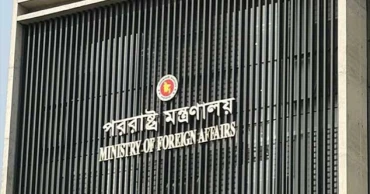
Bangladesh has received the “lowest” tariff rate under a new US decision imposing levies on imports from 60 trading partners over the use of forced labour, the Ministry of Foreign Affairs said on Friday.
While Bangladesh faces the 10% tariff, several major global apparel manufacturing competitors, specifically China, Vietnam and Thailand, will face the maximum 12.5% tariff rate.
The government of Bangladesh said it remains fully committed to upholding international labour standards and will continue to engage closely with international partners to ensure the robust growth, compliance, and sustainability of Bangladesh's critical export sectors.
The US government on Thursday announced the imposition of tariffs under Section 301 of the Trade Act of 1974 on 60 economies representing 86 countries globally.
This measure comes after investigations conducted by the Office of the United States Trade Representative (USTR) regarding the use of forced labour.
Effective Friday, the tariff ranges from a low of 10% to a high of 12.5%.
This replaces the temporary 10% global tariff previously implemented under Section 122.
For Bangladesh, the tariff will be 10% on all imports originating from the country.
It will be applied in addition to existing Most-Favoured-Nation (MFN) tariff rates. Bangladesh is among the 17 out of 86 countries globally that have been placed under the lower 10% tariff tier.
Therefore, it retains Bangladesh's competitive standing in the US apparel and export market, said the ministry.
This distinct differential reinforces Bangladesh's ongoing comparative advantage in the US market relative to its high-tariff competitors, it said.
Additionally, the USTR is considering establishing a three-year Tariff-Rate Quota (TRQ) for four countries, including Bangladesh, Cambodia, Indonesia and Malaysia, to waive Section 301 tariffs on goods made from US cotton and textile inputs.
This, when implemented, will also provide Bangladesh further competitive advantage and promote Bangladesh’s exports to the US market.
6 hours ago
'Child, Not Bride' project concludes successfully
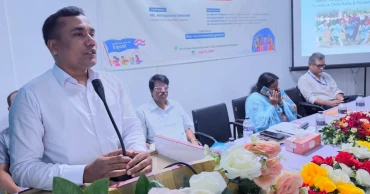
Government representatives, development partners, youth leaders, community members and implementing partners came together on Thursday to celebrate the successful completion of the Child, Not Bride (CNB) Project, marking four years of collective efforts to prevent child, early and forced marriage (CEFM) and advance girls' rights in Kurigram.
Organised by Plan International Bangladesh, the closing event showcased the project’s achievements, recognised the contributions of youths and local stakeholders, and created a platform to reflect on lessons learned and the way forward.
Funded by the Norwegian State Broadcast Corporation (NRK Telethon) and implemented by Plan International Bangladesh in partnership with RDRS Bangladesh and MJSKS, the four-year initiative has worked across 76 unions and municipalities in nine upazilas of Kurigram, empowering girls and young people through youth leadership, economic empowerment and improved access to reproductive health and rights.
Speaking at the event as the Chief Guest Md. Nazir Hossain, Additional Deputy Commissioner of Kurigram, said: “The achievements celebrated today demonstrate what is possible when government institutions, communities, development partners and youths work together towards a common goal. As we celebrate the successes of the Child, Not Bride Project, we must also renew our commitment to ensuring every girl can grow up free from child marriage, complete her education and realise her full potential.”
The event was chaired by Mathilda Mendes, Project Manager, Plan International Bangladesh.
Throughout the event, participants reflected on how the project has strengthened community action to prevent child marriage while creating opportunities for adolescents and youths to realise their rights and reach their full potential.
Over the course of the project, 76 youth organisations were strengthened, with 73 organisations successfully registered under the Department of Youth Development, creating sustainable platforms for youths to lead advocacy and community action against child marriage.
Through youth-led initiatives supported by Flex Funds, youths implemented community awareness campaigns and actively contributed to Child Marriage Prevention Committees across Kurigram.
The project also supported 3,675 young people through 152 Youth Economic Empowerment groups, helping them build sustainable livelihoods and strengthen their financial independence.
In collaboration with the Bangladesh Technical Education Board (BTEB), the project introduced competency standards and market-oriented digital skills training in emerging ICT occupations, preparing youths for the future of work.
In addition, the project established 58 Adolescent Safe Spaces, enabling thousands of adolescents to access information on reproductive health and rights, gender equality, leadership and life skills.
Through peer education and the Girls Out Loud digital platform, girls and young people gained the knowledge and confidence to make informed decisions about their health, education and future.
The event concluded with a renewed commitment from government representatives, implementing partners, youth organisations and community leaders to build on the project’s achievements and continue working together to advance girls' rights, gender equality and meaningful youth participation across Kurigram.
21 hours ago

US new visa restriction policy to deter, dismantle cyberscams, sextortion
US President Donald Trump on Thursday announced a global visa restriction policy that targets individuals responsible for, or complicit in, cybercrime and cyber-enabled crime, such as those involved in cyberscams, and sextortion.
Immediate family members of individuals engaged in such illicit activities may also be subjected to visa restrictions.
"Today, I am announcing a new global visa restriction policy under Section 212(a)(3)(C) of the Immigration and Nationality Act," said the US President.
The Trump Administration is deploying every tool at our disposal - sanctions, prosecutions, asset seizures, extradition requests, and international law enforcement cooperation - to dismantle criminal scam networks and impose costs on those who enable them.
"By restricting visa issuance to those who are responsible for or complicit in these criminal enterprises, we are sending a clear message: The United States will go after those who prey on our citizens," said President Trump.
As President Trump made clear in E.O. 14390 on Combatting Cybercrime, Fraud, and Predatory Schemes Against American Citizens, his administration is taking action to counter an unprecedented threat from online investment scams.
Often orchestrated by Chinese transnational criminal organizations, scammers have defrauded U.S. citizens of at least $10 billion in 2024 alone while fueling corruption, money laundering, and human trafficking, according to a press statement.
American children also have been specifically targeted by offenders operating overseas for sextortion scams, devastating families and futures.
22 hours ago
Shama Obaed reaffirms support for stronger Bangladesh-Saudi economic ties
State Minister for Foreign Affairs Shama Obaed Islam on Thursday commended the efforts made by the Saudi Arabia-Bangladesh Chamber of Commerce and Industry (SABCCI) and reaffirmed her ministry's continued support in strengthening Bangladesh-Saudi economic relations.
She highlighted opportunities for expanding cooperation on trade, investment and skilled workforce, emphasising technical and vocational skills development.
Shama Obaed also underscored the importance of women's economic empowerment and promoting Bangladesh's creative industries, handicrafts, and diversified jute products in the Saudi market.
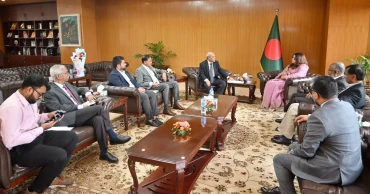
The issues were discussed when a delegation of the SABCCI, led by its President Ashraful Haq Chowdhury, paid a courtesy call on her at the Ministry of Foreign Affairs.
During the meeting, the delegation briefed the state minister on SABCCI's initiatives to enhance bilateral trade, investment, and business cooperation, including plans for trade promotion activities, international exhibitions, and a Bangladesh-Saudi Investment Forum in the Kingdom of Saudi Arabia.
They also sought the ministry's support in facilitating coordination with the relevant Saudi authorities.
The delegation reaffirmed its commitment to advancing bilateral economic cooperation.
22 hours ago
FMs of BIMSTEC Member States meet on ARF sidelines
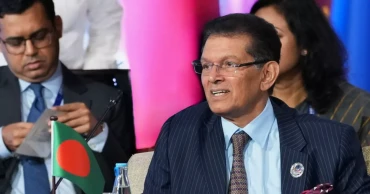
Bangladesh Foreign Minister Dr. Khalilur Rahman, External Affairs Minister of India Dr. S. Jaishankar, and Minister of Foreign Affairs of Sri Lanka Vijitha Herath met on the sidelines of the 33rd ASEAN Regional Forum (ARF) in Manila, Philippines, on Thursday.
On the sidelines of the Forum, Jaishankar also met with Sihasak Phuangketkeow, Deputy Prime Minister and Minister of Foreign Affairs of Thailand, and discussed avenues for further strengthening bilateral cooperation as well as regional developments of mutual interest.
The interaction reflects the continued engagement among the BIMSTEC Member States at the ministerial level to strengthen regional cooperation and partnerships among the BIMSTEC Member States, said the BIMSTEC headquarters in Dhaka.
22 hours ago
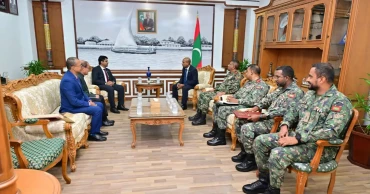
Bangladesh, Maldives eye stronger defence ties
Bangladesh and the Maldives on Thursday reaffirmed their commitment to strengthening defence diplomacy, military cooperation, institutional collaboration, and strategic partnership.
The understanding came when Bangladesh High Commissioner to the Maldives Dr Md Nazmul Islam paid a courtesy call on Maldives' Minister of Defence and National Service Hassan Rasheed, according to the Bangladesh mission.
Both sides discussed expanding cooperation in professional military education and training, defence institutional exchanges, humanitarian assistance and disaster response, maritime security, and capacity building.
They also expressed optimism about enhancing future defence collaboration to further contribute to peace, stability, and security in the Indian Ocean region.
23 hours ago
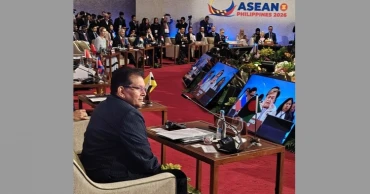
It’s a political failure demanding political solution, says FM about Rohingya crisis
Foreign Minister Dr Khalilur Rahman on Thursday called upon ASEAN Regional Forum (ARF) participants to collectively support efforts to create conducive conditions in Myanmar to facilitate repatriation of more than 1.3 million Rohingyas to their homeland in Rakhine State.
"The Rohingyas are not stateless people by circumstance - they are stateless by design. It is a political failure demanding a political solution,” he said while addressing the 33rd ASEAN Regional Forum (ARF) Ministerial meeting in Manila, Philippines.
Referring to his upcoming Presidency of the 81st Session of the United Nations General Assembly, the Foreign Minister stressed that global challenges must be resolved through dialogue and diplomacy.
Adviser to the Prime Minister Humaiun Kobir was also present at the meeting
Bangladesh is hosting the Rohingyas for nearly a decade that placed significant social, economic, environmental and security burdens on Bangladesh, a senior official told UNB.
The official said Bangladesh keeps urging the international community and key regional actors to intensify diplomatic efforts and engagement to facilitate the early repatriation of the Rohingyas to Myanmar.
Dr Khalilur called on all states to exercise maximum restraint in addressing maritime disputes.
Addressing climate change challenges, the Foreign Minister noted that Bangladesh remains committed to promoting enhanced regional cooperation in disaster preparedness and early warning systems.
Highlighting the opportunities and risks associated with artificial intelligence and emerging technologies, he proposed exploring a regional technology governance framework that reflects the region's unique geopolitical and developmental realities.
The Foreign Minister held bilateral meetings with the Foreign Ministers of Singapore, Sri Lanka and Australia and the Vice President of European Commission.
In the meetings, wide range of bilateral and multilateral issues including trade and investment, tourism, humanitarian assistance, reciprocal support in multilateral fora were discussed.
The ministers congratulated Foreign Minister Dr Khalilur on his election as President of 81st UN General Assembly and assured him of their cooperation during his tenure.
Indian External Affairs Minister Dr S Jaishankar on Thursday met Foreign Minister Dr Khalilur and exchanged pleasantries on the margin of ASEAN Regional Forum Foreign Ministers Meeting.
"Foreign Minister of Bangladesh Dr. Khalilur Rahman and Minister of External Affairs of India Dr. S. Jaishankar greeted each other in Manila on the margin of ASEAN Regional Forum Foreign Ministers Meeting," said an official at the Ministry of Foreign Affairs.
During his meeting with Dr Khalilur, Singapore’s Foreign Minister Vivian Balakrishnan said Singapore and Bangladesh share a longstanding friendship anchored in mutual respect, shared interests, and strong people-to-people ties.
“We discussed how we can deepen bilateral cooperation and work together in ASEAN to create new opportunities for growth and development in Bangladesh and across the wider Indian Ocean region,” he said after the meeting.
Dr Khalilur met with Sri Lanka's Minister of Foreign Affairs, Foreign Employment and Tourism, Vijitha Herath.
The two Ministers discussed strengthening Bangladesh-Sri Lanka bilateral relations, expanding trade and investment, enhancing regional cooperation, and reaffirming their shared commitment to multilateralism, as well as peace, stability, and prosperity in the region.
Dr Khalilur on Wednesday held a series of high-level bilateral engagements with his counterparts from the US, Russia, China and Pakistan on the sidelines of the ASEAN Regional Forum (ARF) Foreign Ministers’ meeting in Manila, highlighting Bangladesh’s continued efforts to strengthen diplomatic relations with key international partners.
During the meetings, the Foreign Minister exchanged views on issues of mutual interest, including economic cooperation, trade and investment opportunities, and matters of shared concern on the global stage, a diplomatic source told UNB.
Dr Khalilur is leading the Bangladesh delegation to the 33rd ASEAN Regional Forum Foreign Ministers’ meeting and the 50th Anniversary of the Treaty of Amity and Cooperation of Southeast Asia.
1 day ago

Dhaka eyes deeper ties with Washington with Sergio Gor's planned visit
Bangladesh on Thursday expressed optimism that the upcoming visit of US Special Envoy for South and Central Asia Sergio Gor to Bangladesh will help strengthen relations between Bangladesh and the United States, with new areas of cooperation.
"The relationship between Bangladesh and the US has always been good, and that relationship is getting stronger under the current government led by Prime Minister Tarique Rahman," said State Minister for Foreign Affairs Shama Obaed Islam on Thursday, hoping that the visit will bring a new dimension to relations between the two countries.
Sergio Gor is likely to arrive in Dhaka on July 30 on a three-day visit, a diplomatic source told UNB, noting that he will try to understand Bangladesh's foreign policy priorities.
He will meet Prime Minister Tarique Rahman and Foreign Minister Khalilur Rahman and exchange views with political party leaders, professionals, and representatives of civil society.
"We believe that any high-level US visit will further deepen the relations between Bangladesh and the US. We hope that our multidimensional relations will move forward through this visit," she told reporters at the Ministry of Foreign Affairs.
The State Minister hoped that issues of increasing cooperation in various areas, including trade, economic diplomacy, and people-to-people contacts, will come up for discussion.
Sergio Gor currently serves as US Ambassador to India. Additionally, President Donald J. Trump appointed Ambassador Gor as the Special Envoy to South and Central Asia.
Earlier, Ambassador Gor was Assistant to the President and Director of Presidential Personnel at the White House. Under his leadership as Director, thousands of political appointees across the entire federal government were hired in record time.
Meanwhile, US Secretary of State Marco Rubio received Bangladesh Foreign Minister Dr Khalilur Rahman on Wednesday on the margins of the ASEAN Regional Forum Foreign Ministers' Meeting in Manila.
Foreign Affairs Adviser to the Prime Minister Humaiun Kobir and Sergio Gor were present during the meeting. Both sides discussed further enhancing Bangladesh-US bilateral relations.
Secretary Rubio congratulated Foreign Minister Dr Khalilur on his victory in the election for the presidency of the 81st session of the UN General Assembly.
The Bangladesh Foreign Minister extended an invitation to the US Secretary of State to visit Bangladesh.
1 day ago