Political will
Hasina's Extradition: Delhi says Dhaka's request being examined
India on Friday reiterated that Bangladesh’s extradition request for former Prime Minister Sheikh Hasina is being taken into consideration, given the legalities and judicial processes involved.
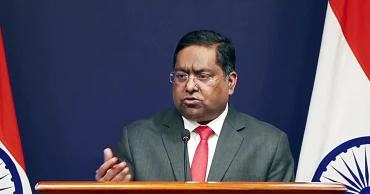
"We have received a request for extradition. This request, as we have said earlier as well, is under examination, and the request is being taken into consideration, given the legalities that are involved and the judicial processes....," Spokesperson at the Indian Ministry of External Affairs Randhir Jaiswal told reporters in New Delhi during a regular media briefing.
Regarding the return of Hasina, State Minister for Foreign Affairs Shama Obaid Islam on Thursday said the Indian government needs to demonstrate political and diplomatic will and all kinds of goodwill.
Shama Obaed said former Prime Minister Sheikh Hasina, currently staying in India, would be arrested whenever she comes to Bangladesh.
"Since she has been convicted, there is no scope for surrender. Whenever she comes to Bangladesh, she will be arrested. It will be done in accordance with the law," she told reporters at the Ministry of Foreign Affairs, noting that efforts are continuing to secure her extradition to Bangladesh.
The State Minister said the people of Bangladesh want court orders to be implemented against those living abroad. She said the Law Adviser and the Home Adviser had already explained the legal aspects.
Bangladesh has formally requested India to extradite Hasina under the bilateral extradition treaty.
Bangladesh is making sustained diplomatic efforts to bring Hasina back to face trial while acknowledging that the extradition process takes time.
Three ministries, including the Ministry of Foreign Affairs, have been pursuing the matter since the new government assumed office in February, building on efforts initiated under the interim government.
The government believes the people of Bangladesh want Hasina to be extradited.
On April 8, Bangladesh renewed its request for the extradition of Hasina and former Home Minister Asaduzzaman Khan Kamal, both of whom have been sentenced to death by the International Crimes Tribunal.
"We will continue to seek her extradition through a transparent judicial process. It has been discussed and will be dealt with through a transparent judicial process," Prime Minister's Foreign Affairs Adviser Humaiun Kobir told reporters in Dhaka.
2 months ago
Political will needed to enforce anti-discrimination law: Citizens’ Platform
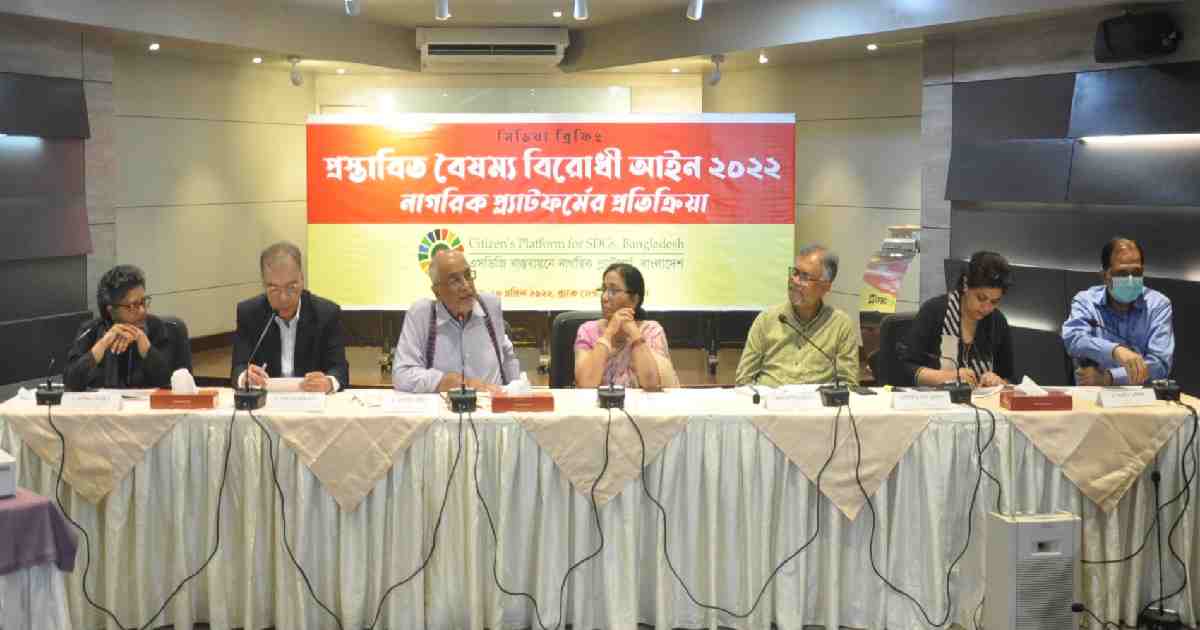
Citizens’ Platform for SDGs, Bangladesh on Sunday said a political will and citizen-based monitoring are required for proper enforcement of the proposed anti-discrimination law.
The platform arranged a media briefing to present the statements of the civil society persons, who were involved in raising public opinion for the formulation of the proposed law, said a release.
The Anti-Discrimination Bill 2022 was placed in Parliament on April 2 last to protect, uphold and ensure equal rights and dignity of all human beings.
Also read: Bill seeking end to discrimination tabled in Parliament
“Undoubtedly, this bill has been placed based on the basic articles of the Constitution. However, visible political will, efficient administration and monitoring by citizens are required for proper enforcement of this law,” said Dr Debapriya Bhattacharya, the Convenor of the Citizen's Platform for SDGs, Bangladesh.
He, in his introductory speech, also said the platform and its affiliates have been assisting the government in raising and drafting this law for a long time.
Dr Iftekharuzzaman, core group member of the platform and also TIB executive director, said the people with mental disabilities and acid burns, and caste discrimination should be incorporated in the structural definition of inequality.
Though the legal owners of land were mentioned in the bill, there is nothing in the law about the traditional owners of lands which means indigenous people, he said.
It is important to assess whether the law can be implemented through formation of an anti-discrimination commission, said Dr Iftekharuzzaman, also the TIB executive director.
Shaheen Anam, another core group member of the platform, congratulated the government for the placement of such a pro-people and women-friendly law.
Focusing on the long struggle for the enactment of law, she said, “Now our main goal is to see if this law reflects the public expectations.”
Shaheen Anam, also the Executive Director of Manusher Jonno Foundation, said a proper monitoring committee is needed for its enforcement.
Barrister Sara Hossain, Executive Director, Bangladesh Legal Aid and Services Trust (BLAST), praised the bill for focusing on all sorts of discriminations generally.
Also read:US envoy discusses DSA with law minister
She said different communities such as transgender, differently abled persons and minorities have reported discrimination against them at different times. “This attempt to centralise all forms of discrimination in a single law generally here is undoubtedly commendable,” she added.
Dr Faustina Pereira, senior fellow of the center for peace and justice, and professor at BRAC University, said the scope for getting remedies should be wider. It is not clear that what would be remedy if a person faces more than one type of discrimination at a time, she said.
She thought that the State should take initiative on its own for the victims before a victim files a complaint.
Dr Shahdeen Malik, a Supreme Court lawyer, said though a monitoring committee is formed under such a law, in many cases such bodies do noy hold meetings, and the law is not properly enforced, he said.
4 years ago