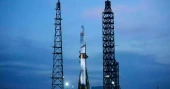
Rocket launch
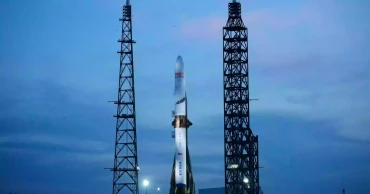
Blue Origin rocket explodes during test at launch pad
A Blue Origin rocket owned by Jeff Bezos exploded during a test at the launch pad on Thursday night, shaking nearby homes and lighting up the sky with a bright orange glow.
The company said its New Glenn rocket blew up while engines were being tested ahead of a planned satellite launch next week. Officials at Cape Canaveral Space Force Station confirmed that no one was injured.
Bezos said it is still too early to determine the exact cause of the explosion but assured that the company will investigate and recover from the setback.
The New Glenn rocket had already been grounded in April after an engine problem caused it to place a satellite into the wrong orbit. This was only its third flight. Blue Origin plans to use the rocket for future missions to the moon, including sending landers for NASA’s lunar program.
Despite the incident, the company had been preparing to test a prototype lunar lander later this year. Earlier this week, NASA awarded Blue Origin a contract worth hundreds of millions of dollars to launch two lunar rovers as part of its Artemis program.
NASA Administrator Jared Isaacman said space missions are extremely challenging and promised updates on how the explosion might affect future lunar plans.
Residents in nearby areas like Cape Canaveral and Cocoa Beach reported feeling the blast around 9 p.m., with many sharing photos of a fireball rising from the launch site.
Emergency teams stayed at the scene for over an hour, but officials said there was no danger from fumes or other hazards.
Authorities also said the incident will not affect other upcoming launches. A United Launch Alliance Atlas V rocket is still scheduled to launch Friday night with a batch of Amazon internet satellites.
SpaceX CEO Elon Musk expressed support, saying he hopes Blue Origin recovers quickly from the setback.
Standing 321 feet tall, New Glenn first launched in 2025. It is named after astronaut John Glenn, the first American to orbit Earth, and is much larger than the company’s New Shepard rockets used for space tourism.
4 months ago

Fuel leak thwarts NASA's dress rehearsal for moon rocket
NASA's latest attempt to fuel its huge moon rocket for a countdown test was thwarted Thursday by a hazardous hydrogen leak, the latest in a series of vexing equipment trouble.
The launch team had just begun loading fuel into the core stage of the rocket when the leak cropped up. This was NASA's third shot at a dress rehearsal, a required step ahead of a test flight to the moon.
This time, the launch team managed to load some super-cold liquid hydrogen and oxygen into the core stage of the 30-story Space Launch System rocket, but fell far short of the full amount. Liquid hydrogen is extremely hazardous, with officials noting that the systems had been checked for leaks prior to the test.
Also read: China launches new satellite for Earth observation
Technicians deliberately left the smaller upper stage empty, after discovering a bad valve last week. The helium valve inside the upper stage cannot be replaced until the rocket is back in its hangar at Kennedy Space Center.
Two previous countdown attempts were marred by balky fans and a large hand-operated valve that workers mistakenly left closed at the pad last week.
Officials said via Twitter that they're assessing their next steps.
Also read: Researchers print 3D cardiac tissue capable of sustaining pulses for over 6 months
NASA had been targeting June for the launch debut of the 322-foot (98-meter) SLS rocket. The empty Orion capsule on top will be sent on a four- to six-week mission around the moon and back.
Astronauts will strap in for the second test flight around the moon, planned for 2024. That would be followed as early as 2025 with the first lunar landing by astronauts since 1972. NASA plans to announce the crews for these two missions this summer.
4 years ago