fish deaths
Power outage not cause of mass fish deaths in Jashore: Probe
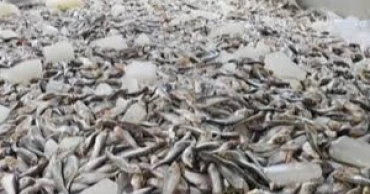
A preliminary investigation into the mass death of fish at an AF fish farm in Sharsha upazila of Jashore has found that frequent power outages were not the main cause of the incident, contrary to claims circulated in various media reports and social media.
The investigation committee formed by the Jashore district administration identified excessive fish stocking, inadequate aeration, high use of protein-rich feed and the resulting biological and nitrogenous waste load, along with abnormalities in water quality, as among the key factors behind the deaths.
The committee visited the affected fish farm near Sonamukhi Beel in Bahadurpur Union on Aug 25 to determine the actual cause of the incident, according to a press release of Jashore DC office sent from Energy Ministry on Wednesday.
During the field visit, the committee collected statements from relevant people, examined records of electricity supply and assessed the quality of water in the affected ponds through the Department of Fisheries.
According to the preliminary findings, electricity supply to the relevant feeder was interrupted for around 44 minutes, from 1:42am to 2:26am on Aug 22.
However, electricity supply to the feeder was generally normal both before and after the interruption, the investigation found.
More importantly, fish had already started dying at the farm before the reported power outage occurred, the committee said.
The investigation also found no factual evidence to support claims that frequent power cuts had caused the fish deaths.
Instead, an assessment of the affected ponds and their water quality revealed several management and technical deficiencies.
These included an excessively high stocking density of fish, the application of large quantities of high-protein feed, increased pressure from organic and nitrogenous waste, and an abnormal proliferation of phytoplankton.
The committee also found irregularities in the levels of pH, ammonia and dissolved oxygen in the water, as well as inadequate aeration compared with the requirements of the fish stock.
The absence of an alternative power supply system for maintaining aeration during emergencies was also identified as a significant management weakness.
The investigation committee said the combined impact of these factors appeared to be the primary cause of the mass fish deaths based on the information and data available so far.
The district administration also pointed to inconsistencies between statements made by the farm owners and the findings of the investigation.
The farm owners have told different media outlets that they had invested heavily in the farm, maintained a large quantity of fish and suffered substantial financial losses because of the incident.
At the same time, they reportedly said that they had been unable to install a generator because of financial constraints.
The district administration said there appeared to be an inconsistency in these claims, as the investment required to establish an alternative power source capable of keeping the aeration system running during emergencies would have been relatively small compared with the investment and value of assets claimed by the farm owners.
The administration also found that the farm owners’ allegations of frequent power interruptions did not correspond with electricity supply records and information obtained during the investigation.
Officials said the findings available at this stage indicate that the incident cannot primarily be attributed to defects in the electricity distribution system or frequent load-shedding.
The district administration said the investigation findings were preliminary and based on the information and data collected so far.
It urged all concerned, including media outlets and social media users, to verify information properly before publishing or circulating claims about the incident.
The administration made the appeal in the interest of ensuring that the public receives accurate and objective information, warning against the dissemination of misleading, exaggerated or unverified information without proper fact-checking.
1 month ago

Tribe: California wildfire near Oregon causes fish deaths
A wildfire burning in a remote area just south of the Oregon border appears to have caused the deaths of tens of thousands of Klamath River fish, the Karuk Tribe said Saturday.
The tribe said in a statement that the dead fish of all species were found Friday near Happy Camp, California, along the main stem of the Klamath River.
Tribal fisheries biologists believe a flash flood caused by heavy rains over the burn area caused a massive debris flow that entered the river at or near Humbug Creek and McKinney Creek, said Craig Tucker, a spokesman for the tribe.
The debris entering the river led to oxygen levels in the Klamath River dropping to zero on Wednesday and Thursday nights, according to readings from tribal monitors at a nearby water quality station.
A photo from the Karuk taken about 20 miles (32 kilometers) downstream from the flash flood in the tributary of Seiad Creek showed several dozen dead fish belly up amid sticks and other debris in thick, brown water along the river bank.
The full extent of the damage is still unclear but the tribe said late Saturday it appears the fish found dead 20 miles downstream were swept there after their deaths and that the fish kill isn’t impacting the entire river.
“We think the impact is limited to 10 or 20 miles of river in this reach and the fish we are seeing in Happy Camp and below are floating downstream from the ‘kill zone,'” the tribe said in an updated statement, adding it continues to monitor the situation.
Read: Wildfires in West explode in size amid hot, windy conditions
The McKinney Fire, which has burned more than 90 square miles (233 square kilometers) in the Klamath National Forest, this week wiped out the scenic hamlet of Klamath River, where about 200 people lived. The flames killed four people in the tiny community and reduced most of the homes and businesses to ash.
Scientists have said climate change has made the West warmer and drier over the last three decades and will continue to make weather more extreme and wildfires more frequent and destructive. Across the American West, a 22-year megadrought deepened so much in 2021 that the region is now in the driest spell in at least 1,200 years.
When it began, the McKinney Fire burned just several hundred acres and firefighters thought they would quickly bring it under control. But thunderstorms came in with ferocious gusts that within hours had pushed it into an unstoppable conflagration.
The blaze was 30% contained on Saturday.
The fish kill was a blow for the Karuk and Yurok tribes, which have been fighting for years to protect fragile populations of salmon in the Klamath River. The salmon are revered by the Karuk Tribe and the Yurok Tribe, California’s second-largest Native American tribe.
The federally endangered fish species has suffered from low flows in the Klamath River in recent years and a parasite that's deadly to salmon flourished in the warmer, slower-moving water last summer, killing fish in huge numbers.
After years of negotiations, four dams on the lower river that impede the migration of salmon are on track to be removed next year in what would be the largest dam demolition project in U.S. history in an attempt to help the fish recover.
4 years ago