Silent Zone
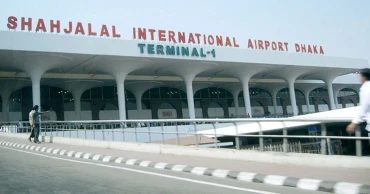
Shahjalal Airport area declared silent zone; authorities vow strict enforcement against noise pollution
The Shahjalal International Airport area has been declared a silent zone, with authorities warning that strict action will be taken against violations of noise pollution regulations.
Dhaka North City Corporation (DNCC) Administrator Mohammad Shafiqul Islam Khan made the announcement while speaking as chief guest at a noise awareness rally jointly organised by DNCC, Dhaka Metropolitan Police (DMP), Bangladesh Road Transport Authority (BRTA) and the Department of Environment on Thursday.
He said the area will remain a designated silent zone from now on and no noise pollution will be tolerated. “If anyone violates the rules, law enforcement agencies will strictly implement the government’s guidelines on noise pollution control,” he said.
The administrator also said that Gulshan, Banani, Niketan and Baridhara have already been declared silent zones, and with cooperation from local societies, DNCC is working to build a cleaner environment free from noise and air pollution.
“We are not saying this will be achieved overnight, but with the cooperation of citizens and environmental stakeholders, we can make progress and prove it through action,” he added.
Responding to questions from journalists, he said the traffic division of DMP, under supervision of the metropolitan traffic department, is successfully using AI technology to manage traffic signals, and the system will continue in the future.
Department of Environment Director General Dr. Mohammad Lutfur Rahman said the agency is working continuously to control noise pollution. He added that awareness campaigns are being carried out, including installation of signboards with messages on major roads, newspaper advertisements, television broadcasts and social media campaigns.
Additional Police Commissioner (Traffic) of DMP Mohammad Anisur Rahman said that since the implementation of the Noise Pollution Control Rules 2025, the traffic police have been actively working to curb noise pollution and citizens will gradually see the benefits.
He urged city residents to cooperate in controlling noise pollution.
Representatives from Gulshan, Niketan, Banani and Baridhara societies, senior officials from DNCC and the Department of Environment, officials from Green Savers, journalists, members of DMP and BRTA, and other dignitaries were present at the event.
4 months ago

Horns still honking in “silent zone” around Dhaka Airport
Despite the declaration of the area surrounding Hazrat Shahjalal International Airport in Dhaka as a “Silent Zone,” little has changed in reality.
The Ministry of Environment, Forest, and Climate Change, led by adviser Syeda Rizwana Hasan, announced the designation of the airport area and a 1.5-kilometer stretch from the airport (from Scholastica School to Hotel La Meridian) as a “Silent Zone” on October 1 as per the Noise Pollution Control Rules 2006, with violations potentially resulting in fines or imprisonment.
The Civil Aviation Authority of Bangladesh (CAAB), Dhaka North City Corporation (DNCC), the Department of Environment, the Road Department, and the Bangladesh Road Transport Owners Association are responsible for enforcing the regulations that took effect on October 1.
However, field observations reveal a different reality.
Field Observations
Upon inspection, signage indicating the start of the “Silent Zone” was spotted at various locations, including in front of La Meridian Point in the south and on a steel pole along the footpath at Scholastica Point in Uttara. Yet, not a single vehicle was seen driving without honking.
During visits on Thursday night and Friday daytime, no drivers appeared to adhere to the regulations. Many continued to honk unnecessarily, especially buses and motorcycles, producing excessive noise levels. Observers noted a lack of enforcement or monitoring in the area.
3 major political party leaders in Barishal rally against hydraulic horns, calls for action on noise pollution, safety hazards
Local Concerns
Residents, passengers, and business owners expressed frustration that the noise pollution situation has remained unchanged since the “Silent Zone” was implemented. “Drivers are honking for any reason and none,” a passenger noted. “Without law enforcement, this initiative cannot succeed.”
Passengers waiting on the main road near the airport confirmed the pervasive sound of horns. “Everyone, including buses and motorcycles, is honking unnecessarily,” one passenger said. “I haven’t seen any fines being enforced by traffic police.”
When questioned about the effectiveness of the silent zone, a security guard near the La Meridian Hotel admitted that honking has not decreased, and drivers continue to use their horns excessively.
Drivers’ Perspectives
Drivers defended their actions, claiming that honking is necessary for safety due to the chaotic traffic conditions in Dhaka. “People cross the road wherever they want, and without honking, accidents are more likely to happen,” Md Yusuf, a private car driver said.
They expressed skepticism about whether driving without honking was feasible. “Do they think we can drive without horns in this city?” another driver, Sujon.
When asked about the penalties for violating the horn ban, drivers were unsure of the specific fines.
Previous Initiatives and Research Findings
Previously, the Department of Environment announced 12 silent zones across Bangladesh, with five located in Dhaka, including the Secretariat, Agargaon, and the Parliament area. However, a recent study by the Center for Atmospheric Pollution Studies (CAPS) revealed that no silent zones in the country were effectively enforced.
The average noise level recorded in these areas was alarmingly high, with the Secretariat area averaging 79.5 decibels.
Professor Ahmed Kamruzzaman, head of the Environmental Science Department at Stamford University and CAPS chairman, emphasized the need for greater awareness among drivers, vehicle owners, and the public.
Relentless assault on hearing: Dhaka’s noise pollution out of control, say experts
“If we can eliminate horns, we can reduce 60% of the noise pollution in Dhaka,” he said.
He acknowledged the current legal framework for noise pollution is weak.
Legal Framework
According to the Noise Pollution Control Rules 2006, residential areas should not exceed 45 decibels from 9 pm to 6 am and 55 decibels during the day.
In commercial areas, these limits are set at 60 and 70 decibels, respectively. Areas surrounding schools, hospitals, and places of worship are designated as silent zones up to 100 meters, with specific noise level restrictions.
Violations may result in up to one month of imprisonment or fines of up to Tk5,000 for first offenses, and for subsequent offenses, six months of imprisonment or fines of up to Tk10,000.
Air Vice Marshal Md. Monjur Kabir Bhuiyan, chairman of Civil Aviation Authority of Bangladesh (CAAB), said the successful implementation of this initiative relies on public awareness and cooperation from drivers and vehicle owners.
CAAB and the authorities at Hazrat Shahjalal International Airport are actively working to combat noise pollution and ensure the success of the “Silent Zone” initiative, he said.
2 years ago