Information and Broadcasting Adviser
Load shedding to ease significantly within short period: Adviser Zahed
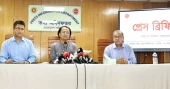
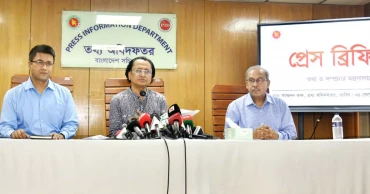
Prime Minister’s Information and Broadcasting Adviser Dr Zahed Ur Rahman on Tuesday expressed hope that the ongoing load shedding across the country will reduce significantly within a very short period.
“The burden of load shedding caused by the ongoing power crisis is now being shared relatively evenly between urban and rural areas,” he said at a press briefing on the progress of various government activities at Secretariat.
Zahed said Dhaka residents have recently been experiencing load shedding at a level that was comparatively uncommon in the capital in the past.
“Earlier, electricity supply was ensured in Dhaka while more load shedding was imposed in rural areas. But the current government has decided that the burden of the crisis should be shared by everyone,” he said.
“Electricity should be supplied more to a large city not because powerful people live there but because economic activities are concentrated there. So, there is a policy tendency in that direction. But since the government has decided that everyone will share the load shedding, we are now seeing load shedding in Dhaka as well,” he added.
The adviser said the government will also publish data showing the actual extent of load shedding during the Awami League government and the interim government, despite their claims of providing uninterrupted power supply during those periods.
“Please look into it. Hopefully, I will provide you with that data next week. I am working on it — how much load shedding there actually was at that time and how many megawatts of load shedding occurred,” he said.
He claimed that a large portion of the load shedding during those periods were imposed on rural and remote areas. “We have moved away from that approach. We hope people will understand this,” Zahed said.
Explaining the reasons behind the current power shortage, he cited fuel shortages, sudden mechanical faults at power plants, maintenance work, limitations in the transmission grid and rapidly rising electricity demand.
He said economic activities tend to increase after a democratic government assumes office, resulting in additional demand for electricity.
“During the interim government’s tenure, this demand was comparatively lower,” he said.
Zahed said load shedding is being adjusted in areas under Dhaka Power Distribution Company (DPDC) and Dhaka Electric Supply Company (DESCO) to keep load shedding in rural areas at a tolerable level and prevent prolonged outages in any particular area.
He said the electricity saved through such adjustments is being redistributed to rural areas and other parts of the country.
As a result, he said, the power supply situation for important consumer groups including industries outside Dhaka is improving.
At the same time, the pressure of prolonged and frequent load shedding in rural areas is declining, making it possible to distribute the burden of load shedding more evenly across the country, he said.
1 month ago
Nahid announces government support for documentary on july uprising
Information and Broadcasting Adviser Nahid Islam has stated that the government will assist in the production of a documentary on the July Uprising.
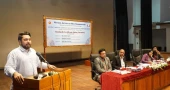
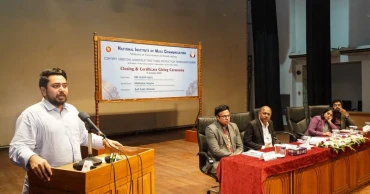
Speaking at the closing ceremony of a training course on Content Creation, Screenplay, and Visual Production Techniques at the National Media Institute of Bangladesh in Dhaka on Monday, Adviser Nahid Islam made this announcement.
Emphasizing the importance of preserving video footage of the July Uprising, the Adviser said, "It is our collective responsibility to preserve the history of this uprising. We must channel the spirit of the July Uprising into our creative work."
Drawing a comparison between the July Uprising and a revolution, the Adviser noted that while the uprising bears stories of the fascist ruler's brutality, it also highlights the courage of students and the public.
July Uprising Directorate by next month: Adviser Nahid Islam
He emphasized the need to bring the stories of the students' bravery to the forefront.
The Adviser also thanked the trainees and course administration for their efforts in creating video content on the July Uprising and urged the trainees to apply the knowledge gained from the training in their work.
The event was chaired by the Director General of the National Media Institute, Suhfi Zakir Hossain. Other notable speakers included the Secretary of the Ministry of Information and Broadcasting, Mahbuba Farzana; Course Director Dr. Md. Maruf Nawaz; and the Convener of the Information and Broadcasting Ministry's Search Committee, Md. Al Amin Rakib Tonoy.
At the conclusion of the event, Adviser Nahid Islam distributed certificates to the trainees.
1 year ago
Govt expects constructive criticism from media: Adviser Nahid
Information and Broadcasting Adviser Nahid Islam has called on the media and journalists to offer constructive criticism to help the government improve its performance.
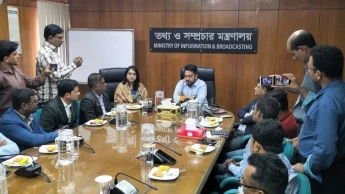
Such feedback would be valuable for refining government policies, he said during an exchange of views with leaders of the Dhaka Reporters' Unity at the Secretariat on Tuesday.
“We welcome constructive criticism. The government remains open to both positive and critical feedback from the media,” Nahid said.
US says labor rights in Bangladesh critical to ensuring national economic prosperity at this “unique moment”
“Constructive criticism will help us reflect on our actions and make necessary adjustments,” he added.
The government has established an independent Media Reform Commission to address the sector's issues. The commission will engage with all stakeholders to draft a roadmap for reforms, which the government will attempt to implement through consultations with various parties. “We want to foster an environment where free and responsible journalism can flourish,” he said.
The adviser further discussed the media's role, pointing out that journalism is a platform for diverse and often conflicting voices. He stressed the importance of collaboration between editors, media owners, and reporters to address issues like wage boards and other reforms.
“All parties must come together and work towards a shared goal,” he urged.
He also spoke on the government's position regarding the cybersecurity law and other legislative reforms. “We have already made decisions on the cybersecurity law, and we are reviewing other laws. Our aim is to minimise barriers and ensure that the legal framework supports free journalism,” he said.
Bangladesh committed to sweeping labour reforms: Prof Yunus
Reflecting on the media’s role over the past 16 years, the adviser urged journalists to acknowledge mistakes when they occur and seek reconciliation. “Truth is essential for reconciliation. If anyone changes their position, they should admit the truth rather than shift their stance,” he added.
Finally, he described the current government as "different," acknowledging its limitations and the inevitability of mistakes.
"We are ready to accept any criticism that helps us improve. We sincerely ask the media to provide constructive feedback, which will help us grow and better serve the people," he said.
1 year ago