national interest
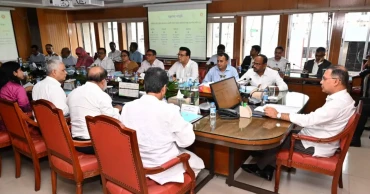
Spend every penny of public money in national interest, PM orders officials
Prime Minister Tarique Rahman on Sunday directed government officials to ensure that every penny allocated for development projects is spent properly in the interests of the country and its people.
“Many projects have been undertaken and many targets set. The government will allocate budgets to achieve those targets. But this is public money. I hope you will all pay attention to ensuring that every penny is spent properly in the national interest and for the welfare of people,” he said.
The Prime Minister made the remarks at a meeting to review the activities of the Ministry of Fisheries and Livestock and the progress of its various development projects at the ministry’s conference room at Secretariat.
Officials briefed him on the ministry’s ongoing activities, development projects, future plans and targets.
Urging officials to view public service as an opportunity to work for people, Tarique said those holding government positions were privileged compared with the country’s overall population.
“We are all privileged compared with the overall population of Bangladesh. Almighty Allah has given us an opportunity to work for our country and its people,” he said.
Tarique urged officials to perform their duties sincerely, according to their respective responsibilities and capabilities.
The Prime Minister said opportunities to serve in public office did not last forever, and everyone should make proper use of the time available to them to work for the welfare of the country and its people.
“Let us all try to make proper use of the opportunity, for as long as we have it, to work for people and the country,” he said at the end of the meeting.
Tarique Rahman also encouraged officials to share their views more actively, saying their field-level experience and observations could play an important role in government decision-making.
He said the progress of the ministry’s activities would be reviewed again in future meetings, expressing hope that officials would speak more openly about their experiences, observations and opinions.
Fisheries and Livestock Minister Mohammad Amin Ur Rashid, State Minister Sultan Salahuddin Tuku, Secretary Delwar Hossain and senior ministry officials attended the meeting.
2 days ago
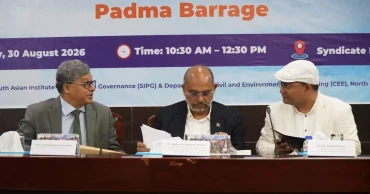
National interest, scientific evidence key to resolving water issues: Speakers
Speakers at a national seminar on transboundary water issues have stressed the need for Bangladesh to pursue water diplomacy and management based on national interest, scientific evidence, fairness and long-term planning.
They said Bangladesh must address both flood-season water abundance and dry-season scarcity through stronger river-basin management, scientific planning, political commitment and coordinated diplomacy.
“The issues are technical, but the solutions must ultimately be political and guided by our national interest,” said Prime Minister Finance and Planning Adviser Dr. Rashed Al Mahmud Titumi while speaking as the chief guest.
The seminar titled “Transboundary Water Sharing Issues and Padma Barrage” was held at North South University on Sunday that called for national preparedness, evidence-based water diplomacy, regional dialogue, technically sound river management, and coordinated policy action to protect Bangladesh’s water security, ecological balance, and sustainable development.
Political Commitment
Dr Titumir said Bangladesh must address both flood-season abundance and dry-season scarcity through long-term planning, political commitment, and scientific management.
Referring to the ecological value of rivers, he observed, “A river should not be understood merely by its number, but by its ecosystem and the wider impacts it creates.”
The economist said the proposed Padma Barrage is not only an engineering project, but also a national development concern linked to agriculture, livelihoods, and the future of western and southwestern Bangladesh.
Economic Implications
Special Assistant to the Prime Minister, Environment, Forests and Climate Change Affairs Dr. Md. Saimum Parvez highlighted the government’s environmental priorities, including tree plantation, canal digging, waste-to-wealth initiatives, renewable energy, and a greener Bangladesh.
“Efficient water use and regional power trade can create pathways for mitigating transboundary water disputes,” he said.
Water-sharing challenges need to be understood through both river-basin dynamics and their economic implications, Parvez said.
The keynote speech was delivered by Dr. Mohammad Abul Hossen, former Member of the Joint Rivers Commission.
He discussed river-basin management, hydro-economic modelling, benefit sharing, efficient water use, and regional power trade as possible pathways for reducing transboundary water disputes.
A policy and diplomacy presentation was delivered by Mohammad Sufiur Rahman, Senior Research Fellow at South Asian Institute of Policy and Governance (SIPG), NSU.
He stressed the need to build synergy with relevant Indian stakeholders and restore natural river flows through fair and cooperative water-sharing arrangements.
Shared Resource
Former Ambassador Sufiur said water should be treated as a shared resource, not as a commercial commodity.
“Equity, fairness, and the principle of causing no harm to either party must remain at the heart of water-sharing negotiations,” he added.
The discussion featured eminent experts, including Engr ANH Akhter Hossain, former Secretary, Government of Bangladesh; Dr. Md. Ataur Rahman, Professor, Department of Water Resources Engineering, BUET.
Discussants called for a stronger national framework combining engineering knowledge, environmental protection, legal preparedness, basin-level planning, and diplomacy.
Shafik Islam, Professor of Tufts University, described the issue as “engineering diplomacy, where rigor meets reality,” noting that “the treaty is only the tip of the iceberg; understanding the patterns, structures, and mental models beneath it is essential.”
The session was chaired by Professor Abdul Hannan Chowdhury, Vice-Chancellor of North South University.
He said, “When the glass remains empty in downstream water sharing, we must find scientific and engineering solutions to manage our own water resources.” He added that Bangladesh’s water resources must be managed for national benefit while supporting sustainable living.
Professor Md. Sirajul Islam, Professor of CEE, NSU, highlighted the focus of the seminar and said, “For Bangladesh, water-resource planning must consider seasonal river changes, sedimentation, transparency, and expert opinion before major interventions are made.”
Delivering the concluding remarks and vote of thanks, Professor Sk. Tawfique M. Haque, Director of SIPG, NSU, urged policymakers to prepare for multiple negotiation scenarios.
He said, “We need greater cohesion and civility in South Asia, in all kinds of negotiation.” He further cautioned, “Policymakers must be prepared with Plans A, B, and C; treaty renewal should not be taken for granted.”
The seminar was jointly organised by SIPG and the CEE, NSU, at North South University.
It brought together policymakers, water experts, engineers, diplomats, academics, and civil society representatives to discuss Bangladesh’s water security, the Ganges Water Sharing Treaty, the Teesta issue, and the proposed Padma Barrage.
1 month ago
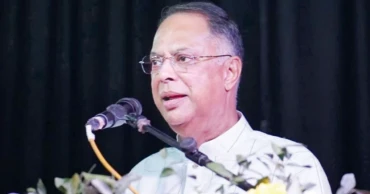
Govt to safeguard national interest in offshore bidding round process: Minister
Power, Energy and Mineral Resources Minister Iqbal Hassan Mahmood on Sunday said the government would ensure that national interests remain protected in all agreements signed under the Offshore Bidding Round 2026 process.
“The BNP has always upheld nationalism as its core principle and we are proceeding with this bidding round keeping that spirit in mind so that Bangladesh does not suffer any loss or compromise its interests,” he said.
The Minister made remarks while addressing a press briefing at his Ministry on the occasion of the launching of its long-awaited Offshore Bidding Round 2026, aiming to attract international oil companies (IOCs) to explore untapped oil and gas reserves in the Bay of Bengal as the country seeks to strengthen energy security and reduce dependence on imported fuel.
He said the government would carefully analyse international production-sharing contracts before finalising any deals with foreign companies.
Describing the launch as the beginning of “a new chapter”, he said Bangladesh had for years relied heavily on imported energy while leaving its own resources unexplored beneath the seabed.
“As a result, the country suffered significantly and our foreign currency reserves came under immense pressure,” he said.
Referring to the last offshore bidding round held in 1993 during the government of former Prime Minister Khaleda Zia, he said gas currently supplied from some offshore fields originated from contracts awarded during that period particularly involving US energy giant Chevron.
“After that, no meaningful offshore bidding round involving foreign companies was held,” he said.
The Minister said that although Bangladesh celebrated its maritime boundary victories in the Bay of Bengal over the past decade, sufficident attention was not given to actual exploration and extraction activities.
“Many spoke about the victory at sea but perhaps forgot that resources also need to be extracted,” he said.
He claimed neighbouring countries that had disputed maritime areas with Bangladesh are already extracting gas from their offshore blocks and exporting energy, while Bangladesh still lacks adequate knowledge about resources beneath its own seabed.
The government, he said, pledged to strengthen state-owned exploration company BAPEX, but acknowledged that the company currently lacks the expertise and equipment required for deep-sea exploration.
“We have encouraged BAPEX to participate in the bidding process through joint ventures with foreign companies, and we have kept BAPEX involved in the process,” he said.
The minister noted that the government moved ahead with the bidding round within 180 days of assuming office, fulfilling one of its election commitments.
“If gas or oil can be extracted from our offshore areas in future, it will become a major driver of the country’s development,” he said.
Highlighting the importance of energy security, he said no country could sustain economic development without ensuring adequate energy supplies.
“When we assumed office, we found the energy sector in a very poor state. Since then, we have been trying to establish long-term energy security, and the situation is now much better than before,” he said.
On possible reserve overlaps or disputes in offshore areas, he said such issues would be resolved through bilateral negotiations if necessary.
The minister said several major international companies have already expressed interest in participating in the bidding round, including firms from the United States and China.
“Many companies have spoken to me directly and expressed their interest. I hope this time the mistakes of the past will not be repeated and investors will participate actively in the bidding,” Iqbal Hassan said.
Responding to a question on labour-related provisions in the bidding framework, particularly the issue of strike clauses and compliance standards, he said Bangladesh has signed around 70 international labour protocols and is therefore obliged to comply with them.
“Bangladesh has signed one of the highest numbers of international labour protocols in the world, so we must follow those commitments,” he said.
Speaking at the event, State Minister for Power, Energy and Mineral Resources Aninda Islam Amit said the move was in line with the ruling BNP-led government’s election manifesto, which pledged to achieve greater self-sufficiency in the energy sector through exploration of offshore and onshore resources.
He said the government had revised several provisions in the tender documents to address past limitations and make the bidding process more attractive to international companies while safeguarding Bangladesh’s national interests.
“We will do everything while protecting Bangladesh’s interests,” he said, seeking cooperation from the media in promoting the initiative internationally.
Power and Energy Secretary Mohammad Saiful Islam said the government had undertaken extensive consultations with international oil companies after the previous offshore bidding round failed to attract any bids despite participation from seven firms in discussions.
He said a review committee was formed to identify the reasons behind the lack of participation.
The secretary said the government spent more than a year consulting international experts, major global energy firms including ExxonMobil, and local petroleum specialists to revise the production sharing contract (PSC) framework.
4 months ago

48 citizens urge interim govt, cadres to prioritise national interest
A group of 48 citizens, living at home and abroad, have appealed to the interim government and all cadre services to refrain from seeking their temporary gains and instead withdraw their movements in the country's interest.
"It is time to play a vital role by contributing to discussions on how the nation can benefit from these reforms," they said in a joint statement coordinated by Bangladesh Research Analysis and Information Network (BRAIN).
The "concerned citizens" issued the statement in the context of "anti-reform activities" of administration cadre employees.
It is regrettable that public-sector employees are creating various obstacles to reform instead of focusing on their responsibilities, the signatories of the statement said.
"Their actions are reminiscent of the fascist era. The fallen regime granted unprecedented power and privileges to administrative cadres to maintain control over the nation," the statement read.
Now, when the entire nation supports reforms, they said certain figures in the administration are attempting to obstruct progress in a despicable manner.
"We, the undersigned concerned citizens, protest this. Instead of uniting for the country’s interests, our cadres have consistently united for power and privileges, holding the nation hostage," the statement reads.
They are the architects of the Jantar Mancha of 1996 and the illegal elections of 2014, 2018, and 2024, said the signatories.
Referring to a White Paper, the "concerned citizens " said their bureaucrats rank first in corruption and foremost in constructing houses in Begum Para.
"It is high time we unite for the greater good and end this cycle of self-serving actions.
Regrettably, this government has not held anyone accountable and has rewarded many with unjust promotions, labeling them as deprived," they said.
The lack of punishment has emboldened these cadres to conspire against the government, violating Section 30 of the Government Servants (Conduct) Rules, the statement mentioned.
By law, they are obliged to accept any government decision, said the signatories, adding that they must uphold the principles of accountability to ensure transparency and fairness in their government, according to the statement.
"We urge the government to thoroughly investigate this matter, excluding any indemnity, by the Government Servants (Discipline and Appeal) Rules, 2018."
They firmly demanded an inquiry into those responsible for destroying documents related to corruption in the recent fire in the Secretariat.
In a fair and equitable Bangladesh, the statement mentioned, the elite class known as the 'cadre' perpetuates discrimination in various areas.
Read: ‘Resolve conflicts through dialogue with govt, avoid destructive activities that can harm national interest’: Adviser Rizwana
For this reason, the signatories said, they express their support for public administration reforms and the country's citizens.
"We must also ensure that the Bangladesh Administrative Services Association, which opposed the July Revolution, a significant political event, does not persist in its mischief in the new Bangladesh," the statement reads.
If this country is to survive, it needs a modern public administration system grounded in the principles of justice. Reforms are necessary to achieve this, they said.
The signatories of the statement are as follows:
Rumi Ahmed Khan, physician and Professor, University of Texas, Austin; Dr. Zahed ur Rahman, political analyst, Dhaka; Imtiaz Mirza, software engineer, blogger-activist, Toronto, Canada; Shafiqur Rahman, political scientist, Canada; Sadique Mahmood, businessman, Dhaka; and Maj (Retd) Shafayat Ahmad, writer and activist, USA.
Subail Bin Alam, engineer, writer, and activist; Ehtasham Haque, campaigner, UK; Zia Hassan, economist and author (Unnayan Bivram); Fahim Mashroor, businessman and activist, Co-ordinator, Voice for Reform; Shadique Mahbub Islam, journalist and activist; and Jyoti Rahman, economist and writer.
Rushad Faridi, economist, Dhaka University; Ronty Chowdhury, social worker and activist, founding member of Policy Watch Bangladesh; Dr. Md. Khan Sobayel Bin Rafiq, researcher and activist; Mahmudul Khan Apel, software engineer and human rights activist, USA; Dilshana Parul, political activist and public policy professional; and Taufique Joarder, global health policy and systems researcher.
Marzea Mithila, architect and sustainable designer, NJ, USA; Md. Adnan Arif Salim, PhD, professor and writer, Dhaka; Kazi Tanvir Ahmed, banker, Alberta, Canada; Muntasir Mamun, mortgage adviser, Alberta, Canada; Md. Saiful Hosyn, marine engineer; and Asif Iqbal, public policy professional, Bangladesh.
Read more: Foreign investments aligned with national interests are welcome: Adviser Nahid Islam
M. Faisal Riyad, researcher and PhD candidate, USA; Khan Md. Monoarul Islam, political activist and writer, Bangladesh; Humayun Kabir, political activist and economic research enthusiast, Bangladesh; Murshid Shalin, political analyst and online activist; Dr. Shakil Ahmed, physician, Sydney; and Dr. Muhammad Khaled Hasan, physician, UK.
Taukir Aziz, financial analyst, Canada; Ehteshamul Haque, lawyer, US; Zia Hassan Siddique, entrepreneur, UK; Ullash Jayed, rail engineer, Victoria Government, Australia; Fokhrul Islam Selim, chief engineer, marine; and Syed Sarwoer Rashid, solution engineer, VERTIV, Australia.
Shekh Mohammad Zilani, operations manager, Amazon Canada; Md. Rashed, activist, satirist, and law enforcement professional, New York; Asad ul Islam, hedge fund accountant, Dallas, USA; Sabin Rahman, transportation engineer, USA; Shayan Khan, journalist, Dhaka; and Asif Khan, financial analyst.
Ridwan Anam, businessman; Islamul Haque, postdoctoral associate, Yale; Dr. Abdullah Al Masud, physician, Dhaka; Mustaque Ahmed, barrister-at-law and chartered certified accountant, Dhaka; Rupom Razzaque, data engineer and human rights defender, UK; and Ashraful Hasan, social entrepreneur, Canada.
1 year ago