Ambassador Tariq Karim
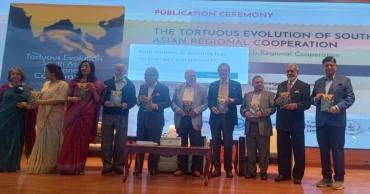
Ambassador Tariq Karim’s book on ‘Evolution of SA Regional Cooperation’ unveiled
A book titled ‘The Tortuous Evolution of South Asian Regional Cooperation: Bangladesh's Travails for Sub-Regional Cooperation', authored by former ambassador Tariq Karim, was launched on Tuesday.
The Association of Former Ambassadors (AOFA) in collaboration with University Press Limited (UPL) and the Global Studies and Governance Department of Independent University Bangladesh arranged the publication ceremony of the new book at the Foreign Service Academy here.
This publication provides deep insights into Bangladesh's journey within the region's frameworks and lays down key pointers for the way forward. The book is a must-read to understand the challenges and opportunities in regional and subregional cooperation in South Asia.
Addressing the function, former ambassador Farooq Sobhan hoped that this book would inspire the younger generation to think about what their role might be and how they can reach out, promote and propagate the ideas of regional cooperation in South Asia.
Former State Minister for Foreign Affairs Abul Hasan Chowdhury said this book is a very useful toolkit for the country’s young diplomats as it would help enhance their negotiation skills.
Former ambassador Shahed Akhtar said this book is more than an academic treasure. “His works (book) shed light on Bangladesh’s persistent and forward looking efforts to strengthen subregional cooperation,” he said.
Amanullah Khan’s Legacy Lives On: His Vast Book Collection Now at AUB Library
Chair of Global Studies and Governance Department in Independent University Bangladesh Dr Marufa Akter said this book is a diplomats' firsthand account. It is a firsthand account for policy formulation, diplomatic negotiation and regional complexities, she said.
AOFA President Ambassador Abdullah Al Hasan, former bureaucrat Abdul Muyeed Chowdhury, Professor of the Graham School of Management at Saint Xavier University, Chicago Faisal Rahman, International Relations Professor of Dhaka University Dr Lailufar Yasmin, International Affairs Analyst Syed Shahnawaz Mohsin, Former Rector of Foreign Service Academy Mashfee Binte Shams and UPL Managing Director Mahrukh Mohiuddin also spoke on the occasion.
Tariq Ahmad Karim, is the President of the Bay of Bengal Institute, a prominent initiative under the Cosmos Foundation.
Tariq Karim in his book describes how the Indian subcontinent morphed from having been the most integrated region in the world, for millennia, to be known as South Asia, the least integrated region, overnight.
He also describes how the former British colonies acquired statehood and emerged after colonial Britain's exit as post-colonial neo-Westphalian states that had all the attributes of a state in the new world order but lacked stability as states and provides a theoretical framework explaining why this happened.
The author then describes how these newly partitioned states tried to come together to form a regional grouping for cooperation (SAARC) and why that attempt failed. Through three case studies of the EU, ASEAN and SAARC he makes a comparison between the different forces and dynamics in Europe and Southeast Asia that led to their success in forming regional groupings for economic cooperation and contrasts them with the forces at work within the SAARC states that led to their failure.
Book fair draws more visitors on third day
On the perceived failure of SAARC, some are engaged in a different route to regional cooperation by their attempts at subregional cooperation within SAARC such as the BBIN initiative, which has yielded mixed results.
He explains this process in detail through his own personal involvement from the inception of the idea of subregional cooperation in the Bangladesh Foreign Ministry and later close involvement in working for the region's economic integration as a consultant to the World Bank.
Tariq Karim describes in detail the various stages of the process, in which some identified goals have made some progress and others none at all and explains how domestic political dynamics and different foreign policy compulsions can have a negative fallout for everyone trying to engage in such subregional cooperation.
The former ambassador then examines the possibility of subregional cooperation of the BBIN countries linking eastwards, within BIMSTEC and beyond, and its possibilities of success.
1 year ago
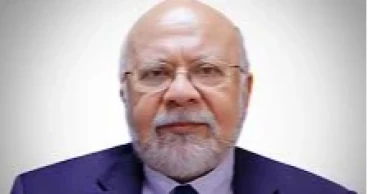
Ambassador Tariq Karim takes charge as President of Bay of Bengal Institute
Former diplomat Tariq Ahmad Karim has assumed the role of President of the Bay of Bengal Institute, a prominent initiative under the Cosmos Foundation.
Ambassador Karim, who has had a distinguished career in Bangladesh's Foreign Service, outlined his vision for the institute, emphasising the strategic importance of the Bay of Bengal.
"There is no gainsaying the importance of the Bay of Bengal from a strategic perspective. It connects the Pacific Ocean with the Indian Ocean, and plays a significant role in the politics of both the Indian Ocean and the Pacific Ocean regions in today’s world" he said.
Italy summons Iran's ambassador to release arrested Italian journalist
He highlighted Bangladesh’s crucial position in global geopolitics, by virtue of its location at the epicentre of Bay, and expressed his intention to leverage the Bay of Bengal’s strategic potential to advance the country’s interests.
Starting his tenure on January 1, 2025, Ambassador Karim plans to launch initiatives aimed at boosting public awareness and engagement, including organising meetings, seminars and dialogues to discuss the region's untapped potential.
Turkish ambassador Ramis Sen pays courtesy visit to Trade Adviser
Dr. Iftekhar Chowdhury, President of the Cosmos Foundation, welcomed the appointment, saying: “We are all very excited to have Ambassador Tariq Karim accept the responsibilities of President of the Bay of Bengal Institute! I know him to be a person of outstanding capabilities. He will bring immense intellectual rigour and a vast reservoir of knowledge to this position. I look forward to a close and rewarding cooperation between the Foundation and the Institute in the times ahead."
Enayetullah Khan, Chairman of the Cosmos Foundation and the Bay of Bengal Institute, congratulated Karim on his appointment, saying, "We are thrilled to have Ambassador Tariq Ahmad Karim at the helm of the Bay of Bengal Institute. His extensive experience and leadership will be invaluable in promoting greater awareness of the strategic importance of the Bay of Bengal and furthering the Institute’s mission to advance Bangladesh’s role on the global stage."
A seasoned diplomat, Ambassador Karim has an extensive history of distinguished service to the nation. He served notably as Bangladesh’s Ambassador to the United States and High Commissioner to India. Earlier he was also High Commissioner to South Africa, Botswana, Lesotho and Namibia, and Ambassador to Iran and Lebanon. He played a pivotal role in the finalization of the landmark 1996 Ganges Water Treaty between Bangladesh and India during his tenure as Additional Foreign Secretary for South Asia and SAARC, when he also advocated for robust sub-regional cooperation on issues of existential importance to Bangladesh and its immediate surrounding region.
In addition to his new role as President of the Bay of Bengal Institute, Ambassador Karim also serves concurrently as Adviser Emeritus to the Cosmos Foundation. He has also been a Distinguished Visiting Research Fellow at the prestigious Institute for South Asian Studies of the National University of Singapore since 2022, and a member of the Board of Advisers of the National Bureau of Asian Research (NBR) of Seattle WA and Washington DC since 2021.
Ambassador Karim’s vast experience in regional and international diplomacy is poised to guide the institute in its mission to elevate Bangladesh's strategic significance in the Bay of Bengal.
1 year ago