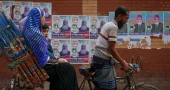
Bangladesh’s interim government
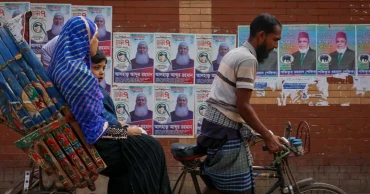
Feb 12 election to mark 'final step in delicate political transition': International Crisis Group
Bangladesh’s interim government, led by Nobel laureate Muhammad Yunus, which assumed office amid high public expectations, is approaching the end of its tenure as the country moves closer to elections, that mark "the final step in the delicate political transition that has been under way for a year and a half," according to the International Crisis Group, the Brussels-based think tank.
“Bangladeshis had high expectations of the interim government, which remained popular for some time, though it has lost some of its lustre of late,” said Crisis Group's expert on Bangladesh, Senior Consultant Thomas Kean, in a Q&A published Monday on the ICG's website.
Chief of interim government Prof Muhammad Yunus and his cohort have chalked up major achievements, including stabilising an economy that had been teetering under Hasina and maintaining a fragile consensus on the course of the transition with the army and political parties, Kean said.
Six international organisations to deploy 63 observers for Bangladesh elections
Their signature achievement as regards reform has been to oversee drafting the July Charter. All the political parties agreed on the need for change, but not necessarily on which measures to take or in what order.
It was nonetheless important for the interim government to seek buy-in from all the parties contesting the vote, since making these reforms will be the responsibility of the incoming government. Yunus and his cabinet succeeded, but with caveats.
"After assuming office on August 8, 2024, Prof Yunus quickly outlined his agenda: initiate major political, economic and institutional change; prosecute those responsible for violence during the protests; and organise free and fair elections," said Kean.
He said the government re-established the International Crimes Tribunal (ICT) – a domestic judicial body first formed in 2009 to investigate crimes committed during the 1971 war – to try those allegedly responsible for serious abuses under Hasina’s regime. It also formed six reform commissions focused on areas considered critical, such as the constitution, election system and judiciary. These steps culminated in a ceremony in October 2025, when most of the country’s political parties signed the July Charter (so named after the month when the uprising against Hasina began), an agreement on a set of reforms the next government is expected to make.
The interim government has not been without its critics, who argue that it has waged a vendetta against the Awami League, failed to restore security and been too accommodating toward far-right Islamist groups, among other things. But it has managed to shore up a cross-party political consensus (excluding the Awami League), helping it reach agreement on the July Charter. Its final task will be to make a smooth exit from Bangladesh’s political scene by ensuring credible, peaceful polls, then transferring power to a democratically elected administration.
Up to 127 million Bangladeshis will go to the polls on 12 February, in the first national elections since Prime Minister Sheikh Hasina’s government fell in August 2024. For tens of millions of them, it will be the first chance in their lives to participate in a credible vote.
The elections mark the final step in the delicate political transition that has been under way for a year and a half.
In the February election, the contest is expected to be closely fought between two blocs led by the Bangladesh Nationalist Party (BNP) and Jamaat-e-Islami.
The BNP retains a strong organisational base but has been weakened by allegations of extortion, internal disputes over candidate selection, and a perception among many voters that it differs little from the Awami League. Party leaders have attempted to counter this image through disciplinary expulsions.
The BNP may benefit from recent events, including the December 2025 return of acting leader Tarique Rahman from long exile and the death of former prime minister Khaleda Zia, which drew huge public crowds. However, Tarique Rahman lacks his mother’s broad appeal and faces lingering corruption allegations, leaving the party’s electoral prospects uncertain.
He also mentioned that Jamaat-e-Islami, Bangladesh’s largest Islamist party, has gained momentum since the 2024 protest movement and appeals to voters as a disciplined alternative to elite-dominated politics, particularly among younger people.
It has also made significant gains in student politics. Jamaat has further strengthened its position through an electoral alliance with the National Citizen Party, though the deal has triggered internal dissent within the NCP.
With the political landscape transformed and the Awami League sidelined, predicting the outcome of the 12 February election is difficult. Polling suggests the BNP holds a narrow lead, while Jamaat appears set to surpass its best-ever electoral performance, Thomas Kean said.
Bangladeshi expats cast 458,000 postal votes ahead of Feb-12 polls
Kean said the biggest risks revolve around security in the run-up to and during the polls. "Historically, political violence in Bangladesh has tended to increase around competitive elections. Bangladeshi human rights groups have already documented an uptick since August 2024. Recent months have witnessed clashes between BNP and Jamaat partisans, and more could flare up in hotly contested districts," according to Kean.
Given the stakes, managing a dispute over the outcome of the vote would be Yunus's biggest challenge yet, he added.
8 months ago
Lasting reforms needed in Bangladesh to stop abuses: HRW
Deputy Asia Director at the Human Rights Watch (HRW) Meenakshi Ganguly on Thursday said Bangladesh’s interim government has taken significant strides towards a democratic and rights-respecting future, but its progress could evaporate without deep institutional reform and international support.
“The interim government needs to protect Rohingya refugees, support credible investigations and reparations for enforced disappearances and provide for civilian oversight over security forces,” Ganguly said.
Arrest warrant for Hasina: HRW calls for amending ICT law to ensure fair trials; opposes ban on party
Bangladesh’s interim government, led by Nobel Prize laureate Mohammed Yunus, has set up a commission to investigate enforced disappearances and pledged reforms and accountability for rights abuses under former Prime Minister Sheikh Hasina’s authoritarian rule, Human Rights Watch said in its World Report 2025 on Thursday.
The interim government should reform institutions in line with international human rights standards with the help of the UN Office of the High Commissioner for Human Rights, disband the notorious Rapid Action Battalion, reform security forces to ensure independent oversight and accountability, and pursue justice for the victims of enforced disappearances and their families, said the HRW, adding that interim government pledged accountability and credible elections.
Bangladesh shipbreaking industry lacks adequate oversight: HRW
It should also ensure unfettered access for human rights monitors to the Chittagong Hill Tracts and work with the UN High Commissioner for Refugees to register Rohingya refugees so that they can access protection, medical care, and food rations, it said.
During the crackdowns on student-led protests over three weeks in July and August, over 1,000 people were killed and many thousands injured due to excessive and indiscriminate use of ammunition by security forces.
For the 546-page world report, in its 35th edition, Human Rights Watch reviewed human rights practices in more than 100 countries.
In much of the world, Executive Director Tirana Hassan writes in her introductory essay, governments cracked down and wrongfully arrested and imprisoned political opponents, activists and journalists.
Armed groups and government forces unlawfully killed civilians, drove many from their homes, and blocked access to humanitarian aid. In many of the more than 70 national elections in 2024, authoritarian leaders gained ground with their discriminatory rhetoric and policies, according to HRW.
Probe into enforced disappearances: HRW says Bangladesh should seek expertise, technical assistance from UN
Activists have raised concerns that security forces have continued to carry out abuses, including arbitrary arrests of opposition supporters and journalists and denying them due process and proper access to legal counsel.
While the interim government acceded to the United Nations Convention on Enforced Disappearances, security forces have failed to release those unlawfully detained or provide answers to their families about what happened to them, said the HRW.
Hundreds of thousands of Rohingya who fled Myanmar and are living in refugee camps are at risk of violence at hands of armed groups and gangs. Unregistered refugees risk hunger and do not seek health care out of fear that they will be returned to Myanmar.
1 year ago