backlash
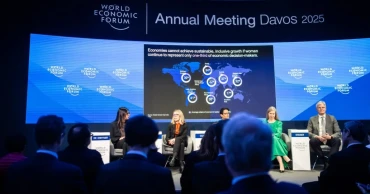
Lutfey Siddiqi shares what’s behind growing backlash
While the economic case for gender parity seems clear-cut, there has been a growing backlash against the push for women’s equal rights.
This backlash could be explained by elements of tokenism, which have also failed to lead to sustainable change.
Making real, lasting change will mean tackling things like deeply ingrained socio-cultural attitudes and gender roles.
Time and time again, research shows that if men and women were to have the same opportunities — educational, professional, health, to name a few — it would pay off, quite literally.
Dr Yunus engages with global leaders, seeks support to bring back stolen money
Alessandra Galloni, Editor-in-Chief, Reuters, Canada; Anna Bjerde, Managing Director, Operations, World Bank, Washington DC; Katherine Garrett-Cox, Chief Executive Officer, Gulf International Bank Asset Management, United Kingdom; Lutfey Siddiqi, Special Envoy of Chief Adviser Prof Muhammad Yunus; Michael Ensser, Chairman, Egon Zehnder, Switzerland; spoke in "Adding Trillions with Gender Parity" session at the World Economic Forum Annual Meeting 2025.
“If you had women participating as actively as men in the economy, the GDP of the world would be 20% higher,” pointed out Anna Bjerde, Managing Director of Operations at the World Bank, in a session at Davos.
Case closed. Or, as another panellist in the session, Michael Ensser, Chairman of executive search firm Egon Zehnder, put it: the business argument for gender equality is “an absolute no-brainer.”
And yet, what once seemed like a consensus view — that gender equality was something worth fighting for — has increasingly been called into question. For example, around the world, women’s access to sexual and reproductive healthcare has come under attack.
Lutfey Siddiqi, a special envoy of the head of Bangladesh’s interim government, has a theory.
“One of the problems that we need to confront is that there have been elements of tokenism and virtue-signalling in the way we’ve approached this,” he argued, citing examples where companies have “tried to parachute people in from the top as opposed to building an inclusive culture from the bottom.”
UN chief Guterres meets Dr Yunus in Davos
Not only was this approach ineffective, it possibly accounts for the push-back we’ve been seeing in some countries when it comes to gender equality, Siddiqi said.
“Some of the ESG scores are very reductionist, they look for a single score. And then in organizations it becomes adopted by HR and compliance, and all of a sudden you’ve defenestrated the manager who could have taken some ownership of this thing.”
But Siddiqi emphasised that even if this might offer an explanation for the backlash, it doesn’t justify that backlash. “We can’t throw out the baby with the bathwater,” he argued. “To say, well, because it was done in a tokenistic way in that instance, I’m going to give up on that altogether, that would be a silly way to go.”
"It’s quite embarrassing that we are having this conversation in 2025,” Katherine Garrett-Cox, Chief Executive Officer at GIB Asset Management, said during the session. “I wonder if it’s that some people think it’s too hard?”
UAE invites Dr Yunus to attend World Governments Summit in Dubai
While specific solutions might not be obvious, one thing the session made clear: we should all agree that achieving gender parity is a priority. “We have a lot to learn from each other,” conceded Bjerde. “But let’s not abandon this topic.”
1 year ago