RAMSAR site
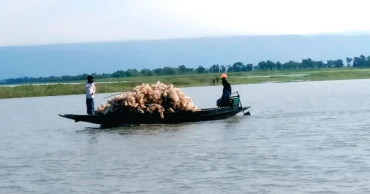
A Ramsar site under pressure: Plastic traps threaten Tanguar Haor
One of Bangladesh’s most ecologically significant freshwater wetlands, Tanguar Haor, is facing growing environmental threats from the widespread use of plastic fish traps and what conservationists describe as a lack of effective enforcement against destructive fishing practices.
Spread across nearly 126 square kilometres in Sunamganj’s Tahirpur and Madhyanagar upazilas, Tanguar Haor is recognised as the country’s second Ramsar site after the Sundarbans and serves as a vital reservoir of biodiversity.
But environmentalists warn that increasing plastic pollution coupled with illegal fishing methods is undermining the fragile ecosystem.
Once home to between 140 and 200 species of indigenous fish, the haor has witnessed a steady decline in aquatic biodiversity in recent years.
Experts attribute the trend to multiple environmental pressures, including overfishing, illegal fishing nets and the growing use of plastic-made “Kiranmala chai” traps that have become common across the wetland.
According to locals and environmental groups, fishermen frequently leave behind discarded plastic traps after harvesting fish.
These non-biodegradable materials remain floating on the water surface or settle on the lakebed for years, gradually breaking down into microplastics.
Environmental experts said the resulting microplastic contamination poses a serious risk to fish and other aquatic organisms.
The particles can enter the food chain through aquatic species, affecting fish growth and reproduction while threatening the broader ecological balance of the wetland.
The discarded plastic also obstructs natural water flow, further disrupting the haor’s ecosystem.
Representatives of the Environment and Haor Development Organisation said Tanguar Haor is already under pressure from illegal current nets, ‘China duari traps’ and excessive fish harvesting.
The addition of plastic pollution has made the situation increasingly alarming.
They also noted signs of declining oxygen levels in water, reduced aquatic vegetation growth and lower fish breeding rates.
Every year, fresh floodwaters entering the haor through rivers bring various fish species into the wetland.
With early monsoon flows arriving this year due to heavy rainfall in Cherrapunji, water levels in the Jadukata and Patlai rivers rose earlier than usual, allowing fish to enter the haor ahead of schedule.
Taking advantage of the situation, many local fishermen have reportedly intensified the use of plastic traps throughout the wetland. The traps are particularly popular because they can catch shrimp and a variety of small fish species with minimal effort.
Despite recurring criticism and periodic discussions about the environmental impact of the traps, locals alleged authorities have yet to establish a sustained campaign to stop their production, storage and sale.
4 months ago

Top 3 Books in English on the Bangladesh Sundarbans
The Sundarbans, the world’s largest mangrove forest, stretches across Bangladesh and India, with approximately 60% of its vast 10,000 sqkm expanse lying within Bangladesh’s borders. Recognized as a UNESCO World Heritage Site in 1997 and a RAMSAR site in 1992, this unique ecosystem is home to rich biodiversity and serves as Bangladesh’s last stronghold for the endangered Bengal tiger. For those looking to explore the history, ecology, and mysteries of this remarkable forest, here are three essential English-language books on the Sundarbans.
3 Best English-Language Books on Sundarbans in Bangladesh
If you're specifically looking for books on the Sundarbans in Bangladesh, here are three top recommendations covering its ecology, history, culture, and conservation:
The Man-Eating Tigers of Sundarbans by Montgomery
"The Man-Eating Tigers of Sundarbans" by Sy Montgomery is an engaging exploration of the Sundarbans, a vast mangrove forest along the Bay of Bengal in India and Bangladesh, renowned for its unique population of tigers.
Montgomery's narrative delves into the mysteries surrounding these tigers, blending scientific inquiry with local folklore and firsthand accounts. She offers insights into the tigers' behavior, the challenging environment of the mangrove swamps, and the complex relationship between the tigers and the local communities who both revere and fear them.
Read more: Tracing the Roots of Ekushey Boi Mela
Critics have praised Montgomery's ability to turn a scientific study into a page-turning mystery. Her writing is noted for its fresh, engaging style that captivates readers, making complex subjects accessible and intriguing.
Overall, "The Man-Eating Tigers of Sundarbans" offers a fascinating and informative journey into one of the world's most enigmatic regions, providing a balanced perspective that honors both scientific understanding and the rich cultural narratives of the local people.
The Bangladesh Sundarbans by Enayetullah Khan
"The Bangladesh Sundarbans" by Enayetullah Khan, published in 2011, offers a detailed description of the world's largest mangrove forest. The book delves into the diverse flora and fauna of the Sundarbans and provides insights into the lives of its inhabitants, exploring their lifestyle, beliefs, social customs, and the profound connection they share with the forest.
The author illustrates the natural history of this spectacular forest. A brief overview of the lives and means of subsistence of the forest's resource users is also included in this book. "The Bangladesh Sundarbans" reveals how this forest serves as a natural barrier against cyclones and tidal surges.
Read more: Rich Dad Poor Dad– Worth Reading in Your Quarantine
The book is enriched with photographs that capture the landscape, people, and wildlife of the Sundarbans, providing readers with a visual context to the compelling narrative.
Critics have praised the book for its comprehensive portrayal of the Sundarbans' natural beauty and cultural richness. Readers interested in the intricate relationship between the Sundarbans' ecosystem and its people may find this book particularly enlightening.
Sundarbans and its Ecosystem Services: Traditional Knowledge, Customary Sustainable Use and Community-Based Innovation by Rashed Al Mahmud Titumir (Editor)
This edited collection explores traditional knowledge, customary sustainable usage, and community-based innovation in the Sundarbans, the world's largest single-tract continuous mangrove forest. To show that indigenous and local knowledge (ILK) is crucial for the preservation and sustainable use of natural resources, the book examines the Sundarbans' current condition as well as its many values and ecosystem services.
In addition to being crucial to the achievement of SDGs 14 (life below water) and 15 (life on land), this forest also actively aids in the accomplishment of numerous other objectives. By placing human-nature relationships in the context of the COVID-19 pandemic-heightened interest in biodiversity and climate change, the book offers a fresh perspective on sustainability.
Read more: 10 Best eBook Reader Apps for Android, iOS
For sustainable development, the book connects scientific knowledge with the multi, inter, and trans-disciplinary character of ILK gathered from the bottom-up level. The market-based approach to valuing natural resources is contested in this book.
Conclusion
The Sundarbans in Bangladesh is the largest mangrove forest in the world and a UNESCO World Heritage Site. It covers about 6,017 sqkm in Bangladesh and extends into India. This unique ecosystem is located in the southwestern coastal region of Bangladesh, mainly in the Khulna, Satkhira, and Bagerhat districts.
So far, we have reviewed the top 3 English books written on the Sundarbans in Bangladesh. These books can enlighten readers about the location, geography, ecosystem, and biodiversity of the Sundarbans.
Read more: Benefits of Reading Habit for Mind and Body
1 year ago