Dhaka Delhi
FM’s India Visit: Dhaka to push key bilateral concerns in talks with Delhi
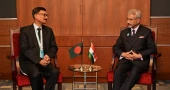
Bangladesh is keen to see bilateral relations return to normalcy on the basis of ‘mutual respect and mutual gains,’ as Foreign Minister Dr Khalilur Rahman prepares to visit India on a ‘goodwill’ trip this week which comes amid increased engagement between the two countries in recent weeks.
Although Dhaka prefers to describe the trip as a ‘goodwill visit,’ officials told UNB that it will involve substantive discussions with New Delhi to ‘better understand current dynamics’ and to raise issues of key importance to Bangladesh.
In addition to his meeting with Indian External Affairs Minister Dr S Jaishankar, Dr. Khalilur is scheduled to hold talks with National Security Adviser Ajit Doval and Petroleum and Natural Gas Minister Hardeep Singh Puri.
Bangladesh will reiterate its request for the extradition of former Prime Minister Sheikh Hasina as well as seek the swift return of other accused individuals including prime suspect Faisal Karim Masud who was arrested in Kolkata in connection with the killing of Shahid Sharif Osman Bin Hadi, convenor of the Inqilab Mancha.
“It may take time but we want to see their return as soon as possible,” a senior official told UNB, referring to extradition of accused (Hadi’s murder).
Dhaka will also urge a more positive approach from India regarding the full resumption of visa services, noting that India stands to benefit significantly from medical tourism.
Border management will be another key issue, with Bangladesh emphasising that it does not want to see any loss of life along the border.
The two sides are also expected to discuss energy cooperation, water-sharing of common rivers, and measures to ease trade barriers.
The Foreign Minister is scheduled to depart for New Delhi on Tuesday afternoon, before continuing on to Mauritius. Prime Minister’s Foreign Affairs Adviser Humaiun Kabir will accompany him during the New Delhi leg of the visit.
Both sides are now working to retune bilateral relations, a move that could usher in a new phase of cooperation on a range of issues important to both Dhaka and Delhi and lend genuine momentum to the relationship, officials said.
This will mark the first high-level visit to India since the BNP government, led by Prime Minister Tarique Rahman, assumed office, following a period of significant strain in bilateral relations.
“The meeting between the two foreign ministers will be held in New Delhi on April 8,” a senior official told UNB, without elaborating further.
Bangladesh and India share deep-rooted bonds of history, language, culture, and multitude of other commonalities, said an official, noting that in any bilateral meeting all issues of mutual interest come up for discussion.
The two Foreign Ministers are likely to discuss cooperation in the areas of energy, water sharing, border management, visa, people-to-people ties, he said adding that a future visit of Prime Minister Tarique Rahman to India may also come up for discussion at the meeting.
Indian Prime Minister Narendra Modi has already invited Prime Minister Tarique, his wife Dr Zubaida Rahman, their daughter Barrister Zaima Rahman to pay a visit to India at a convenient time.
“I take this opportunity to invite you, along with Dr Zubaida Rahman and your daughter Zaima, on a visit to India at a mutually convenient time. A warm welcome awaits you in India,” Modi said in his letter handed over to PM Tarique by Speaker of the Indian Lok Sabha Om Birla who represented the government of India at the swearing-in ceremony of the newly elected government of Bangladesh.
Prime Minister Modi said he looks forward to working closely with Prime Minister Tarique to strengthen their multifaceted bilateral relations, enhance regional cooperation, and advance their common goals in wide-ranging areas of connectivity, trade, technology, education, skill development, energy, healthcare, as well as cultural and people-to-people exchanges.
Asked whether the Prime Minister would consider India for his first bilateral visit, a diplomatic source told UNB that Bangladesh would take a decision “creatively” on the matter.
Forward-Looking Ties
Indian High Commissioner to Bangladesh Pranay Verma on Monday reaffirmed India’s intent to work together with the Government and the people of Bangladesh in a ‘positive, constructive and forward-looking manner’ based on mutual interest and mutual benefit.
The Indian envoy conveyed the intent when he paid a courtesy call on Prime Minister Tarique Rahman at his office.
They discussed bilateral engagement with focus on people-centric cooperation in multiple domains aligned with the national development priorities of the two countries, said the High Commission after the meeting.
The discussions focused on enhancing cooperation in a wide range of areas including public health, financial inclusion, women‘s empowerment, rural development, bilateral trade and investment, ease of doing business, technology partnerships, and power and energy cooperation.
The High Commissioner underlined that India-Bangladesh cooperation should transform their geographical proximity into new opportunities by strengthening economic and connectivity linkages, and by enhancing cultural and people-to-people exchanges.
Water Sharing Issues
The subject of water is widely seen as a sensitive issue and Bangladesh always keeps talking about its long pending request for concluding the agreement on the sharing of the waters of the Teesta River, the draft of which was finalised in 2011. The two countries share 54 common rivers, including the Teesta.
In India’s federal scheme of things, nothing is done without consultations with the State Government and any agreement that they conclude will have to be acceptable to the State Government of India; at the same time, it would also have to be acceptable to Bangladesh, officials said.
The Bangladesh-India Ganga/Ganges Water Treaty was signed on December 12, 1996 and is expiring in December this year.
As discussions for its renewal are yet to commence between the two countries, officials said this might be one of the issues to be discussed this time.
In July 2024, the governments of Bangladesh and India had decided to begin discussions on renewal of the Ganga Water Treaty.
The discussions are yet to commence in this regard and no fresh agreement has been ratified between the two countries.
The Indian side had offered to renew it in 2024 but the interim government did not pursue it at that time, a diplomatic source in New Delhi told UNB.
Inputs on drinking water and industrial water requirements have also been received from all stakeholders including from the government of West Bengal, which have been taken into account while formulating the Indian government’s views.
Visa Issues
Indian High Commissioner to Bangladesh Pranay Verma, in his recent meetings with the Ministers in Dhaka, explored new areas for future collaboration in people-centric domains aligned with the respective developmental priorities of the two countries based on mutual interest and mutual benefit.
The two sides also discussed various aspects of Bangladesh-India economic cooperation, including ways to strengthen transport, energy and digital connectivity between the two countries.
At the foreign minister–level meeting, the Bangladesh side is expected to raise the visa issue as tourist visas for Bangladeshis have remained suspended since July 2024 on security grounds.
Indian visa centres in Bangladesh are still understaffed, suggesting that a full resumption of services may take time, a diplomatic source said, adding that the restart will be announced once finalised.
India thinks the two countries can truly become catalysts for each other's sustainable growth, work for each other's security and enable mutual prosperity as two fast-growing economies and aspiring societies.
Bangladesh and India on Thursday discussed ways to enhance bilateral defence cooperation, including joint training initiatives.
The issues were discussed when Bangladesh High Commissioner to India M Riaz Hamidullah met Indian Chief of Army Staff General Upendra Dwivedi at the South Block.
They also explored opportunities for deeper collaboration aimed at promoting regional peace and security.
The envoy said he was pleased to meet General Upendra Dwivedi and reflect on Bangladesh-India ties, including defence cooperation.
6 months ago
Hossain-Jaishankar talks recognise challenges, highlight importance of working together
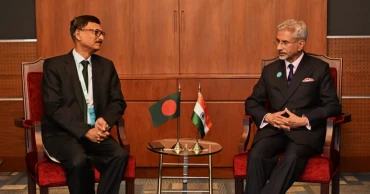
Bangladesh and India on Sunday recognised the challenges the two neighbours are facing in terms of bilateral relations and discussed the necessity to work together to address those.
On the sidelines of the 8th Indian Ocean Conference (IOC), Foreign Affairs Adviser Md Touhid Hossain met his Indian counterpart Dr S Jaishankar in Muscat, Oman.
Both sides also said that a meeting at the level of Directors General of Border Guarding Forces of the two countries is scheduled to be held in New Delhi on February 18-20.
They hoped that various border-related issues would be discussed and resolved during the meeting, said the Ministry of Foreign Affairs.
"Conversations focused on our bilateral relationship, as also on Bimstec," Jaishankar said after the meeting.
Dhaka committed to boosting Indian Ocean partnership: Foreign Adviser
Chief Adviser Prof Muhammad Yunus is scheduled to attend the Bimstec Summit to be held in Bangkok on April 4.
Foreign Adviser Hossain emphasized the importance of initiating the discussion for renewal of the Ganges Water Treaty.
He also highlighted the importance of holding the meeting of the Saarc Standing Committee and requested consideration of the government of India in this regard.
The two sides discussed various bilateral issues of mutual concerns and interests.
Recalling their last meeting on the sidelines of UNGA in September 2024, both noted that since then the two countries have participated in various bilateral engagements.
The Foreign Office Consultations (FOC) between Bangladesh and India at the level of Foreign Secretaries was held in Dhaka on December 9, 2024.
The Energy Adviser of Bangladesh participated at the India Energy Week events in New Delhi on February 10-11, among others.
Foreign Adviser Hossain is attending the 8th Indian Ocean Conference (IOC) being organised in Muscat, Oman on February 16-17 by the government of the Sultanate of Oman in association with the Indian government and India Foundation.
The theme of the 8th IOC is "Voyage of New Horizons of Maritime Partnership”.
The Adviser spoke at one of the plenary sessions on the topic of ‘Strengthening Maritime Supply Chains’.
BGB-BSF border talks begin in New Delhi tomorrow
He explained the multifaceted challenges that endanger the efficiency, reliability, and sustainability of maritime supply chains and holistic approach and collaboration required for strengthening maritime supply chains by overcoming disruptions and enhancing resilience.
Among others, he also called for easing visas and other administrative processes for the seafarers, ensuring facilities for them, as their roles are crucial in maintaining the maritime supply chain.
Ministerial delegations from more than thirty countries and several regional organisations, including Saarc, Bimstec and IORA attended the meeting.
On the sidelines of the 8th IOC, the Foreign Adviser also had meetings with the second Minister of Foreign Affairs of Brunei, Vice Minister of Foreign Affairs of VietNam and Deputy Minister of Foreign Affairs of Tanzania and discussed various issues of mutual interests.
The Foreign Affairs Adviser is also scheduled to meet the Minister of Foreign Affairs of Oman on Monday.
1 year ago
Dhaka committed to boosting Indian Ocean partnership: Foreign Adviser
Bangladesh has reiterated its commitment to embracing the tremendous opportunities that the Indian Ocean region offers by strengthening partnerships.
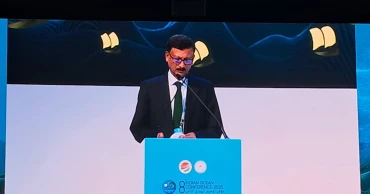
"We are committed to strengthening our partnerships across the Indian Ocean, addressing emerging challenges, and embracing the tremendous opportunities this region offers," said Foreign Affairs Adviser Md Touhid Hossain on Monday.
The multiple challenges and other geo-economic and geo-strategic factors require increased cooperation among the States, he said.
Hossain made the remarks while speaking at the plenary session titled "Strengthening Maritime Supply Chains: Overcoming Disruptions and Enhancing Resilience" as part of 8th Indian Ocean Conference (IOC)-2025 in Muscat, Oman.
Sheikh Humaid Al Maani, Head of Diplomatic Academy, MoFA, Oman chaired the session.
The Foreign Adviser said the Indian Ocean region is a crucial strategic area that links the Asia-Pacific and African regions, with profound economic, political and security significance.
The conference provided a platform for participants to engage in "constructive discussions, share ideas, exchange knowledge, identify actionable solutions, and build meaningful partnerships and cooperation" in the region.
Indian Ocean Conference: Meeting between Tohidul, Jaishankar underway
"We look forward to working together to ensure a brighter, more prosperous future for all nations of the Indian Ocean and beyond," Adviser Hossain said.
As a littoral state, he said, Bangladesh has long been a center of maritime activities and it actively participates in various regional platforms, including the Indian Ocean Rim Association and the International Seabed Authority.
The 8th Indian Ocean Conference is being held under the theme "Voyage of New Horizons of Maritime Partnership.”
Bangladesh, as a nation with deep historical, cultural, and economic ties to the Indian Ocean, is committed to advancing maritime cooperation that drive collective prosperity and ensure sustainable, peaceful development, Hossain said.
Bangladesh, he said, places strong importance on maritime cooperation for facilitating the efficient movement of goods, services and people, for advancing food security, energy security, water cooperation, disaster risk reduction and providing fair access to global public goods. Bangladesh advocates for "shared prosperity" through "shared responsibility".
While Maritime transport is the main artery of global trade, Hossain said maritime supply chains remain the backbone of the global economy.
He said while eighty percent of global trade by volume, and over seventy percent by value, is transported by sea, the Indian Ocean, the world's third-largest body of water, plays a crucial role in this global trade.
The Indian Ocean plays a vital role in this global trade and the global supply chain as it hosts important chokepoints of canals and straits, Hossain said.
Approximately 80 percent of the world's seaborne oil trade transits through the strategic choke points of the Indian Ocean, making it a vital link between the East and the West.
"Countries depend on the Indian Ocean for the movement of goods through maritime trade routes, safeguarding their economic and energy interests. However, the sector is facing multifaceted challenges that endanger the efficiency, reliability, resilience and sustainability of maritime supply chains," he said.
Maritime supply chain is vulnerable to many challenges like port congestion, capacity limitations, regulatory, operational and administrative issues, cyberattacks, piracy, and geopolitical tensions, which can disrupt the efficiency of maritime supply chains.
Tohidul Hussain, Jaishankar share stage at Indian Ocean Conference in Muscat
"We must also remember that the oceans are not only a driving force for global economic growth but also a vital source of food security," Hossain said.
The oceans are facing growing pressures from population growth, global competition for resources, rising food demand, water scarcity, maritime security threats, climate change, biodiversity loss and marine pollution.
"We need to take appropriate actions to tackle the maritime security threats of piracy, armed robbery, human trafficking, illegal arms trade, and illegal and unregulated fishing, among others. We need to address regulatory and administrative issues," said the Foreign Adviser.
The global economy, food security, and energy supplies are at increasing risk due to vulnerabilities at key maritime routes.
"We must take measures to address vulnerabilities and enhance resilience.
Strengthening maritime supply chains and overcoming disruptions is a necessity for improving global trade, reducing costs, and ensuring the smooth flow of goods across the world," said the Foreign Adviser.
Strengthening maritime supply chains involves a holistic approach combining technology, infrastructure improvements, strategic planning, risk management strategies and cross-border collaboration.
"We need to facilitate maritime connectivity, reduce the trade barriers," he said, adding that they also need to consider liberalization of the visa regime, particularly easing visas and other administrative processes for the seafarers, ensuring facilities for them, as their roles are crucial in maintaining the maritime supply chain.
The Indian Ocean has historically been a region of great collaboration.
"The benefits of multilateral cooperation in maritime issues are likely to increase over time," Hossain said, adding that to ensure a resilient and improved shared future, it is essential for the countries in the Indian Ocean region to explore opportunities for mutual collaboration across all possible areas.
Modi discusses Bangladesh issue with Trump, shares concerns: Vikram Misri
Each coastal nation should ensure that growth and prosperity in the Indian Ocean region, as well as the surrounding seas and bays, are built on mutual trust, respect, and an understanding of equal interests, as all littoral states collaborate to develop together.
"We also must prioritize conservation and the sustainable use of ocean and coastal resources to ensure that the use of these resources does not contribute to the decline in the health of oceanic and coastal environments," Hossain said.
1 year ago
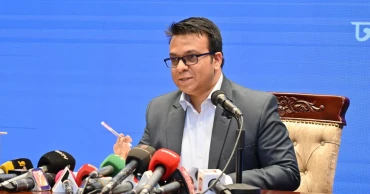
Dhaka to remind Delhi about its request for Hasina’s extradition: Ministry
Bangladesh had sent a set of relevant documents to India with the diplomatic letter (note verbale) in December last year seeking deposed Prime Minister Sheikh Hasina's extradition, and will issue a reminder at an appropriate time.
Spokesperson at the Ministry of Foreign Affairs Mohammad Rafiqul Alam made the remarks while responding to a question during a weekly media briefing on Thursday.
As a journalist wanted to know whether Bangladesh had sent an arrest warrant or all necessary documents to India for Hasina's extradition, the Spokesperson also said they had sent all required documents received from the relevant ministry under the extradition treaty and information were included when Bangladesh sent the note verbal to India regarding the extradition.
Asked when Bangladesh will give a reminder to India, the Spokesperson said it kind of both a diplomatic process and political decision. “A reminder will be sent when the leadership thinks that it is the right time to do so,” he added.
Foreign Adviser Hossain likely to meet Indian EAM Jaishankar at Indian Ocean Conf in Oman
So far, India has not responded to Bangladesh's request for Hasina's extradition, despite the Foreign Ministry's note verbale.
"We continue to expect a response from India," Rafiqul Alam said.
Bangladesh has long been waiting for a reply from India regarding its request for Hasina’s extradition and was supposed to send a reminder after a certain period if no reply is received from New Delhi.
He said the government will take the next step based on the reply from the Indian side.
The spokesperson at India’s Ministry of External Affairs Randhir Jaiswal confirmed that they received the extradition request for Hasina from the interim government of Bangladesh.
Hasina is facing over 100 cases with a wide range of charges, including murder, genocide and crimes against humanity in charge of killings during the July uprising that led to make her flee to India on August 5.
Bangladesh and India signed an extradition treaty in 2013, which was later amended in 2016, providing a legal framework for such requests.
In July 2016, Bangladesh and India amended Article 10 (3) of their bilateral Extradition Treaty to facilitate the swift extradition of fugitive criminals between the two nations.
The interim government claims that Hasina was the key person who passed the order in the "massacre" during the July-August period.
Bimstec Summit: A meeting between Dr Yunus and Modi in the making?
In September, Chief Adviser Prof Muhammad Yunus said Hasina should be extradited and brought to justice if she committed crimes.
"Why shouldn't she be? If she committed crimes, she should be extradited and brought to justice… she should be facing justice, too," he said while responding to a question at "The New York Times Climate Forward Event."
1 year ago