President Xi
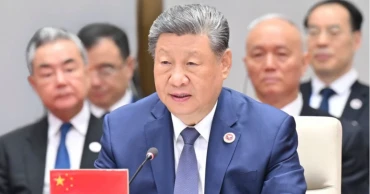
President Xi outlines four-point proposal at SCO Bishkek summit
Chinese President Xi Jinping on Tuesday put forward a four-point proposal at the 26th Meeting of the Council of Heads of State of the Shanghai Cooperation Organization (SCO) in the Kyrgyz capital of Bishkek.
In his speech at the summit, Xi said this year marks the 25th founding anniversary of the SCO. He pointed out that 25 years ago, safeguarding sovereignty, security and development interests became a shared consensus among countries in the region in the face of the profound lessons of the Cold War, the real threat posed by the "three evil forces," as well as the strong aspirations of people in various countries for peace and development.
The SCO thus emerged, and the organization has increasingly demonstrated its strong vitality and dynamism, Xi added.
Over the past 25 years, the SCO has gone through an extraordinary journey, Xi said, noting that its most significant achievement has been its gradual transformation into a new type of regional cooperation organization that spans the largest geographical area, represents the largest population, and possesses enormous development potential in the world.
The SCO's most valuable spiritual asset is the pioneering proposal and steadfast adherence to the "Shanghai Spirit" of mutual trust, mutual benefit, equality, consultation, respect for diversity of civilizations and pursuit of common development, he said.
The SCO's most important experience for cooperation is that it has found the right way of coexistence featuring non-alliances, non-confrontation and not targeting any third party, while bringing countries in the region together to build a common home, he added.
Xi said that 25 years on, as profound changes unseen in a century are accelerating, the rivalry is intensifying between dialogue and confrontation, win-win cooperation and zero-sum, and multilateralism and unilateralism, and the shadow of war continues to haunt the world.
At the crossroads concerning the future of humanity, the SCO should shoulder its historic responsibility and take the initiative in steering the course of history, he said.
Xi called on the SCO to stay committed to putting development first, and open up the prospects for shared prosperity.
The SCO, Xi said, should champion a universally beneficial and inclusive economic globalization, consolidate cooperation in traditional areas such as trade and investment, connectivity, energy and resources, and expand cooperation in emerging areas such as artificial intelligence, digital economy, green industry and green mining.
China sees the SCO as a priority area for the high-quality joint construction of the Belt and Road and implementation of the Global Development Initiative, and will continue to host events such as the SCO Digital Economy Forum and the SCO Agricultural Expo, Xi said.
China will also establish an international cooperation center on AI applications for SCO countries, set up a China-SCO port economy cooperation center in Tianjin, and jointly implement 100 technological cooperation projects with SCO countries over the next three years, Xi added.
Xi urged the SCO to stay committed to taking security as a key goal, and foster an environment of common security.
The SCO should coordinate to counter traditional and non-traditional security threats, combat the "three evil forces," transnational organized crime, drug trafficking and telecommunications fraud, strengthen cooperation on information security, bio-security and outer space security, and prevent external forces from interfering in the internal affairs, endangering political security and undermining regional stability, Xi noted.
Xi said China stands ready to work with all parties to act on the vision of a common, comprehensive, cooperative and sustainable security, and build the SCO into an important platform for implementing the Global Security Initiative.
China supports the early opening of the SCO's "four security centers" so as to enhance the capacity of member countries to address security threats and challenges, Xi said.
Xi also called on the grouping to put people first, and cement the foundation for everlasting friendship.
The SCO should take into account the characteristics of each member state's history, culture, social system and development stage, build cooperation networks between legislatures, political parties, schools, think tanks, enterprises and media, promote people-to-people exchanges, and inject vitality into the good-neighborliness and friendship among member states, he said.
China is willing to work with all parties to implement the Global Civilization Initiative, and supports a greater role of the SCO Good-Neighborliness, Friendship and Cooperation Commission and other organizations of friendly people-to-people exchanges, Xi said.
The Chinese side will set up a China-SCO basic education cooperation center, and continue to build bridges for exchanges and mutual learning as well as people-to-people connectivity through such programs as Confucius Institutes and Luban Workshops, he added.
Xi also urged the SCO to promote dialogue and consultation, and strive for more equitable and orderly governance.
He stressed that the SCO should always advocate that all countries, regardless of their size, are equal, and that regional affairs should be discussed by all countries to bridge differences and build consensus. The SCO should properly handle differences through dialogue and consultation, and meet common challenges through multilateral coordination.
China supports the SCO in setting an example in cooperation to implement the Global Governance Initiative, Xi said, calling for continued efforts to improve the SCO's operational mechanisms, and enhance the efficiency of its decision-making and execution.
More like-minded countries are welcome to become SCO partners to join the effort to improve regional and global governance, he said.
Xi stressed that China is ready to work with all parties to continue to uphold the banner of the "Shanghai Spirit," implement the SCO's development strategy for the next decade, strive for higher quality development, and make greater contributions to building a community with a shared future for humanity.
Leaders of member states fully affirmed the achievements the SCO has made in the past 25 years, and recognized that the SCO has provided important guarantee for regional security and prosperity and has become one of the cornerstones of global stability and economic development.
All parties expressed appreciation for China's important contribution to the organization's development as a founding member, and agreed to actively implement the strategic vision set out at the 2025 Tianjin summit, continue to uphold the Shanghai Spirit, promote institution-building, enhance political mutual trust, deepen cooperation in areas including trade, investment, science and technology, energy, finance, industrial and supply chains, and connectivity, strengthen people-to-people bonds, jointly respond to new types of security challenges, with a view to writing a new chapter of lasting peace and common development.
In the face of a complex and volatile international situation, SCO member states should embrace solidarity and cooperation, enhance the influence of SCO, promote the building of a more just and equitable global governance system, and play a greater role in safeguarding peace, stability and prosperity in the region and beyond.
Leaders of the member states signed and issued the Bishkek Declaration, approved the protocol on amendments and additions to the SCO Charter, the regulations on the SCO Universal Center for Countering Security Challenges and Threats and the regulations on the SCO Anti-drug Center, and adopted 28 outcome documents covering such areas as security, economic and people-to-people cooperation, and organizational development.
President Xi congratulated Pakistan Prime Minister Shehbaz Sharif on taking over the chair of the Council of Heads of State.
1 month ago
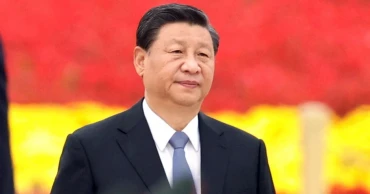
President Xi calls for ethnic solidarity to build a better life
Chinese President Xi Jinping has called on residents of Galai Village in Nyingchi, Xizang Autonomous Region, to uphold ethnic solidarity and work towards creating a happier and more prosperous life.
In a reply letter to the villagers—whom he visited in July 2021—Xi, also General Secretary of the Communist Party of China Central Committee and Chairman of the Central Military Commission, expressed his happiness upon learning about the village’s recent progress.
He mentioned that the village has undergone significant changes, with villagers’ incomes increasing steadily, reports Xinhua.
Xi emphasised the importance of continuing to follow the Party’s policies aimed at developing border areas and improving residents’ livelihoods.
He also encouraged the villagers to further protect the natural beauty of the plateau, develop their tourism industry, and contribute to building a prosperous and stable border region.
Renowned for its beautiful peach blossoms, Galai Village has achieved notable progress in rural tourism development, boosting the collective economy, and strengthening ethnic unity in recent years.
1 year ago
.jpg)
China committed to remain engaged in future development
Chinese Ambassador to Bangladesh Li Jiming on Wednesday said China will coordinate sustainable and green development and respond to the core concerns of Bangladesh and the international community on climate change.
He made the remarks at a webinar titled-“Impressions of Bangabandhu Sheikh Mujibur Rahman on newly born People’s Republic of China” organised by Bangladesh-China Silk Road Forum.
“Bangladesh has just completed a 10-day long grand celebration on the occasion of the birth centenary of the Father of the Nation Bangabandhu Sheikh Mujibur Rahman and the Golden Jubilee of Independence. I would like to take this opportunity to pay my highest tribute to Bangabandhu. As a friendly neighbour, we are very proud and glad to see the prosperity and progress of Bangladesh,” he added.
Li Jiming also said over the past 46 years, China and Bangladesh have carried forward the traditional friendship, continuously deepened political mutual trust, and promoted economic and trade cooperation.
During President Xi's state visit to Bangladesh in October 2016, the two sides signed a memorandum of understanding on cooperation under the framework of the Belt and Road Initiative and decided to elevate bilateral ties to the level of a strategic partnership of cooperation.
“China has been Bangladesh's largest trading partner for years. In July last year, China began to offer zero-tariff treatment to 97% of Bangladesh's exports, and Bangladesh has ushered in a new golden age in exporting to China, Chinese market, the largest single retail market in the world and attracting Chinese and foreign investors,” he added.
Also read: Will strengthen development strategies with Bangladesh: Chinese President
During the pandemic, China and Bangladesh supported each other and worked together to overcome difficulties. At the difficult time for China to fight the pandemic, the government and people of Bangladesh donated a large number of medical materials to China, he also said.
The two countries have also overcome the impact of the pandemic to advance cooperation projects such as the Padma Bridge and a multi-lane road tunnel under the Karnaphuli River. The Payra Power Plant has been completed and is going to go into commercial operation.
“In 2021, China and Bangladesh have both entered a new stage of development. China has completed building a moderately prosperous society in all respects successfully and is going to celebrate the 100th anniversary of the founding of the Communist Party of China and embark on the 14th Five-Year Plan to achieve the Long-Range Objectives Through the Year 2035, while Bangladesh celebrates the 50th anniversary of its independence and embark on the 8th Five-Year Plan to achieve the Vision 2041,” he also said.
“At present, the COVID-19 epidemic has brought the world into a period of turbulence and change. Only by maintaining strategic focus in the face of challenges, sticking to the theme of development and working together can we promote China-Bangladesh strategic partnership of cooperation entering a new stage. China and Bangladesh should adhere to the common commitment of upholding multilateralism made by the heads of states, and contribute to world peace and stability in the post-pandemic era,” Li Jiming said.
He added that Bangladesh’s GDP has maintained a growth rate of over 6% for many years in a row. This has raised the welfare of Bangladeshi people. Recently, Bangladesh has obtained the qualification to graduate from the Least Developed Countries as assessed by the United Nations.
Also read: Bangladesh, China discuss Covid vaccine assistance: Envoy
In his video message, China’s president Xi Jinping stressed that he attaches great importance to China-Bangladesh relations.
“In the future, we would like to work with people from all walks of life in Bangladesh to implement the important consensus reached by the leaders of our two nations, promote the synergy between the two countries to achieve high-quality coordinated development, and promote the early realization of the Chinese Dream and the dream of "Sonar Bangla. I am confident that with the concerted efforts of China and Bangladesh, China-Bangladesh cooperation will yield even more golden fruits,” he also added.
Li Jiming said to continue the expansion of cooperation, China has decided to donate 500,000 doses of COVID-19 vaccine to Bangladesh, ensuring the fulfillment of China's commitment to making vaccines more accessible and affordable in developing countries.
Professor Dr. Gowher Rizvi, International Affairs Adviser to Prime Minister; Rashed Khan Menon, President of Workers Party of Bangladesh, Hasanul Haque Inu, President of Jatiya Samajtantrik Dal, Mozaffar Hossain Paltu, Advisory Council Member of Bangladesh Awami League, and Dilip Barua, Chairperson of Bangladesh-China Silk Road Forum also joined in the virtual discussion.
5 years ago

President Xi discuses Rohingya repatriation issue with Myanmar
China has reaffirmed its willingness to provide further support, within its capacity, to Myanmar in the Rohingya repatriation process and resettlement of the displaced people from Rakhine State.
6 years ago