Israel-Lebanon
Trump's proposal for Syria to confront Hezbollah raises concerns in Lebanon and Israel
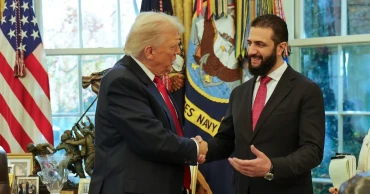
U.S. President Donald Trump's suggestion that Syria should take on Hezbollah instead of Israel has sparked concern in both Lebanon and Israel, despite Syria insisting it has no plans to intervene.
As the White House has become increasingly critical of Israel's prolonged military campaign against the Iran-backed Hezbollah group in Lebanon, Trump has repeatedly argued that Syria's new Islamist-led government would be better suited to deal with the militant organization.
Speaking on the sidelines of the G7 summit earlier this month, Trump said Israel's war against Hezbollah had gone on for too long and resulted in too many civilian deaths.
"You don't have to knock down an apartment house every time you're looking for somebody," Trump said, adding that Syria could "do a better job" of handling Hezbollah.
He later repeated the idea in an interview with Fox News, saying he was considering letting Syria take over the task because he believed Syrian President Ahmad al-Sharaa's government could carry out more targeted operations.
The White House declined to provide further details, referring to Trump's previous public remarks.
Syria, however, quickly rejected suggestions that it was preparing for any military action in Lebanon.
In a speech in Damascus on June 13, al-Sharaa said reports claiming Syria planned to intervene were false. Instead, he said Syria supports a permanent end to the fighting, stronger Lebanese state institutions and closer economic cooperation between the two countries.
In a later interview with Emirati broadcaster Al Mashhad, al-Sharaa said Trump's comments had been misunderstood.
He said Syria had proposed peaceful solutions to Washington focused on ending the conflict and helping stabilize both Lebanon and Syria through political, economic and social measures, not military action.
Although al-Sharaa previously led insurgent forces fighting former Syrian President Bashar Assad during Syria's civil war, his government has repeatedly said since taking power in December 2024 that it is focused on rebuilding the country rather than seeking revenge against Hezbollah, which had supported Assad during the conflict.
Syria also stayed out of the recent war involving Israel, the United States and Iran, while reinforcing its border with Lebanon to prevent weapons smuggling and avoid the conflict spilling across its territory.
At one point in March, Syria accused Hezbollah of firing artillery shells into Syrian territory, an allegation the Lebanese group denied. The tensions later eased after mediation efforts by Turkey, according to Turkish Foreign Minister Hakan Fidan.
Al-Sharaa has also said he remains open to dialogue with Hezbollah and even offered to help mediate discussions among Lebanon's political factions over the future of the group's weapons.
Despite Syria's denials, Trump's proposal has revived old fears in Lebanon, where many people still remember Syria's military presence in the country that lasted until 2005. There are also concerns that sectarian violence in Syria could spread across the border.
Analysts have questioned the practicality of Trump's proposal.
Randa Slim, director of the Middle East Program at the Washington-based Stimson Center, said the idea reflected a poor understanding of the situation on the ground.
She said Syria is still struggling to rebuild after years of war, while its security forces remain fragmented and include foreign Islamist fighters with uncertain loyalties.
Israel is also watching developments closely. Since al-Sharaa came to power, Israeli forces have taken control of a strip of southern Syria and remain wary of the country's new leadership. Israeli officials are also monitoring growing competition between Israel and Turkey, a key supporter of Syria's new government, over influence in Syria.
An Israeli official, speaking on condition of anonymity, said senior security officials met this week to discuss the situation. While Israel is concerned about Syria potentially regaining political influence in Lebanon, the official said its main security focus remains Hezbollah.
3 months ago
Israel retaliates with strikes on Lebanon after rocket attack
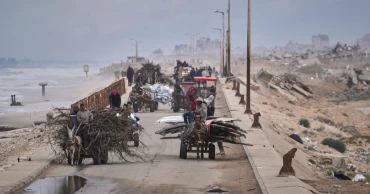
Israel launched airstrikes on Lebanon on Saturday in retaliation for rockets fired at Israeli targets, marking the most intense exchange of fire since the ceasefire.
The rockets from Lebanon, which hit northern Israel, were launched earlier in the day, sparking concerns over the stability of the fragile ceasefire with Hezbollah. Israel had warned of a severe response to the attack, which targeted the town of Metula.
Israel-Hezbollah war: WB estimates $11 billion needed for reconstruction of Lebanon
The conflict between Israel and Hezbollah escalated after the October 7, 2023, Hamas attack from Gaza, leading to full-scale war in September. Israel’s massive airstrikes killed many Hezbollah leaders and left over 4,000 people dead in Lebanon. The ceasefire brokered in November required Israel to withdraw from all Lebanese territories by January, with the deadline extended to February 18. However, Israel has remained in five locations across Lebanon, continuing airstrikes on southern and eastern regions, which it claims were aimed at Hezbollah.
Israel’s Prime Minister instructed the military to strike dozens of targets in Lebanon, asserting that Israel would not tolerate threats to its sovereignty. No comments have been made by Hezbollah. Lebanon's Prime Minister, Nawaf Salam, urged the Lebanese military to take necessary actions while expressing a desire to avoid war.
The United Nations Interim Force in Lebanon (UNIFIL) expressed concern over the potential escalation and called for restraint, warning of serious consequences for the region.
The strikes occurred after Israel announced its plans to intensify operations in Gaza until Hamas releases the 59 hostages it holds. Israeli airstrikes the previous night resulted in the deaths of at least nine people, including three children. Israel also destroyed Gaza's only specialized cancer hospital, accusing Hamas of using it as a base. Around 600 Palestinians have been killed since Israel resumed its operations earlier this week.
War-torn Lebanon forms its first government in over 2 years
International condemnation of the attacks has been widespread. Foreign ministers from the UK, France, and Germany called Israel's actions in Gaza a major setback, urging an immediate return to a ceasefire.
The ongoing conflict has killed over 49,000 Palestinians, with Israel claiming that around 20,000 were militants, though this figure remains unverified.
1 year ago