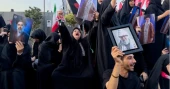
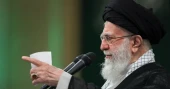
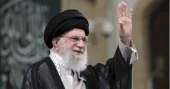
Ayatollah Khamenei
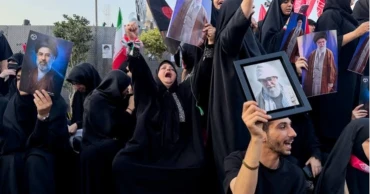
Mourners fill Tehran streets for Ayatollah Khamenei's funeral, chant against Trump
Huge crowds of mourners dressed in black filled the streets of Iran's capital on Monday as the funeral procession for late Supreme Leader Ayatollah Ali Khamenei continued, with many participants chanting slogans calling for the death of U.S. President Donald Trump.
Khamenei's coffin, draped in the Iranian flag, was placed on a truck decorated to resemble the ornate lattice surrounding the shrine of an imam. The coffins of several members of his family, who were killed in a Feb. 28 airstrike during the war launched by Israel and the United States, were also carried in the procession.
The large turnout, encouraged by Iran's clerical leadership as a display of national unity and strength, came as Tehran prepares to resume negotiations with the United States on reaching a permanent end to the conflict that claimed the life of the 86-year-old leader.
Live footage broadcast by Iranian state television showed a massive crowd stretching for several kilometres from Tehran's Azadi (Freedom) Square along the city's main boulevard. The gathering appeared larger than the funeral procession held in 2020 for Revolutionary Guard General Qassem Soleimani, which attracted more than one million mourners.
Authorities did not immediately release an official estimate of the crowd size as the truck carrying the coffins moved slowly through the streets. Many mourners carried banners and placards calling for Trump's death.
"Today is a very difficult day because we are attending the funeral of our leader," mourner Fatima Hassan said. "We are not here to say goodbye. We are here for revenge, and we will take revenge."
Many mourners reached out to touch the truck carrying Khamenei's coffin, while others threw scarves and personal belongings toward attendants so they could briefly touch the coffin, a traditional practice in Iran believed to bring blessings.
To help people cope with the heat, attendants standing on fire trucks sprayed water mist over the crowd. Officials repeatedly urged mourners through loudspeakers to walk slowly, avoid pushing and remain along the edges of the road to prevent accidents.
Revolutionary Guard General Hasan Hasanzadeh, who is overseeing the funeral arrangements, said the coffins would travel through Tehran over a 12-hour journey before reaching Mehrabad International Airport.
Iranian authorities have closed major roads, restricted airspace and suspended much of daily activity during the mourning period, which began on Saturday and will continue until Thursday. Khamenei will be buried at the Imam Reza shrine in Mashhad, his birthplace.
"This is the last time I will see him," said mourner Maryam Alizadeh through tears. "Our generation lived with him for decades."
As the funeral ceremonies continued, calls for retaliation over Khamenei's death grew louder. Many mourners displayed signs demanding the deaths of both Trump and Israeli Prime Minister Benjamin Netanyahu. One effigy of Trump was seen hanging along the procession route.
"We are here to show that his path will continue," mourner Sahar Zaraatgar said. "All of us will continue on his path, and we will certainly avenge his death against the U.S. and Israel."
U.S. authorities have monitored Iranian threats against Trump and other senior officials for years following Trump's order to kill General Qassem Soleimani in 2020. Iran has repeatedly denied plotting to assassinate Trump, although hardline propaganda has frequently portrayed him as a target.
During the recent conflict, Trump also threatened to destroy Iran's civilisation if tensions escalated further.
Meanwhile, negotiations between Washington and Tehran remain on hold until after Khamenei's burial. The United States hopes to resume talks aimed at reopening the Strait of Hormuz, curbing Iran's disputed nuclear programme and securing a lasting end to the war.
The funeral has also served as a demonstration of national unity as Iran continues to demand greater control over the strategically important Strait of Hormuz, a key global energy shipping route that it closed during the conflict. The United States has rejected those demands, while disagreements also remain over Iran's nuclear programme and the conflict involving the Iran-backed Hezbollah group in Lebanon.
Iran's new Supreme Leader, Ayatollah Mojtaba Khamenei, has not appeared publicly during the funeral ceremonies. He is believed to be in hiding after reportedly being wounded in the airstrike that killed his father.
During the war, before an April ceasefire took effect, Israel targeted several senior Iranian leaders, in some cases reportedly using their public appearances to identify their locations. Israeli officials have also threatened to kill the younger Khamenei.
3 months ago
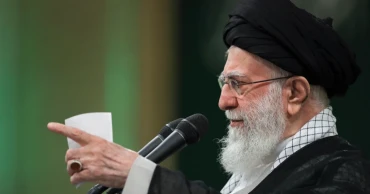
Khamenei calls US nuclear criticism 'nonsense'
Iran’s supreme leader on Tuesday pushed back against US criticism of the country’s nuclear program, saying that Tehran won’t seek permission from anyone to enrich uranium and calling American statements “nonsense.”
“They say, ‘We won’t allow Iran to enrich uranium.’ That’s way out of line,” Ayatollah Ali Khamenei said during a memorial for late President Ebrahim Raisi, who died in a helicopter crash last year, AP reports.
“No one in Iran is waiting for their permission. The Islamic Republic has its own policies and direction — and it will stick to them.”
Khamenei’s remarks came as indirect talks between Iran and the US reportedly continue, though he expressed doubt about their outcome.
Trump and US administration used power for massacre in Gaza: Ayatollah Khamenei
“Yes, indirect negotiations were held during Raisi’s time too, just like now,” he said. “But they didn’t go anywhere — and we don’t expect much from the current ones either. Who knows what will happen.”
His comments reflect Tehran’s growing frustration with the stalled nuclear discussions, as well as the broader tensions that have defined US-Iran relations in recent years.
Foreign Ministry spokesman Esmaeil Baghaei told the state-run IRNA news agency that “no definitive decision has been made about the next round of negotiations,” adding that “the Islamic Republic of Iran is reviewing the matter while considering the US side’s contradictory and constantly changing positions.”
IRNA also reported that Kazem Gharibabadi, the deputy foreign minister, said that Tehran had received a proposal regarding the next round of indirect talks with Washington and was currently reviewing it.
1 year ago
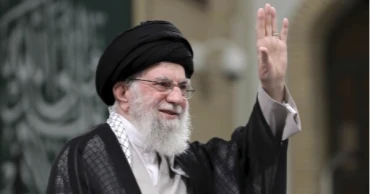
Trump and US administration used power for massacre in Gaza: Ayatollah Khamenei
In his first reaction to Trump’s regional visit, Iran’s Supreme Leader Ayatollah Ali Khamenei said Trump wasn't truthful when he made claims about creating peace through power.
“Trump said that he wanted to use power for peace, he lied. He and the US administration used power for massacre in Gaza, for waging wars in any place they could,” Khamenei said Saturday during a meeting with teachers broadcast on state television, reports AP.
The US has provided Israel with 10-ton bombs to “drop on Gaza children, hospitals, houses of people in Lebanon and anywhere else when they can," Khamenei said.
Khamenei, who has the final say on all Iranian state matters, reiterated his traditional stance against Israel.
Israeli strikes kill 93 people in Gaza as Trump wraps up Middle East visit
“Definitely, the Zionist regime is the spot of corruption, war, rifts. The Zionist regime that is lethal, dangerous, cancerous tumor should be certainly eradicated, and it will be," he said, adding that the US has imposed a pattern on Arab nations under which they cannot endeavour without US support.
“Surely this model has failed. With efforts of the regional nations, the US should leave the region, and it will leave," Khamenei said.
Meanwhile, regional leaders were to meet in Baghdad on Saturday at the annual summit of the Arab League, with the war in Gaza expected to once again loom large.
1 year ago