Jamaat-e-Islami Ameer Dr Shafiqur Rahman
Govt’s ‘wrong decisions’ pushing economy towards collapse: Jamaat ameer
Leader of the Opposition in Parliament and Bangladesh Jamaat-e-Islami Ameer Dr Shafiqur Rahman on Wednesday alleged that some “wrong and shortsighted” decisions of the government have put the country’s economy at risk of collapse.
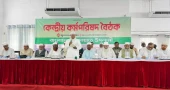
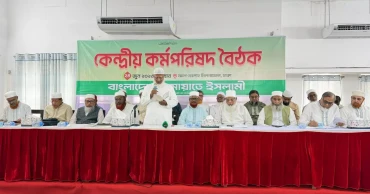
Speaking at a meeting of the party’s Central Working Committee, he particularly criticised the government’s decision regarding the banking sector.
“Some wrong and imprudent decisions of the government have brought the economy to the verge of collapse. When Islami Bank Bangladesh PLC, which had been devastated during the fascist era, was just beginning to recover, the government made a suicidal decision to hand over the bank back to the cohorts of fascism,” the Jamaat chief said.
“We believe this decision will destroy the country’s economy from the roots. The people expect the government to demonstrate wisdom and reconsider the matter immediately,” he added.
In his inaugural speech at the meeting, Shafiqur Rahman said Jamaat has pursued politics through democratic, constitutional and peaceful means since its inception and has played a “dignified role” in democratic movements in Bangladesh. “We played an important role in the anti-fascist movement of 2024.”
He, however, said it is extremely unfortunate that the current government is making a self-destructive and shortsighted attempt to make people forget the spirit of July 2024. “The Prime Minister campaigned for a ‘Yes’ vote in the referendum but later trampled on the referendum verdict, effectively betraying the nation. This decision will ultimately backfire on the government,” he said.
The opposition leader further alleged that extortion, tender manipulation and land grabbing by “ruling party activists” have reached alarming levels, while bribery and corruption continue unchecked.
He also alleged that political patronage has contributed to a rise in crimes such as murder and rape, leading to a severe deterioration in the country’s law-and-order situation.
The Jamaat leader further accused the government of “blatant politicisation” of education, economic institutions and the administration.
“Even in newly formed Parliament, there is visible discrimination. Opposition MPs are being deprived of fair allocations. Through such actions, the government is gradually moving towards a one-party rule, which is deeply disappointing for the nation,” he said.
In his concluding remarks, the Jamaat ameer, who chaired the meeting, said the overall situation in the country is becoming increasingly complex amid various national and international challenges.
“The fallen fascist forces and their allies will try to provoke us from both inside and outside the country. We must proceed with patience and caution and avoid falling into any traps,” he said.
Highlighting the importance of young people and religious scholars, Shafiqur Rahman said Bangladesh still has reason to remain hopeful.
The meeting, moderated by Jamaat Secretary General Mia Golam Porwar, reviewed the current political situation, law and order, border push-ins and other issues of public importance. Participants also discussed preparations for the party’s upcoming Central Majlis-e-Shura session scheduled for June 26, along with various organisational matters.
3 months ago
EU Envoy meets Jamaat Ameer, reaffirms support for Bangladesh’s democratic transition
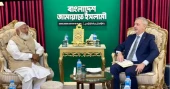
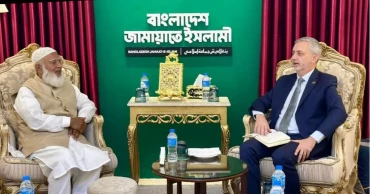
European Union (EU) Ambassador to Bangladesh Michael Miller on Thursday met with Jamaat-e-Islami Ameer Dr Shafiqur Rahman, reaffirming the EU’s support for Bangladesh’s democratic transition and reform process.
"We look forward to smooth elections and stand ready to work with whomever will form the next government to further strengthen EU-Bangladesh relations," said the EU Embassy in Dhaka after the meeting.
8 months ago
Time up for the old ways of doing things in Bangladesh: Jamaat-e-Islami Chief
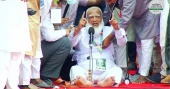
Bangladesh Jamaat-e-Islami Ameer Dr Shafiqur Rahman on Saturday delivered a firm rebuke to those who would like to see a restoration of the country’s “rotten old system,” saying, “First bring back the lives of those who sacrificed themselves in the July struggle—if you have the power. But you won’t be able to.”
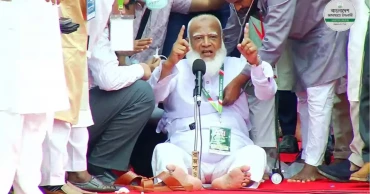
He made the remarks while addressing a large national rally at Dhaka’s historic Suhrawardy Udyan, the party’s first-ever public gathering at the venue.
“The martyrs of July gave their lives for the freedom of the nation. If everything from the past is to be restored, then what did they die for?” Dr Rahman asked.
“We are indebted to those who were tortured, disabled, or martyred in the fight against tyranny. May Allah grant us the strength to repay that debt as long as Jamaat-e-Islami exists.”
The Jamaat chief mentioned several individuals who fell ill during the rally, including Khulna's upazila-level leader Maulana Abu Sayeed and Pabna’s elderly activist Mustafizur Rahman. “May Allah grant Paradise to those who passed away,” he said.
Dr Rahman fell ill himself while delivering his speech and had to pause briefly. Upon recovering, he resumed his remarks and declared, “As long as I live, I will fight for the people, InshaAllah. Our struggle will continue until the people of Bangladesh are truly free.”
He emphasized that the next major battle would be against corruption: “Another war is coming—against corruption. With the strength of our youth, we will launch that fight, InshaAllah.”
Dr Rahman made a series of promises in case Jamaat comes to power in the future.“If Jamaat-e-Islami forms the government with Allah’s mercy and the people's support, no MP or minister will take government land allotments. No one will use duty-free vehicles. They will not handle public funds personally.”
He further added “If any MP or minister receives a development allocation, they must report back to the 18 crore people of the country upon completion of the work. We will neither take bribes nor tolerate corruption.”
Referring to past incidents, he said “We must not forget or neglect those who were martyred—from October 28, 2006, to the Shapla Square massacre and the 2024 killings. We demand visible steps toward justice for all these atrocities. Until then, the old system cannot be allowed to continue in Bangladesh.”
1 year ago

Jamaat Ameer alleges manipulated ‘judicial killings’ under Hasina regime
Jamaat-e-Islami Ameer Dr Shafiqur Rahman on Tuesday alleged that six top leaders of his party were victims of so-called ‘judicial killings’ through fabricated cases under Sheikh Hasina’s autocratic rule.
“During Sheikh Hasina’s authoritarian regime, our six top leaders were executed through false cases in what can only be described as manipulated judicial killings. Many other leaders and activists were also brutally murdered. During the mass movement of 2024, numerous people were mercilessly martyred,” he said.
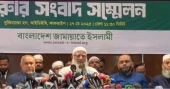
The Jamaat Ameer came up with the remarks while speaking at a press conference at the meeting room of Diploma Engineers' Institute in the city following the acquittal of Jamaat leader ATM Azharul Islam.
Dr Shafiqur Rahman claimed that the trials were marred by gross irregularities and forgery. “There were calls from various quarters for ensuring fair justice, but those were ignored as the true intention was to eliminate our leadership. The judiciary was used to orchestrate their deaths.”
Elections before reforms may not meet people's expectations: Jamaat Ameer
He further alleged that the party’s leaders were subjected to torture in 'safe homes' and were harassed through false charges. “Attempts were made to coerce false confessions from many of our leaders. But they remained steadfast in faith and refused to bow to falsehood,” the Jamaat Ameer said.
Referring to the case of witness Sukharanjan Bali, he said Bali was allegedly abducted from the court premises after appearing to testify in favour of Azharul Islam. “International legal standards were not followed in these trials. The entire process was a mockery of justice—what we call ‘genocide justice’,” the Jamaat leader said.
“If we get the opportunity to serve the nation, we will eliminate the politics of vengeance and build a just and equitable society… had our senior leaders been alive today, they could have played a vital role during this critical juncture of the nation,” he said.
1 year ago