Port in China
Tianjin Port advances as China’s premier smart shipping hub
Tianjin Port, recognised as one of China’s leading modern comprehensive ports and the world’s highest-grade artificial deep-water port, continues to expand its global reach.
Connecting with over 500 ports across more than 200 countries and regions, it operates more than 40 sea-rail multimodal routes and 147 container shipping lines.
In recent years, the port has shifted its focus towards intelligent shipping services, transforming into a comprehensive port and logistics operator.
As part of the “China Up Close: Tianjin Tour,” journalists from various countries recently visited the port.
The visit was co-hosted by China Global Television Network (CGTN) and the Tianjin Municipal People's Government.
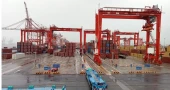
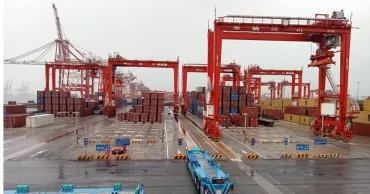
During the tour, journalists observed the port’s operations, which are powered entirely by clean energy.
In 2019, President Xi Jinping visited Tianjin Port and instructed authorities to digitalise the facility. Since then, the port has focused on implementing digital technologies, achieving automation across several sectors, according to a port official.
"We offer our partners online services through a single station, and many new methods are currently being trialled to enhance our service efficiency," said the official.
Feng Miao, Manager of Operation Management at Tianjin Port, said that the port utilises its own global navigation satellite system, BeiDou (BDS), for precise positioning and navigation.
Furthermore, all dispatching and instructions within the port are managed by Huawei, which has contributed to increased operational efficiency, he added.
Tianjin Port handles various types of cargo, including liquid bulk, general cargo, roll-on/roll-off (RoRo) vehicles, and containers, facilitating seamless connections with ports worldwide. The port is also equipped to manage specialised cargo such as metal ore, coal, oil, automobiles, steel, and grain.
1 year ago