US strike-Trump
Iran says US strikes on nuclear sites complicate prospects for talks
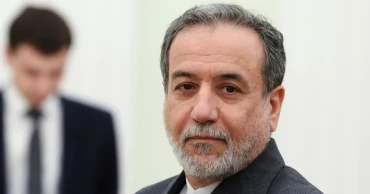
Iran’s foreign minister has said that the possibility of new negotiations with the United States over Tehran's nuclear program has been complicated by recent American military strikes that caused “serious damage” to Iranian nuclear sites.
The United States was among the original parties to the 2015 nuclear agreement, under which Iran agreed to curb its uranium enrichment activities in return for sanctions relief and other benefits. However, the deal collapsed after then-U.S. President Donald Trump unilaterally withdrew from the agreement during his first term.
Trump, who has expressed interest in renewed talks with Iran, recently claimed that negotiations between the two sides would take place next week.
In an interview aired on Iranian state television late Thursday, Foreign Minister Abbas Araghchi said Iran had not agreed to resume talks but did not rule out the possibility entirely.
“No agreement has been made for resuming the negotiations,” Araghchi said. “No time has been set, no promise has been made, and we haven't even talked about restarting the talks.”
Araghchi noted that the recent U.S. military intervention “made it more complicated and more difficult” to restart discussions on Iran’s nuclear program.
The development comes after a wave of Israeli strikes on Iran that began on June 13. Israel targeted nuclear facilities, air defense systems, senior military officials, and atomic scientists in an intense 12-day assault.
According to Israeli officials, the attacks killed approximately 30 Iranian commanders and struck eight nuclear-related sites and over 720 pieces of military infrastructure. The Washington-based Human Rights Activists group reported that more than 1,000 people were killed, including at least 417 civilians.
Iran capable of rebuilding nuclear infrastructure after strikes: IAEA chief
In response, Iran fired over 550 ballistic missiles at Israel. Most were intercepted, but those that hit their targets caused widespread damage and left 28 people dead.
The United States later intervened, launching a wave of cruise missiles and bunker-buster bombs from B-2 bombers on Sunday. The attacks focused on three of Iran's most critical sites, using weapons designed to penetrate heavily fortified underground facilities.
Following the strikes, Iran retaliated by firing missiles at a U.S. military base in Qatar on Monday, though no casualties were reported.
Trump has claimed the U.S. attacks “completely and fully obliterated” Iran's nuclear program. However, Iran’s Supreme Leader Ayatollah Ali Khamenei dismissed the claim as an exaggeration, stating the strikes did not “achieve anything significant.”
There is also speculation that Iran relocated much of its stockpile of highly-enriched uranium ahead of the strikes. Iran had previously informed the International Atomic Energy Agency (IAEA) of plans to move the material.
Despite this, IAEA Director Rafael Grossi told Radio France International that the damage to Iran’s Fordo nuclear site, which is built deep into a mountain, was “very, very, very considerable.”
Grossi said that centrifuges used for uranium enrichment are delicate and that “it’s not possible” for them to remain undamaged after multiple 30,000-pound bombs struck the facility.
“These centrifuges are no longer operational,” Grossi stated.
Araghchi acknowledged the severity of the damage. “The level of damage is high, and it’s serious damage,” he said.
He added that Iran had not yet decided whether to allow IAEA inspectors to visit the damaged sites, saying they would be barred “for the time being.”
1 year ago
Iran vows retaliation over US strikes; Trump hints at regime change
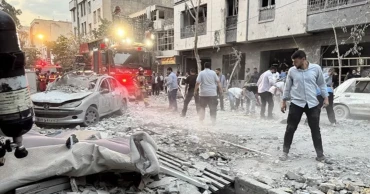
Tensions in the Middle East continue to escalate as Iran has vowed retaliation over US military strikes on its nuclear facilities while US President Donald Trump has openly hinted at possible regime change in Tehran.
Iranian Supreme Leader Ali Khamenei, in his first remarks since the US joined Israel’s attacks on Iran, promised to punish “the Zionist enemy”. His statement comes amid ongoing exchanges of strikes between Israel and Iran.
US President Trump questioned the future of Iran’s leadership. “If the current Iranian regime is unable to make Iran great again, why wouldn’t there be a regime change?” Trump said, fuelling speculation about Washington’s broader goals following the strikes.
Iran’s ambassador to the United Nations has accused the US of "waging war" under an "absurd pretext" after American forces hit three key Iranian nuclear sites—Fordo, Natanz, and Isfahan.
Oil prices have surged in response to the developments. US Secretary of State Marco Rubio has urged China to apply pressure on Tehran to prevent the closure of the strategic Strait of Hormuz, a critical route for global energy shipments.
US strikes on Iran draw sharp divide in Congress along party lines
The US State Department has issued a worldwide alert for American citizens, warning of possible retaliatory attacks following the escalation.
Uncertainty remains over the extent of damage to Iran’s nuclear programme.
President Trump has claimed the strikes effectively neutralised Iran’s nuclear ambitions, saying the US action took "the 'bomb' right out of their hands".
However, the UN’s nuclear watchdog has stated it cannot yet determine the current situation at the Fordo plant.
Despite the US strikes, Israel and Iran have continued trading attacks over the past 24 hours, intensifying fears of a wider conflict.
According to Iranian authorities, more than 400 people have been killed and at least 3,056 others wounded since Israel launched its assault on June 13. On the Israeli side, at least 24 people have reportedly been killed in retaliatory Iranian strikes.
With inputs from Al Jazeera, BBC
1 year ago