Missile Fire
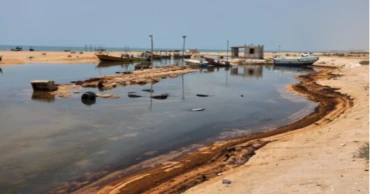
UAE suspends trade with Iran after renewed missile fire
The United Arab Emirates suspended all trade with Iran on Wednesday after accusing Tehran of launching renewed missile attacks, adding to the economic pressure on Iran as it faces US sanctions and a blockade.
The UAE issued nationwide warnings on Tuesday night asking residents to take shelter after two ballistic missiles were fired toward the country. It was the first such warning in several weeks.
The UAE had faced frequent Iranian missile attacks earlier in the conflict, causing trade between the two countries to largely stop. Some maritime trade resumed in late June as fighting eased, according to Iran's state-run IRNA news agency, though the current level of trade was unclear.
UAE accuses Iran of missile attacks
The UAE Foreign Ministry said two ballistic missiles were fired toward the country on Tuesday and later fell into the Persian Gulf.
The ministry said it remained committed to dialogue and regional cooperation but had decided to suspend economic ties with Iran.
"All trade, commercial exchanges and financial transactions with Iran have been halted until further notice," it said, citing growing regional tensions.
The UAE Defense Ministry said its assessment showed that the missiles were aimed at maritime traffic. It was not immediately clear whether Emirati vessels or UAE territorial waters were directly targeted.
Iranian Foreign Ministry spokesperson Esmail Baghaei denied that Tehran had launched missiles toward the UAE.
Attacks on ships increase tensions
Iran has repeatedly targeted vessels using the Strait of Hormuz as part of its efforts to control the key waterway. Four tankers owned by Abu Dhabi's state oil company ADNOC have been attacked over the past two weeks.
The attacks caused no injuries but drew strong condemnation from the UAE and other Gulf countries, including Kuwait and Bahrain.
Nearly 20 ADNOC vessels have been attacked by Iranian missiles and drones in the Strait of Hormuz since the conflict began, killing one person and injuring about 20 others.
The strait is a major strategic point for Iran because about one-fifth of the world's traded oil and natural gas passed through it before the war.
The United States and Israel launched the conflict on Feb 28, with their stated objectives including weakening Tehran's government and ending its nuclear programme. However, the fighting has increasingly focused on control of the Strait of Hormuz.
Iran has fired hundreds of ballistic missiles and thousands of drones during the conflict. Tehran says many of the attacks targeted US assets, but some struck buildings and key infrastructure in Dubai and Abu Dhabi, including Dubai's airport, ports and energy facilities.
Iran has accused the UAE and other US allies in the Gulf of helping American military operations against Iran.
Iranian Chief of Staff Gen Ali Abdollahi issued a fresh warning Wednesday to countries along the southern coast of the Persian Gulf.
He said any assistance given to the US military would amount to taking part in American military operations, according to Iran's semiofficial Fars news agency.
Trade suspension could increase pressure on Iran
The UAE was one of Iran's largest trading partners before the war. According to the World Trade Organization's latest 2024 figures, the UAE accounted for more than 30% of Iran's imports, worth about $21 billion, and received nearly 13% of Iran's exports, valued at around $7 billion.
The UAE's decision comes as the United States prepares to impose further economic pressure on Iran.
US Treasury Secretary Scott Bessent said last week that the measures would combine economic isolation with the ongoing American blockade of Iranian ports.
The latest economic pressure follows heavy US and Israeli airstrikes on Iranian military, industrial and civilian infrastructure.
Iran's economy is already under severe strain. The International Monetary Fund expects inflation to reach nearly 70% this year and the economy to shrink by 5.4%. Iran's rial has also fallen to record lows.
1 month ago
Israel launches airstrikes on Yemen’s Houthis; rebels retaliate with missile fire
Israel carried out airstrikes early Monday targeting ports and facilities under the control of Yemen’s Houthi rebels, who responded by launching missiles aimed at Israel.
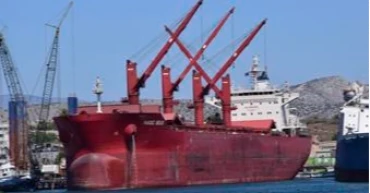
The escalation followed an attack on Sunday on the Liberian-flagged cargo ship Magic Seas in the Red Sea, which caught fire and began taking on water, eventually forcing its crew to abandon the vessel.
While the Houthis have not formally claimed responsibility, suspicion quickly fell on the group, especially after a security firm reported that bomb-laden drone boats struck the ship after it was hit with small arms and rocket-propelled grenades. Houthi media outlets reported the incident but did not claim it, which is not unusual as the group often delays acknowledging such operations.
A renewed wave of Houthi attacks on maritime vessels could once again draw U.S. and Western military involvement in the region, similar to when President Donald Trump ordered large-scale airstrikes against the rebels.
The latest ship attack comes amid heightened tensions in the Middle East, with ceasefire negotiations in the Israel-Hamas conflict hanging by a thread and Iran considering resuming nuclear talks following U.S. strikes on its key nuclear facilities during Israel’s conflict with the Islamic Republic. Meanwhile, Israeli Prime Minister Benjamin Netanyahu is traveling to Washington for talks with Trump.
Israel targets ports, seized ship, radar system
According to the Israeli military, strikes were carried out on Houthi-controlled ports in Hodeida, Ras Isa, and Salif, along with the Ras Kanatib power plant. The military released footage showing an F-16 taking off from Israel for the operation, which followed an Israeli warning for the area.
“These ports are used by the Houthi terrorist regime to transfer weapons from the Iranian regime, which are employed to carry out terrorist operations against the state of Israel and its allies,” the Israeli military said.
Israel also targeted the Galaxy Leader, a vehicle carrier seized by the Houthis in November 2023 at the onset of their Red Sea attacks linked to the Israel-Hamas war.
“Houthi forces installed a radar system on the ship and have been using it to track vessels in the international maritime arena to facilitate further terrorist activities,” the Israeli military stated.
The Galaxy Leader, flying the Bahamas flag, is linked to an Israeli billionaire, but no Israeli nationals were aboard. The ship was operated by Japan’s NYK Line.
Australian woman convicted of killing 3 relatives by serving poisonous mushroom meal
The Houthis confirmed the Israeli strikes but did not provide details on damage. Their military spokesman, Brig. Gen. Yahya Saree, claimed Houthi air defenses “effectively confronted” the Israeli assault but provided no supporting evidence.
Israel has conducted repeated strikes on Houthi positions in Yemen, including a naval attack in June. While both the U.S. and Israel have previously targeted ports in the area — with a U.S. airstrike in April reportedly killing 74 — Israel now appears to be acting independently as Houthi missile fire toward Israel continues.
Israel’s Defense Minister Israel Katz warned of more military action if necessary.
“What’s true for Iran is true for Yemen,” Katz declared. “Anyone who raises a hand against Israel will have it cut off. The Houthis will continue to pay a heavy price for their actions.”
In response, the Houthis launched missiles at Israel. The Israeli military reported intercept attempts, but said the missiles appeared to hit their targets, though no casualties were reported. Sirens sounded across the West Bank and the Dead Sea area.
Saree later claimed the Houthis used both missiles and drones in the retaliatory strike on Israel.
“We are fully prepared for a sustained and prolonged confrontation, to confront hostile warplanes and to counter attempts to break the naval blockade imposed by our armed forces on the enemy,” Saree stated.
Attack on Magic Seas forces crew evacuation
The attack on the Magic Seas, a bulk carrier en route to Egypt's Suez Canal, occurred approximately 100 kilometers (60 miles) southwest of Hodeida, a port city controlled by the Houthis. According to the United Kingdom Maritime Trade Operations center, the ship’s onboard security team initially returned fire after being attacked with gunfire and rocket-propelled grenades, but the vessel was later struck by projectiles.
Ambrey, a private maritime security firm, reported that drone boats laden with explosives hit the Magic Seas, marking what could be a significant escalation. The firm said two drone boats successfully hit the vessel, while two others were neutralized by security personnel on board.
The UK Maritime center confirmed that the ship was taking on water, forcing the crew to abandon it. They were later rescued by a passing vessel.
Moammar al-Eryani, information minister for Yemen’s internationally recognized government, blamed the Houthis for the incident, identifying the vessel as the Magic Seas. He said the ship had been broadcasting its armed security status and was traveling north at the time of the attack.
“The attack also proves once again that the Houthis are merely a front for an Iranian scheme using Yemen as a platform to undermine regional and global stability, at a time when Tehran continues to arm the militia and provide it with military technology, including missiles, aircraft, drones, and sea mines,” al-Eryani wrote on X.
The ship’s owners have not responded to requests for comment.
Houthi attacks tied to Israel-Hamas war
The Houthis have been targeting commercial and military vessels in the region with missiles and drones, which the group says is in retaliation for Israel’s military offensive in Gaza.
Between November 2023 and January 2025, the Houthis attacked over 100 merchant ships, sinking two and killing four sailors. Their campaign severely disrupted trade through the Red Sea, a critical waterway that handles around $1 trillion in goods annually. Although trade volume remains below average, activity in the Red Sea has increased recently.
The Houthis had halted their maritime attacks after the U.S. launched a large-scale assault against them in March. That operation ended weeks later, and while the Houthis have refrained from targeting vessels since then, they have continued to sporadically fire missiles at Israel.
1 year ago