ethnic Bengali Muslims
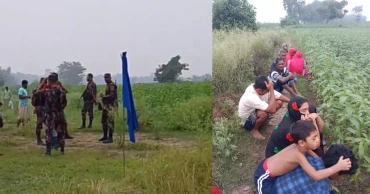
India should stop unlawfully expelling Bengali Muslims to Bangladesh: HRW
Urging India to stop brutal expulsions, the Human Rights Watch (HRW) on Wednesday said both Bangladesh and Indian governments should ensure that border management never again comes at the cost of basic human dignity.
The New York-based rights body said the Indian authorities are forcibly expelling ‘ethnic Bengali residents, mostly Muslims’ from West Bengal state, to Bangladesh without basic due process.
“No one, whatever their nationality, should be left to spend nights in an open field between two lines of armed border guards,” said Meenakshi Ganguly, deputy Asia director at Human Rights Watch.
Ganguly said the Indian authorities are cruelly dumping families into Bangladesh or leaving them stranded at the border, ignoring their basic human rights.
“The government (of India) should stop unlawfully expelling people, ensure procedural safeguards, engage with Bangladeshi authorities to verify citizenship, and end this dismaying animosity toward Muslims.”
Bangladeshi border guards have reported that since June 1, 2026, they have foiled 21 attempts by the BSF to push more than 200 people, including children, into Bangladesh’s border districts.
The chief minister of India’s West Bengal state, Suvendu Adhikari, who took office after the Hindu-majoritarian Bharatiya Janata Party (BJP) won the March elections, said that the government under his “detect, delete and deport” policy had detained hundreds of “Bangladeshi infiltrators” and forced nearly 5,000 people “to go back.”
The Human Rights Watch interviewed nine people who witnessed Indian border security troops bring groups of people to the border at night and push them through cuts in the barbed wire fencing into Bangladeshi territory.
In several cases, Indian border guards eventually allowed people to return after the Bangladesh border force denied them entry, it said in a statement.
Just ahead of March elections in West Bengal, India’s election commission had carried out a hurried and controversial revision of voter lists that dropped over nine million names, triggering threats of detention and deportation, said HRW.
A flawed and discriminatory citizenship verification process in Assam state in 2019 had already left over 1.9 million people stateless and thousands of Bengali-speaking residents of the state have been held in detention centers, while many were expelled unlawfully.
The BJP chief minister in Assam, Himanta Biswa Sarma, has repeatedly lashed out at Bengali-speaking Muslims in the state, calling them “illegal immigrants.” Recently he said: “We take them to a convenient location near the border, and literally push them across the border. Now, such an atmosphere has been created in Assam that several illegal Bangladeshis have started going back on their own.”
Indian officials contend that numerous Bangladeshis are living in India illegally and have offered to help them return voluntarily.
Genuinely voluntary repatriation, including with assistance, is compatible with international human rights standards, but India should not coerce repatriation or forcibly expel people, the HRW said.
“Nor should they, as some of those interviewed allege, strip them of documentation, money, and personal belongings.”
Bangladeshi authorities have said they will not accept people pushed across the border outside legal channels, insisting that any returns must follow proper verification and established repatriation procedures, according to the HRW.
Leaving people without food, water, shelter, or medical care may amount to cruel, inhuman, or degrading treatment, it said.
The Indian government should ensure access to fundamental procedural safeguards for anyone subject to expulsion.
This includes access to full information about the grounds for deportation, the right to legal representation, and an opportunity to appeal a decision to expel them.
Expelling or stranding children violates the Convention on the Rights of the Child, which obligates states to respect children’s right to preserve their nationality and prohibits their arbitrary deprivation of liberty.
India and Bangladesh have bilateral mechanisms that provide for verification of nationality and orderly transfer of nationals.
Indian authorities’ circumvention of these procedures has repeatedly left people trapped between two border forces in conditions that violate their fundamental rights, Human Rights Watch said.
3 months ago

Hundreds of Muslims unlawfully expelled to Bangladesh by India: HRW
The Indian government should stop unlawfully deporting people without due process and ensure everyone’s access to procedural safeguards to protect against arbitrary detention and expulsion, said Human Rights Watch (HRW) on Thursday.
The New York-based rights body said Indian authorities have expelled hundreds of ethnic Bengali Muslims to Bangladesh in recent weeks without due process, claiming they are “illegal immigrants" and many of them are Indian citizens from states bordering Bangladesh.
“India’s ruling BJP is fueling discrimination by arbitrarily expelling Bengali Muslims from the country, including Indian citizens,” said Elaine Pearson, Asia director at Human Rights Watch.
“The authorities’ claims that they are managing irregular immigration are unconvincing given their disregard for due process rights, domestic guarantees and international human rights standards.”
Since May 2025, the Hindu nationalist Bharatiya Janata Party (BJP)-led government has intensified operations to expel ethnic Bengali Muslims to Bangladesh, ostensibly to deter people from entering India without legal authorisation, the HRW claimed.
It interviewed 18 people in June, including affected people and family members in nine cases.
Those interviewed include Indian citizens who returned to India after being expelled to Bangladesh and family members of those who were detained and are still missing.
On July 8, Human Rights Watch wrote to India’s Ministry of Home Affairs with our findings but received no response.
The Indian government has provided no official data on the number of people expelled, but Border Guard Bangladesh has reported that India expelled more than 1,500 Muslim men, women, and children to Bangladesh between May 7 and June 15, including about 100 Rohingya refugees from Myanmar.
The HRW said expulsions have continued.
Authorities in the BJP-run states of Assam, Uttar Pradesh, Maharashtra, Gujarat, Odisha and Rajasthan have rounded up Muslims, mostly impoverished migrant workers, and turned them over to Indian border guards.
Push-ins from India a violation of human rights: BGB DG
In some cases, the border guards allegedly threatened and beat the detainees to force them to cross into Bangladesh without adequately verifying their citizenship claims.
The Indian government has had to readmit dozens of people who eventually proved their Indian citizenship.
The crackdown followed a deadly attack by gunmen against Hindu tourists in Jammu and Kashmir in April.
Police started harassing Muslims, refused to accept their citizenship claims and seized their phones, documents, and personal belongings, leaving them unable to contact family members.
Some of those apprehended said Indian Border Security Force (BSF) officials threatened and assaulted them, and in a few cases, forced them to cross the border at gunpoint.
Khairul Islam, 51, an Indian citizen and former schoolteacher from Assam state, said that on May 26, Indian border officials tied his hands, gagged him, and forced him into Bangladesh, along with 14 others.
“The BSF officer beat me when I refused to cross the border into Bangladesh and fired rubber bullets four times in the air,” he said.
He managed to return two weeks later.
Irregular migration from Muslim-majority Bangladesh to India has gone on for decades, but there is no accurate data and figures are often inflated for political purposes, said HRW.
Senior BJP officials have repeatedly labeled irregular immigrants from Bangladesh as “infiltrators” and used the term more broadly to demonize Indian Muslims to gain Hindu political support.
13 push-ins detained by BGB in Moulvibazar
On May 8, Bangladesh’s Foreign Ministry wrote to the Indian government calling these “push-ins” – an apparent reference to collective expulsions – “unacceptable,” and saying that they would “only accept individuals confirmed as Bangladeshi citizens and repatriated through proper channels.”
In May, Indian authorities also expelled about 100 Rohingya refugees from a detention center in Assam across the Bangladesh border.
The United Nations Office of the High Commissioner for Human Rights (OHCHR) reported that the authorities forced another 40 Rohingya refugees into the sea near Myanmar, giving them life jackets and making them swim to shore in what the UN special rapporteur on Myanmar, Tom Andrews, called “an affront to human decency.”
Andrews said the incident was also “a serious violation” of the principle of nonrefoulement, the international legal prohibition against returning people to a territory where they face threats to their lives or freedom.
The Indian Supreme Court refused in early May to block deportations of Rohingya refugees, saying that if they are found to be foreigners under Indian law, they must be deported.
On May 16, in response to the account of Rohingya forced into the sea, the court said there was no evidence to support these allegations, claiming this was a “beautifully crafted story.”
The Indian government has, however, not denied the allegations.
India is obligated under the International Covenant on Civil and Political Rights and the International Convention on the Elimination of All Forms of Racial Discrimination to ensure the protection of everyone’s rights and to prevent deprivation of citizenship on the basis of race, color, descent, or national or ethnic origin, said the HRW.
India’s detention and expulsion of anyone without due process violates fundamental human rights, Human Rights Watch said.
The Indian government should ensure access to fundamental procedural safeguards for anyone subject to expulsion.
BGB detains 6 push-ins from Lalmonirhat; claims they're Indians
This includes access to full information about the grounds for deportation, competent legal representation, and an opportunity to appeal a decision to expel.
The authorities should ensure that security forces and border guards do not use excessive force and should impartially investigate alleged misuse of force.
Those responsible for abuses should be appropriately disciplined or prosecuted. People detained for expulsion should have access to adequate food, shelter, and medical facilities, and authorities should address the specific needs of marginalised groups, including women, children, older people and people with disabilities.
“The Indian government is putting thousands of vulnerable people at risk in apparent pursuit of unauthorised immigrants, but their actions reflect broader discriminatory policies against Muslims,” Pearson said.
“The government is undercutting India’s long history of providing refuge to the persecuted as it tries to generate political support,” Pearson added.
1 year ago