children under 16
Malaysia enforces social media ban for children under 16
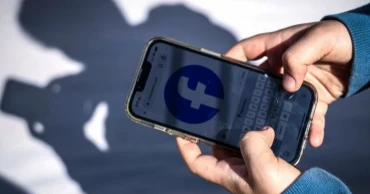
Malaysia on Monday started enforcing new rules that prohibit children under the age of 16 from having social media accounts, joining a growing number of countries seeking to improve online safety for young users.
Under the new regulations, social media companies must introduce age-verification systems and prevent users younger than 16 from creating accounts. The rules apply to platforms with at least 8 million users, including Facebook, Instagram, TikTok and YouTube.
Companies that fail to follow the regulations could face fines of up to 10 million ringgit (about $2.5 million). However, parents will not be punished if their children manage to bypass the restrictions.
The Malaysian government said the measures are designed to protect children from harmful online content, cyberbullying and platform features that encourage excessive screen time and addictive use.
Malaysia joins countries such as Australia, Brazil and Indonesia, which have already introduced or announced restrictions on children's access to social media. Several other nations, including Britain, France, Spain, Denmark, Thailand and South Korea, are also considering similar measures.
The Malaysian Communications and Multimedia Commission said the rules are not intended to block children from using the internet or digital technology. Instead, they aim to ensure that service providers take greater responsibility for online safety and put age-appropriate protections in place.
“These measures help strengthen the protection of children in the online environment, while providing added reassurance to parents in navigating increasingly complex digital risks,” the regulator said in a statement issued last month.
Social media platforms will also be required to introduce safety features that discourage compulsive use and take stronger action against underage accounts and harmful content.
Technology companies have not yet explained how they will fully comply with the new requirements. The regulator said platforms will be given a grace period to complete the rollout of age-verification systems.
In April, Clara Koh, Meta’s director of public policy for Southeast Asia, warned that a blanket ban on users under 16 could have unintended consequences by pushing teenagers toward less-regulated parts of the internet. She noted that Meta has already introduced “teen accounts” for users under 18, with restrictions on contact, screen time and exposure to inappropriate content.
Malaysia’s move comes as governments worldwide face increasing pressure to address concerns about the impact of social media on children's mental health and online safety.
In March, a US jury ordered Meta and YouTube to pay millions of dollars in damages in a case that alleged certain platform design features contributed to harm suffered by a young user.
While many parents have welcomed the new rules, privacy advocates have raised concerns about the age-verification process.
Benjamin Loh, a social science lecturer at Monash University Malaysia, said the requirement for government-issued identification to verify age has sparked concerns over personal data protection.
He also questioned the effectiveness of age-based restrictions, noting that experiences in other countries have shown mixed results. Since parents face no penalties, he said, families could easily bypass the rules by creating accounts on behalf of their children.
“Unless regulators address this loophole, the law may have limited success in preventing children from using social media,” Loh said.
4 months ago
Spain moves to ban social media use for children under 16
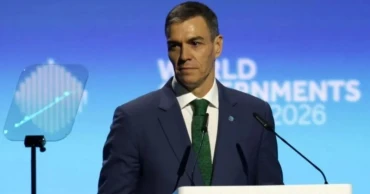
Spain has announced plans to ban children under the age of 16 from using social media, joining a growing number of European countries seeking tighter online protections for minors.
Prime Minister Pedro Sánchez made the announcement at the World Governments Summit in Dubai on Tuesday, saying children must be shielded from what he called the “digital Wild West.”
The proposed ban, which still requires approval from parliament, is part of a broader package of digital reforms. These include holding senior executives of social media companies legally responsible for illegal or harmful content shared on their platforms.
Australia became the first country in the world to introduce such a ban last year, and several nations are now closely watching its outcome. France, Denmark and Austria have said they are considering similar age limits, while the UK government has launched a consultation on whether to restrict social media use for under-16s.
Sánchez said social media exposes children to addiction, abuse, pornography, manipulation and violence, arguing that young users are being left alone in spaces they are not ready to navigate.
Under the proposed Spanish law, platforms would be required to introduce strong and effective age verification systems, going beyond simple check boxes. The changes would also criminalise the manipulation of algorithms to boost illegal content and disinformation for profit.
The prime minister said the government would no longer accept claims that technology is neutral, stressing that platforms and actors behind harmful content would be investigated. A new system would also be created to monitor how digital platforms fuel hate and social division, although details were not provided.
Read More: UK to consult on possible social media ban for under-16s
Spain also plans to investigate and prosecute crimes linked to platforms such as TikTok, Instagram and Grok, the AI tool linked to X. The European Commission and the UK have already launched investigations into Grok, while French authorities recently raided X’s offices as part of a cybercrime probe.
Passing the law could prove challenging, as Sánchez’s left-wing coalition lacks a parliamentary majority. However, the main opposition People’s Party has expressed support, while the far-right Vox party has opposed the move.
Reacting to the announcement, X owner Elon Musk criticised Sánchez, calling him a “tyrant and traitor.”
Meanwhile, France continues to push for tougher rules, with President Emmanuel Macron aiming to ban social media for under-15s by the start of the next school year in September.
#With inputs from BBC
8 months ago
Australia bans YouTube accounts for children under 16 from December
In a major policy reversal, the Australian government has announced that YouTube will be included among social media platforms prohibited for users less than 16 years of age, effective from December 10.
The move overturns a previous exemption granted to the video-sharing platform when Parliament passed landmark legislation last November restricting under-16s from accessing platforms like Facebook, Instagram, TikTok, Snapchat and X (formerly Twitter).
Communications Minister Anika Wells on Wednesday released a list of services that will fall under the “age-restricted social media platforms” category. She confirmed YouTube’s inclusion, citing government research that found four in 10 Australian children reported experiencing harm on the platform.
“We will not be intimidated by legal threats when this is a genuine fight for the wellbeing of Australian kids,” Wells told reporters. She said platforms that fail to take “reasonable steps” to exclude underage users could face fines of up to AUD 50 million (USD 33 million).
YouTube to shut down trending page on July 21
While children will still be able to access YouTube content, they will no longer be allowed to hold their own accounts.
YouTube’s parent company, Alphabet Inc., criticized the decision as a reversal of a prior public commitment. “Our position remains clear: YouTube is not social media, it is a video-sharing platform increasingly viewed on TV screens,” the company said in a statement, adding it would consult with the government on next steps.
Prime Minister Anthony Albanese said Australia would push for international backing for the under-16 social media ban at a UN forum in New York in September, calling the issue a “common global experience.”
Messaging, education, health, and gaming apps are excluded from the ban as they are deemed less harmful.
1 year ago