US diplomats met Chief Adviser Yunus
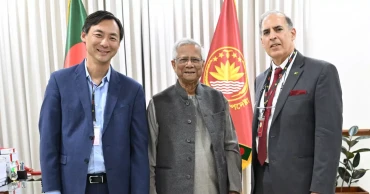
No possibility of reconciliation with previous regime at this moment: Prof Yunus
Chief Adviser Prof Muhammad Yunus has ruled out the possibility of reconciliation in Bangladesh at this moment due to the ‘continued denial’ by the former regime of its crimes.
He made the remarks when two former senior United States diplomats -- Albert Gombis and Morse Tan, both of whom served during the Donald Trump administration -- asked whether a truth and reconciliation initiative, similar to post-apartheid South Africa, was possible in Bangladesh.
They met the Chief Adviser at the State Guest House Jamuna in Dhaka late Tuesday night, said the Chief Adviser’s press wing on Wednesday (January 14, 2026).
Albert Gombis, a former Acting Under Secretary of State, and Morse Tan, a former Ambassador-at-Large, are visiting Bangladesh ahead of the crucial elections.
Read more: Ocean a major asset, yet it's increasingly polluted: Prof Yunus
Both diplomats praised the Chief Adviser for his crucial role in steering the country over the past one and a half years.
As a friend of late Nelson Mandela, Prof Yunus said, he closely followed South Africa’s truth and reconciliation process, but he saw no possibility of a similar move in Bangladesh right at this moment due to the continued denial by the former regime of its crimes.
“Time is not right. Where do you start? Truth and reconciliation come when you admit that you were wrong, when you repent and show remorse for your crimes, and when you create the right atmosphere,” the Chief Adviser said.
“But so far, there is no remorse, no repentance. Instead, they claim that the young people killed during the July uprising were killed by terrorists. There are stacks and stacks of evidence of their crimes, absolutely barbaric crimes, yet they remain in complete denial,” he said.
Prof Yunus reaffirmed his government’s commitment to hold the general elections and the referendum as scheduled on February 12.
He said there had been a flood of fake news and deliberately spread confusion surrounding the elections, but stressed that the Interim Government remained firm in its commitment to hold the polls on February 12 and to hand over power to a democratically elected government once the results are announced.
“No matter who says what, elections will be held on February 12, not a day before, not a day after,” the Chief Adviser said, adding that the vote would be free, fair and peaceful, and held in a festive atmosphere.
He said the interim government would remain completely neutral during the elections, ensuring an unbiased administration and a level playing field for all political parties.
During the hour-long meeting, the Chief Adviser and the visiting former diplomats discussed a wide range of issues, including the forthcoming elections, the July Revolution and its aftermath, the rise of young protesters, the July Charter and the referendum, fake news and misinformation targeting the vote, the Rohingya crisis, and the prospects for truth and reconciliation in a post-July Bangladesh.
The Chief Adviser said his government was campaigning for ‘Yes’ votes in the referendum, noting that the July Charter, set to be endorsed by the people, would usher in a new era of democratic governance and leave no room for future autocracy.
Election on Feb 12, no matter who says what: Prof Yunus tells former US diplomats
Prof Yunus said supporters of the former autocratic regime were spreading fake news and misinformation in an attempt to create confusion about the elections. “But people are alert. Increasingly, they can detect AI-generated misinformation videos,” he said.
Former Under Secretary Gombis agreed that fake news had emerged as ‘one of the main enemies’ of democracy worldwide and stressed the need for greater efforts to combat the threat.
SDGs Affairs Principal Coordinator and Senior Secretary Lamiya Morshed was also present at the meeting.
9 months ago