Chuadanga’s winter molasses haat
Chuadanga’s centuries-old molasses haat comes alive in winter
In the middle of winter, trading activity has surged at the historic Sarojganj date molasses market in Chuadanga, one of Bangladesh’s most renowned traditional haats for palm jaggery, with the aroma of freshly boiled sap filling the air.
Nearly 300 years old, Sarojganj Haat sits twice a week, on Mondays and Fridays, and during the peak season now records transactions worth more than Tk one crore weekly.
On each market day, sales range between Tk 1.5 crore and Tk 2 crore. If the current momentum continues, total transactions this season are expected to reach Tk 50–55 crore, according to local traders.
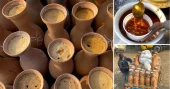
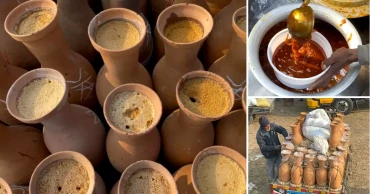
A visit to the haat presents a vibrant tableau of rural commerce. Earthen pots brimming with liquid jaggery line the stalls, while freshly made nolen patali are neatly stacked alongside newly produced molasses displayed in bamboo baskets and wooden frames. Buyers and sellers engage in animated bargaining, their calls echoing through the market.
Read more: A Sweet Legacy: Traditional molasses-making flourishes in Jhenaidah village
Renowned for its distinctive taste, rich colour and natural aroma, Sarojganj’s date molasses enjoys strong demand across the country.
Retail prices currently range from Tk 230 to Tk 350 per kilogram, depending on quality. Earthen pots weighing between 12 and 16 kilograms sell for Tk 1,800 to Tk 2,600, while different varieties of nolen patali fetch between Tk 300 and Tk 430.
Molasses collected from the haat is supplied to a wide network of districts, including Dhaka, Kushtia, Meherpur, Jhenaidah, Pabna, Rajshahi, Rangpur, Barishal, Sylhet, Khulna, Mymensingh, Magura, Rajbari and Panchagarh.
Sazzad Hossain, a molasses producer from Sarabaria village in Chuadanga Sadar upazila, said the jaggery is prepared using traditional methods passed down through generations.
“Sap collected from date palm trees is boiled in traditional ovens using tin strainers. When the sap thickens, it is stirred continuously to make molasses. We have been producing pure jaggery using this age-old method for generations,” he said.
On market days, sellers arrive with their produce by bicycle, van or even carrying heavy earthen pots on their heads. Buyers carefully examine the colour, thickness and overall quality before finalising their purchases.
Read more: Cold and fog bite into Narail’s honey season
Shahidul Islam, a trader from Pabna, said he returns to Sarojganj every year because of the product’s purity. “The price is a bit higher, but the quality is superior,” he said.
Date palm farmer Jamal Uddin from Baliakandi village in Chuadanga Sadar said he is collecting sap from 35 palm trees this season and expects to produce around 400 to 500 kilograms of molasses.
Local trader Ujjal Kumar Adhikari described Sarojganj Haat as one of the largest molasses markets in the country, operating continuously for nearly three centuries through generations of traders and producers.
Haat operator Md Alauddin Ala said traders from across Bangladesh, including Dhaka and Chattogram, regularly attend the market. “Each haat sees transactions worth Tk 1.5 crore to 2 crore, and we ensure the safety of both buyers and sellers,” he said.
According to the Department of Agricultural Extension (DAE) in Chuadanga, sap is being collected from around 2,72,000 date palm trees in the district this season, with a production target of 2,700 metric tonnes of molasses.
Read more: Severe cold throws normal life in Chuadanga out of gear
Deputy Director Md Masudur Rahman Sarkar said farmers are producing pure, sugar-free molasses and that regular monitoring is being conducted to prevent adulteration.
Locals said trading at the Sarojganj date molasses market will continue in full swing until Chaitra, promising yet another successful winter season for this historic marketplace that remains a symbol of Chuadanga’s rich agrarian heritage.
8 months ago