Climate project
Sundarbans climate project to close early amid UK aid cuts
A UK-funded climate resilience project in Bangladesh is being forced to close two years ahead of schedule following cuts to Britain’s foreign aid budget, leaving thousands of vulnerable people without planned support and threatening to undermine work already carried out, according to The Independent.
The UK Foreign, Commonwealth and Development Office (FCDO) is implementing cuts to the foreign aid budget that will reduce the UK aid budget from 0.5 percent to 0.3 percent of Gross National Income.
The cuts have affected aid programmes in a number of developing countries, with observers describing them as a “moral catastrophe” and expressing particular concern over reductions in funding for climate projects, said the report.
Among those affected is British development charity Practical Action, which has managed part of a major development project in Bangladesh since 2023.
The project aims to improve the lives of tens of thousands of people through interventions including solar power systems, climate-resilient agriculture and aquaculture feedstocks and technologies, as well as weather information systems providing early warnings for extreme rainfall and cyclones.
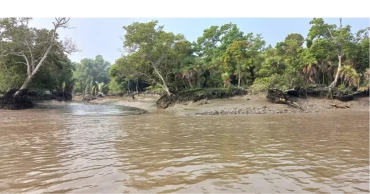
The project is located in Bangladesh’s Sundarbans, the world’s largest tidal mangrove forest, much of which is a UNESCO World Heritage Site. It began in 2023 and was originally expected to continue until 2028.
However, in April 2026, Practical Action was told that it would have to end its project in June this year, according to Tamanna Rahma, climate resilience lead for Practical Action Bangladesh. Following lobbying by the charity, the deadline was later extended to September, she said.
Practical Action was expected to receive £2.2 million by 2026, but received “far less than this”, Rahma said.
The project was originally expected to reach 57,000 people by the end of this year, but will ultimately reach around 37,000 people, according to Rahma.
“This abrupt cut has threatened our reputation in the community, which we have carefully built up over the past two and a half years,” Rahma said. “It has also impacted the long-term stability of the interventions that we have made, and limited our ability to plan for an effective exit.”
The reduction in funding for Practical Action’s project forms part of wider cuts to the UK-Bangladesh bilateral aid programme, which is set to fall from £66.7 million to £31 million between 2025/26 and 2026/27, according to figures revealed in July and cited by The Independent.
Rahma said the early exit was particularly damaging because communities in the project area require continued support to adapt to the impacts of climate change.
“Every year we are seeing more severe storms and cyclones, while the sea is rising and soil is becoming salinated,” she said. “There is huge demand for financing such as this, yet the ability to make these kinds of tangible programmatic interventions is declining.”
The Sundarbans is situated on the Ganges Delta, where the Ganges, Brahmaputra and Meghna rivers converge before flowing into the Bay of Bengal.
The vast mangrove forest covers 10,277 square kilometres and is home to 42 mammal species, including endangered tigers and river dolphins, as well as nearly 300 species of birds.
Many residents also continue to suffer the after-effects of Cyclone Aila, which affected an estimated 100,000 people when it struck the Sundarbans in 2009, destroying local infrastructure and significantly changing the landscape in parts of the region.
The Sundarbans is also facing sea-level rise of roughly 3 centimetres a year, around twice the global average, according to the report. The rising sea level is displacing communities and damaging once-fertile soil.
1 month ago
New climate-resilient project aims to create 1,000 new agri-entrepreneurs in Rajshahi division
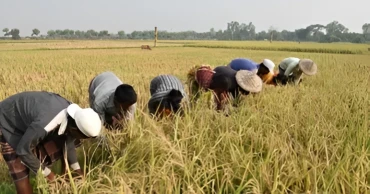
As climate stress tightens its grip on Bangladesh’s farmlands and cultivable land continues to shrink, the government has rolled out a large-scale agricultural project aimed at securing food production and livelihoods in one of the country’s most important farming belts — Bogura agricultural region.
With an allocation of Tk 251.97 crore, the project, titled Sustainable Agricultural Development of Bogura Agricultural Region, seeks to boost crop output, modernise farming practices and build long-term resilience in four districts of the Rajshahi division.
The project will be implemented by the Department of Agricultural Extension (DAE) under the Ministry of Agriculture from January 2026 to December 2030, fully funded by the government.
Spanning 44 upazilas in Bogura, Joypurhat, Pabna and Sirajganj, the project is among the largest region-based agricultural programmes undertaken in recent years.
Tk 1,300cr GK irrigation rehabilitation project aims to revive southwest agriculture
Officials say it is designed as a response to a convergence of challenges including falling groundwater levels, erratic rainfall, rising temperatures and increasingly unpredictable seasons — all of which have disrupted year-round crop cultivation in the region.
Targets and technologies
At the heart of the project is a production target: a 5 percent increase in crop output, from 41.87 lakh metric tonnes to 43.96 lakh metric tonnes.
This is to be achieved through the application of 24 modern and environment-friendly agricultural technologies, including water-saving methods, improved soil health management and better crop planning.
Cropping intensity is also expected to rise by 5 percent, from 236 percent to 241 percent, reflecting more efficient land use in an area where arable land is steadily being lost to floods, river erosion and expanding infrastructure and industrial establishments.
To address post-harvest losses — a persistent problem for farmers — the project includes the construction of 200 onion storage facilities, each with a capacity of 10 metric tonnes, alongside three storage centres for vegetables, fruits and other produce.
A deputy director’s office-cum-training centre will also be built in Bogura to strengthen local extension services.
Mechanisation is another major pillar. Under the plan, 3,185 agricultural machines will be procured and distributed to farmers to reduce production costs, ease labour shortages and improve efficiency during peak seasons.
Investing in people
Beyond infrastructure and machines, the project places strong emphasis on human resource development.
According to Planning Ministry officials, 4,840 training batches will be conducted to enhance farmers’ skills in modern crop production, seed technologies and agribusiness development.
The initiative aims to create at least 1,000 new agricultural entrepreneurs and develop around 35,000 trained agricultural human resources across the region.
More than 41,800 demonstration plots will showcase improved farming practices, while 700 field days, technical discussion sessions and 70 exposure visit programmes are planned to encourage technology adoption at the grassroots.
A Planning Commission official described the project as a strategic investment in both productivity and people. “Expanding high-yielding and high-value crops, promoting safe fruit and vegetable cultivation and improving post-harvest management can significantly lift farm incomes if done properly,” the official said.
If implemented as planned, the project is expected to contribute to soil health protection, improved nutrition, reduced rural poverty and a gradual transformation of agriculture into a more profitable and sustainable profession in the region.
For thousands of farmers facing an uncertain climate future, the success of this initiative could determine whether Bogura’s fields remain productive — or increasingly precarious — in the years ahead.
8 months ago