Prime Minister Tarique
‘What we give the country matters most, not what we get,’ says PM
Prime Minister Tarique Rahman on Saturday called for collective efforts to build a better Bangladesh, saying the sacrifices made during the July Mass Uprising and at different times in the country’s history were aimed at creating a more developed and livable country.
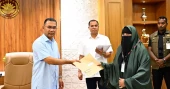
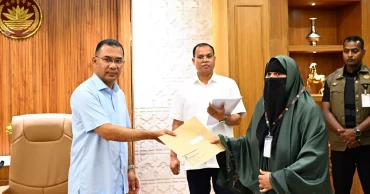
He made the remarks while handing over appointment letters to 10 family members of those killed or seriously injured in the July 2024 Mass Uprising at the Prime Minister’s Office in Tejgaon, said PM’s deputy press secretary Hasan Shiplu.
“Some of you directly took part in the July movement while some had loved ones who participated. It is because of your sacrifice or that of your loved ones that the people of Bangladesh can live in a free environment today,” Tarique Rahman said.
He recalled the sacrifices made by people from the 1971 Liberation War to the July 2024 uprising, saying their common aspiration was to build a better Bangladesh where people could live with greater dignity and security.
2 months ago
PM invites global investors to partner in Bangladesh's economic transformation
Prime Minister Tarique Rahman on Thursday called upon global investors to become long-term partners in Bangladesh's economic transformation, saying his government is committed to building a US$1 trillion economy by 2034 through investment-friendly reforms and private sector-led growth.
He also invited local and foreign investors to expand their businesses in Bangladesh, pledging stronger legal protection, simpler regulations and a more business-friendly environment.
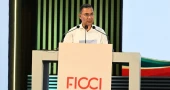
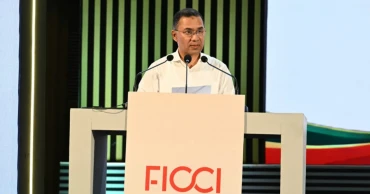
“Whether you are a local entrepreneur or a foreign investor, when you invest in Bangladesh, our government will invest in you through our time, support, and policies. That is a commitment we will keep, InshaAllah,” the Prime Minister said while addressing the FICCI FDI Conference 2026: Driving Foreign Investment for Jobs and Prosperity in Bangladesh at the Bangladesh-China Friendship Conference Centre (BCFCC) in the capital.
Addressing foreign investors, business leaders, diplomats and development partners, Tarique Rahman said Bangladesh's future depends not only on attracting investment but also on building lasting partnerships.
“I invite every business leader in this room to become part of that future. Together, we can build an economy that is stronger, equitable, and inclusive. I welcome all of you to invest and flourish in Bangladesh. Let us grow together, create jobs, and shape Bangladesh. Let us become partners in building a prosperous and globally connected Bangladesh,” he said.
The Prime Minister said the government wants to build a rules-based, globally connected and private sector-driven economy and invited investors to become partners in implementing that vision.
He said Bangladesh possesses significant strengths, including a large and rapidly growing domestic market, a young workforce, a strategic geographical location and an elected government with strong public support. “Together, these strengths position Bangladesh for sustained prosperity.”
Recalling his own experience in business before entering politics, Tarique Rahman said successful businesses depend not only on entrepreneurship but also on supportive government policies.
He thanked foreign investors for choosing Bangladesh and said their investments have created jobs, introduced new technologies, strengthened global supply chains and contributed significantly to the country's economic progress.
“Our government has completed five months in office but our policy preparations began long before the election,” the Prime Minister said.
He said the government consulted investors, entrepreneurs, economists, business associations and development partners before taking office.
2 months ago
PM forms committee to address textile sector’s issues
Prime Minister Tarique Rahman on Wednesday formed a high-level committee to review and address the challenges facing the country's textile industry.
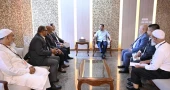
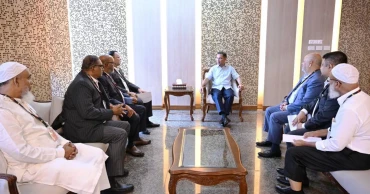
The committee was formed during a meeting with leaders of the Bangladesh Textile Mills Association (BTMA) at the Prime Minister's Office in the Bangladesh Secretariat, said Prime Minister's Deputy Press Secretary Hasan Shiplu.
During the meeting, the BTMA leaders discussed the current state of the textile industry, its export potential and a range of challenges.
They highlighted the textile industry's contribution to the national economy and sought the government's support for its sustainable growth.
They also urged the Prime Minister to provide policy support to strengthen the sector's competitiveness in the global market.
Prime Minister Tarique Rahman praised the textile industry's contribution to industrialisation, employment generation and export earnings and assured the industry leaders of the government's continued support for the sector's development.
BTMA President Shawkat Aziz Russell, Vice-President Shamim Islam, former President A. Matin Chowdhury, former Director Syed Enayet Kabir, Engineer Rajib Haider, Directors Chowdhury Mohammad Hanif Soyeb and Badsha Mia, Amanat Shah Group Chairman Helal Mia and Munnu Fabrics Managing Director Samiul Islam were present at the meeting.
2 months ago
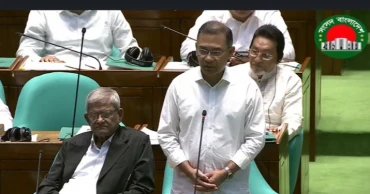
‘Tried to protect interests of country, its people’: PM on Malaysia, China visits
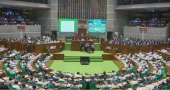
Prime Minister Tarique Rahman on Saturday told Parliament that his recent visits to Malaysia and China were guided solely by the interests of Bangladesh and its people, saying any achievements from the tours belong to the nation rather than any person.
"What I have tried to do, Honorable Speaker, from my position is to speak for the interests of my country and the people of my country and to protect those interests," he said.
The Prime Minister said this while extending thanks and gratitude to all members of Parliament, including the Opposition Leader, for unanimously adopting a thanksgiving motion in the House on his recent six-day visit to Malaysia and China.
He said the people of Bangladesh entrusted his government with the responsibility of safeguarding their interests.
“The core issue here is that the people of Bangladesh have given us the responsibility to look after their interests,” Tarique Rahman said.
Referring to his party’s ‘Bangladesh First’ slogan, he said guided by that principle they tried to uphold and protect the interests of Bangladesh and its people during the visits.
“None of us has any personal issue here. If any positive thing has been achieved, it is an achievement for Bangladesh. If the people of the country have gained any achievement through these visits, that achievement belongs to them,” he said.
On Friday, Prime Minister Tarique Rahman returned home from Beijing, wrapping up his six-day maiden overseas visit to China and Malaysia.
3 months ago
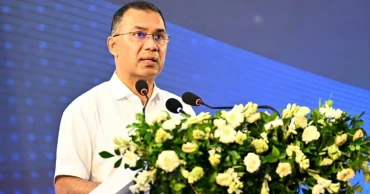
PM pushes for mandatory industry-academia linkage to address graduate unemployment
Prime Minister Tarique Rahman on Sunday stressed the need for mandatory internships, apprenticeships and stronger industry-academia collaboration to make higher education more job-oriented and reduce unemployment among graduates.
“Many graduates remain unemployed despite completing higher education. One of the main reasons, many believe, is that while students earn academic qualifications, they often fail to acquire the practical, applied and technological skills,” he said.
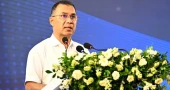
The Prime Minister made the remarks while inaugurating a national training programme, titled “Inclusion of Skills-Based Education in National University Curriculum”, at the Bangladesh-China Friendship Conference Centre in the capital.
Considering the situation, he said, the government wants to take effective steps to expand apprenticeship and internship opportunities and strengthen collaboration between universities and industries to make higher education more practical and relevant to the needs of the job market.
“To make the higher education system more technology-driven and employment-oriented, greater coordination between universities and the industrial sector, as well as mandatory internship and industry-academia linkage programmes, is now the demand of the time,” Tarique Rahman said.
Initially, he said the programme will be implemented through partnerships between universities in divisional cities and local industries and business establishments.
As a result, the Prime Minister said, students will be able to gain practical skills alongside their academic studies while still studying, reducing the likelihood of unemployment after completing their education.
He said the government is also taking initiatives to create entrepreneurs directly from campuses.
As part of the plan, Tarique Rahman said, the government has decided to provide “seed funding” or “innovation grants” on a competitive basis for the commercialisation of innovative business ideas in colleges and universities.
He expressed hope that many young entrepreneurs will emerge through these initiatives and contribute to the country’s economy instead of waiting for jobs after graduation.
The programme was organised by the National University as part of its initiative to train 12,000 college teachers across the country in vocational and technical education.
Highlighting the importance of developing skilled human resources, the Prime Minister said Bangladesh could emerge as a global role model if its youth and student population are transformed into a workforce equipped with knowledge, science and technology-based skills.
“The day is not far when Bangladesh can become a prosperous and self-reliant nation if we succeed in building a skilled generation,” he said.
Addressing young people, Tarique Rahman urged them to prepare themselves for the challenges of a rapidly changing world through education, skills and character building.
He encouraged students to acquire technological knowledge while remaining committed to the country’s long-standing religious, social and moral values.
The Prime Minister also underscored the importance of learning foreign languages, saying proficiency in a third language alongside Bangla and English will significantly enhance employment opportunities both at home and abroad.
He said the government is committed to building a knowledge-based and merit-based state and society where education, research, creativity, competence and innovation receive the highest priority.
Tarique Rahman called upon teachers, educationists and students to work together for national development, describing it as a collective endeavour rather than the responsibility of any single institution or individual.
“The government expects cooperation from universities, teachers, students, parents, civil society and the industrial sector in this journey,” he said.
The Prime Minister expressed confidence that the country’s progress will remain unstoppable if all stakeholders work in unity.
“Let us build an employment-oriented education system that will not only award certificates but also create skilled human resources. It will transform our population into productive assets,” he said.
Tarique Rahman also said education should not merely produce job seekers but should also nurture entrepreneurs. “It should serve not only as a driver of economic growth but also as a foundation for social transformation, accelerating national prosperity beyond individual or group interests.”
Referring to the rapid technological transformation worldwide, he said the world has already entered the era of the Fourth Industrial Revolution, where artificial intelligence (AI) is creating both challenges and opportunities.
“Automation and AI-driven technologies have put many traditional jobs at risk, while at the same time creating opportunities in many new sectors,” the Prime Minister observed.
He also stressed that subjects like artificial intelligence, cybersecurity, forensic science, programming, digital entrepreneurship, leadership, communication skills and financial literacy should become integral parts of modern education curricula.
Tarique Rahman mentioned emerging fields such as genetic engineering, biotechnology, quantum computing, nanotechnology, 3D printing and fifth-generation wireless technology, saying success in future workplaces will become difficult without knowledge of such areas.
He said the government has already begun reforming the curriculum from primary to higher education levels to make it more practical, technology-oriented and employment-focused. “Curriculum reform is a continuous process in this age of research, innovation and technological advancement.”
The Prime Minister appreciated the National University authorities for taking steps to modernise and update the curriculum in line with present-day demands.
He urged them to give greater importance to students’ mental health, social inclusion, environmental protection and ethical development alongside technological advancement.
“There is no alternative to moral education in becoming a compassionate and responsible human being,” Tarique Rahman said.
Speaking about the National University, he said the institution could play the most important role in expanding modern and technology-based higher education because it has more than 2,000 affiliated colleges and nearly 40 lakh students across the country.
The Prime Minister recalled that former Prime Minister Begum Khaleda Zia established the National University in 1992 to expand access to higher education for students in both urban and rural areas.
He formally inaugurated the training programme by pressing a button on a laptop around 11:25am.
During the programme, NU Vice-Chancellor Prof Dr ASM Amanullah and other teachers presented the Prime Minister with a commemorative crest and a sapling.
Education Minister Dr ANM Ehsanul Hoque Milon, Prime Minister’s Adviser on Education, and Primary and Mass Education Mahdi Amin, and Amanullah also addressed the programme.
4 months ago
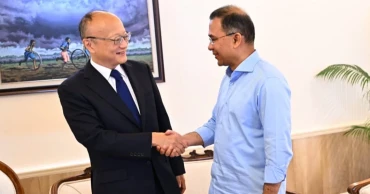
Bangladesh entering critical new phase, says ADB President highlighting $5 billion in funding
Asian Development Bank (ADB) President Masato Kanda has said Bangladesh is entering a 'critical new phase' and ADB will help the country protect hard-won stability, unlock new sources of growth, and build a more resilient economy that delivers better jobs and wider opportunity.
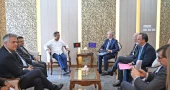
He met Prime Minister Tarique Rahman in Dhaka to discuss Bangladesh’s development priorities during a visit that highlighted funding announcements totaling $5 billion.
During the visit, ADB signed about $1.4 billion in loans as part of the 2026 annual commitment program, said the Manila-based lending agency on Monday.
ADB support was scaled up by $250 million to help address financing gaps linked to the economic impact of the Middle East conflict, which is adding pressure to Bangladesh’s economy, driving up the cost of fuel, liquefied natural gas, fertilizer, and shipping.
These strains come as inflation remains high and the banking sector remains under stress.
ADB said it will work with the government and development partners to track the situation, bring in additional financing and private investment, and help Bangladesh build a more resilient economy through more diverse energy sources and exports, and stronger institutions.
ADB also intends to provide $5 billion over five years for the Integrated Growth Network Development Initiative.
The Initiative, presented by Kanda during the visit, is designed to expand investment, create jobs, improve connectivity, and promote more balanced regional growth.
The five-year package is expected to amount to about $1 billion a year and will be strategically integrated into ADB’s enhanced annual sovereign commitment envelope for Bangladesh.
ADB plans to increase its annual sovereign commitments for Bangladesh by 20%, from about $2.0 billion to about $2.4 billion over the medium term.
The higher annual envelope will support Bangladesh’s development priorities, including investment-led growth, job creation, economic diversification, stronger governance, and a smooth transition from least developed country status.
ADB will also provide $2 million in technical assistance to support the preparation and implementation of Bangladesh’s medium-term development framework and align ADB’s forthcoming country partnership strategy with government priorities.
Kanda also met Finance and Planning Minister Amir Khosru Mahmud Chowdhury, with discussions focused on Bangladesh’s reform agenda, macroeconomic pressures, external financing needs, and ADB’s support for the government’s growth and resilience priorities.
He met with key private sector leaders to discuss the opportunities and constraints shaping investment.
ADB is also working with the government to mobilize additional private capital by deepening capital markets, preparing bankable projects, and attracting cofinancing and private investment.
On Monday morning, the ADB delegation, led by its President Masato Kanda met Prime Minister Tarique Rahman at the Prime Minister’s Office in Tejgaon.
ADB is a leading multilateral development bank supporting sustainable, inclusive, and resilient growth across Asia and the Pacific.
4 months ago
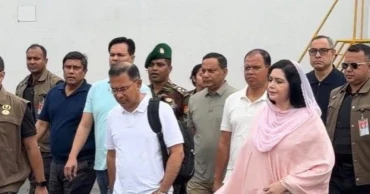
PM arrives in Sylhet with wife on first official visit
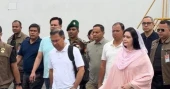
Prime Minister Tarique Rahman arrived in Sylhet on Saturday morning on his first official visit to the divisional city since assuming office.
He landed at Osmani International Airport at 10:05am on a domestic flight accompanied by his wife, Dr Zubaida Rahman, Prime Minister's Additional Press Secretary Atikur Rahman Rumon told UNB.
Commerce Minister Khandaker Abdul Muktadir, Expatriates' Welfare and Overseas Employment Minister Ariful Haque Chowdhury, Sylhet City Corporation Administrator Kaiyum Chowdhury, Divisional Commissioner Mashiur Rahman, Deputy Commissioner Sarwar Alam and other senior officials received the Prime Minister at the airport.
From the airport, Tarique headed straight to the shrine of Hazrat Shahjalal (R)where he is scheduled to offer fateha.
Earlier in the morning, the Prime Minister left his Gulshan residence for Hazrat Shahjalal International Airport at around 8:25am.
During the day-long visit, he will lay the foundation stone of a Sylhet City Corporation project at Chandni Ghat aimed at easing waterlogging in the city and address a civic gathering there.
At noon, he is scheduled to inaugurate the re-excavation of the Baisha River in Kashipur Union under Sylhet Sadar upazila.
After offering Zuhr prayers and having lunch at the Circuit House, the Prime Minister will inaugurate Notun Kuri Sports-2026 at Sylhet District Stadium at 3:00pm.
Tarique Rahman is also scheduled to attend a meeting with party leaders and workers at the Shilpakala Academy later in the day.
He is expected to return to Dhaka in the evening.
This will be Tarique Rahman's first visit to Sylhet as the Prime Minister.
He last visited the city on January 21 during the campaign for the 13th parliamentary election, in his first trip to Sylhet in nearly two decades.
5 months ago
Teesta Master Plan feasibility study completed, PM tells Parliament
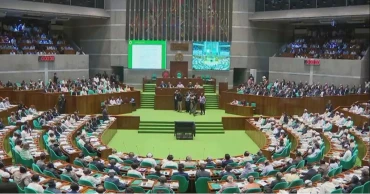
Prime Minister Tarique Rahman on Wednesday told Parliament that the feasibility study for implementing the Teesta Master Plan has already been completed.
Replying to a starred question from Gaibandha-1 MP Majedur Rahman during the question-answer session, he said the Bangladesh Water Development Board completed the study.
"The feasibility study report has recommended dredging of 110 kilometres of the Teesta River under the Teesta Master Plan," the Prime Minister said.
He said the technical and financial aspects of the feasibility study report are now being examined at different levels.
"Once the review process is completed and the project is found technically viable, a timeline for implementation will be fixed," Tarique said.
He said the Teesta is a fast-flowing river and excessive rainfall during the monsoon often causes flash floods and riverbank erosion in the region.
"On the other hand, water flow drops sharply during the dry season, and in many places it almost reaches zero," he said.
He also noted that heavy silt carried by monsoon waters causes the riverbed to fill up, splitting the Teesta into multiple channels.
The first 30 minutes of Wednesday's parliamentary sitting, chaired by Speaker Hafiz Uddin Ahmed, were allocated for the Prime Minister's question time.
5 months ago
EU Ambassador meets PM
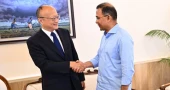
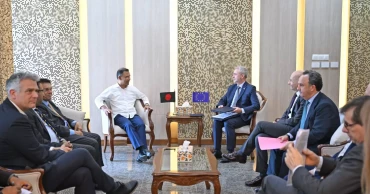
European Union (EU) Ambassador to Bangladesh Michael Miller paid a courtesy call on Prime Minister Tarique Rahman on Monday.
The meeting was held at the Prime Minister’s Office in the Bangladesh Secretariat, where Miller led an EU delegation, said a PMO release.
During the meeting, the Prime Minister and the EU Ambassador discussed issues of mutual interest, including strengthening bilateral relations.
Foreign Minister Dr Khalilur Rahman and Prime Minister’s Foreign Affairs Adviser Humaiun Kobir were present at the meeting.
6 months ago
Third day at Secretariat, PM Tarique Rahman focuses on discipline
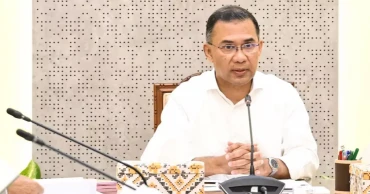
Prime Minister Tarique Rahman attended his office at the Secretariat for the third consecutive day on Sunday morning, where he enquired about the punctuality of cabinet members and other officials.
PM’s Additional Press Secretary Atikur Rahman Rumon said the Prime Minister arrived at the Secretariat at 9:05am.
“Many were surprised to see the Prime Minister at the office so early,” he added.
After reaching his office, Rumon said, the Prime Minister enquired which ministers, state ministers and advisers had already arrived.
He also gave verbal instructions that all officials must be present at their offices on time.
Tarique Rahman took oath as Prime Minister on February 17.
The following day, he began working at his Secretariat office and continued there for two days.
On Sunday, which was a public holiday, he worked from the Prime Minister’s Office in Tejgaon.
7 months ago