US-Iran War

US, Iran launch airstrikes after Trump blamed Tehran for downing Army helicopter
The United States launched airstrikes on Iran and Tehran retaliated with attacks targeting Gulf states on Wednesday after President Donald Trump blamed Iran for the crash of a US Army helicopter near the Strait of Hormuz, further escalating tensions in the Middle East.
Iran said it carried out attacks against Bahrain and Kuwait, prompting both countries to activate air-defense systems and issue alerts. Tehran also claimed it targeted an air base in Jordan that hosts US troops, though neither US nor Jordanian officials immediately confirmed the strike.
The latest exchange of attacks has raised fresh concerns over regional stability and threatens efforts to preserve a fragile ceasefire reached in April after months of conflict.
The US military's Central Command said Air Force and Navy fighter jets struck Iranian air-defense systems, ground-control facilities and surveillance radar sites.
"The operation was a proportional response to recent attacks on US forces and international commercial ships transiting regional waters," Central Command said.
Iran acknowledged that strikes hit areas around Bandar Abbas and Qeshm Island in southern Iran but did not provide details on casualties or damage.
Earlier, Trump said on social media that Iran had shot down an Army helicopter during a patrol mission over the Strait of Hormuz and insisted the United States had to respond.
Iranian Foreign Minister Abbas Araghchi rejected the accusation and warned that foreign military forces operating near Iranian territory faced increasing risks.
"Iranian forces will leave no attack or threat unanswered," Araghchi said in a post on X, adding that foreign forces should leave the region if they wanted to remain safe.
The latest confrontation came a day after Iran and Israel exchanged fire for the first time since the two-month ceasefire took effect. Iranian state media reported that Israeli attacks killed at least two members of the country's air-defense forces.
The conflict has continued to disrupt global markets since US and Israeli strikes on Iran began on Feb. 28, contributing to higher energy prices and rising costs of essential goods worldwide.
According to a US official familiar with the investigation, the Army AH-64 Apache helicopter crashed after colliding with an Iranian drone while operating near the Strait of Hormuz.
The official, who spoke on condition of anonymity, said investigators have not determined whether the collision was accidental or deliberate. US authorities have said the incident remains under investigation.
The two crew members aboard the helicopter were rescued in an unprecedented operation involving an unmanned surface vessel, US Central Command said.
The rescue took place about two hours after the helicopter went down off the coast of Oman early Tuesday. Trump said both service members escaped unharmed.
Capt. Tim Hawkins, a spokesman for US Central Command, said a drone boat located the pilots and transported them to another position at sea, where they were later picked up by a helicopter.
He described the mission as the first known rescue at sea conducted by a drone vessel in US military history.
The unmanned vessel used in the operation was a 24-foot Corsair boat built by Saronic Technologies and assigned to the Navy's Task Force 59, a unit specialising in autonomous and artificial intelligence-based maritime security operations across the Middle East.
Apache helicopters have played an important role in US efforts to monitor regional waterways and enforce restrictions on Iranian oil shipments. The aircraft have also been used by the United Arab Emirates to intercept Iranian drones.
Before the latest escalation, Trump had expressed optimism about reaching a nuclear agreement with Iran, although no breakthrough has been announced.
Pakistan has been leading mediation efforts between Washington and Tehran, but major differences remain over Iran's nuclear programme and sanctions relief.
The United States wants Iran to surrender its stockpile of highly enriched uranium, while Tehran insists on sanctions relief and access to frozen assets before any final agreement is reached.
Meanwhile, the conflict involving the Iran-backed Hezbollah group remains a major concern for Tehran.
Lebanese Army chief Gen. Rodolphe Haykal visited Pakistan on Tuesday and met Pakistan's army chief, Field Marshal Asim Munir, who has played a central role in efforts to mediate between Iran and the United States.
The visit came as Lebanon's government adopts a tougher stance on Hezbollah while continuing to face difficulties in disarming the powerful armed group.
Hezbollah on Tuesday thanked Iran for attacking Israel "in defense of our Lebanese people" and suggested Beirut should take steps to improve relations with Tehran.
1 month ago
US strike on Kharg Island raises stakes in conflict
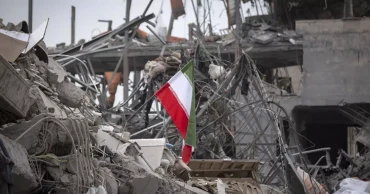
A US strike on Iran’s Kharg Island has significantly raised tensions in the ongoing confrontation between Tehran on one side and the United States and Israel on the other, according to media reports.
Kharg Island, located in the northern Gulf, is considered a crucial part of Iran’s oil export system and serves as the terminal for nearly 90 percent of the country’s crude shipments. Its deep waters allow Very Large Crude Carriers (VLCCs) to load oil for export.
Analysts say targeting the island is effectively aimed at the core of Iran’s economy because of its central role in oil exports.
If US President Donald Trump decides to go further and target the island’s oil facilities rather than only the Iranian troops stationed there, it could push global oil prices even higher.
Observers are also concerned about Iran’s potential response. Despite the ongoing conflict, Iran still has the capacity to launch large numbers of low-cost explosive drones targeting Gulf Arab countries and shipping routes.
There are also fears that Iran could expand its targets to include key infrastructure in the region, such as desalination plants that supply drinking water to millions of people.
With inputs from BBC
4 months ago
US seeks Ukraine help against Iranian drones
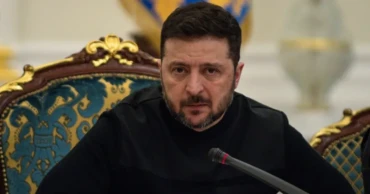
The United States has asked Ukraine to help Gulf allies defend against Iranian drones, Ukrainian President Volodymyr Zelensky said, as tensions in the Middle East raise concerns about wider security risks.
Zelensky said several partners have contacted Kyiv seeking support, including requests from the American side. The Pentagon has not commented on the claim.
He said Ukraine is willing to assist but only if the support does not weaken its own defence against Russia. Zelensky also suggested a possible exchange in which Ukraine could provide interceptor drones in return for more US Patriot air defence systems to counter Russian ballistic missiles.
The Middle East conflict has raised fears that Ukraine could face reduced attention and support from allies if global focus shifts to the new crisis.
There are also concerns that the war could increase oil prices, which would benefit Russia by boosting revenues that fund its military operations.
Despite these risks, Zelensky appears eager to use the situation to strengthen Ukraine’s diplomatic and military position. He said Kyiv has been in contact with leaders in the United Arab Emirates, Qatar, Bahrain, Jordan and Kuwait about helping defend their military bases and civilian infrastructure from drone attacks.
Ukraine has extensive experience dealing with Iranian-designed Shahed drones used by Russian forces. These one way attack drones are difficult to intercept without proper equipment and training.
“It is clear what their main request to Ukraine is,” Zelensky said on social media, noting that countries facing Iranian drone attacks need expertise and effective defence systems.
Ukraine may hope that helping US partners in the Gulf will improve relations with Washington and build stronger ties with Arab states, some of which have maintained close relations with Russia.
Delegations from several Gulf countries have already arrived in Kyiv for discussions on possible cooperation.
Zelensky also warned that the Middle East conflict has led to heavy use of Patriot interceptor missiles. He said around 800 Patriot PAC-3 missiles had been used in recent days, more than Ukraine has received during the entire war.
He suggested Ukraine could transfer some drone interceptors to partners if it receives additional Patriot missiles to fill its own shortages.
Ukraine’s defence industry says it could increase production of interceptor drones to about 10,000 per month. However, officials say any decision to export such systems would require approval from the country’s top leadership.
Experts also warn that providing equipment alone may not be enough, as foreign partners would require extensive training to use advanced air defence systems effectively.
With inputs from BBC
4 months ago