Farmers’ Card
PM Tarique sets December deadline for verified farmers' database
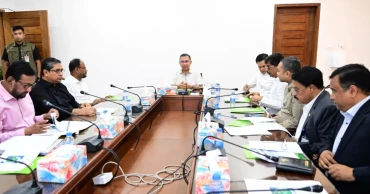
Prime Minister Tarique Rahman on Tuesday directed the authorities concerned to prepare a complete and accurate database of farmers by December through a transparent verification process to ensure that government support reaches genuine farmers.
The directive came at a meeting on the Farmers’ Card programme held at the Prime Minister's Office in the Cabinet Division at the Bangladesh Secretariat, said PM’s Deputy Press Secretary Hasan Shiplu.
The Prime Minister instructed the authorities to ensure that the new Farmers’ Card carries the holder's photograph and a QR code, along with information on the farmer's identity, agricultural production, government assistance and agricultural market-related services.
He asked the officials concerned to take these requirements into account while designing the card.
Officials at the meeting said the process of opening bank accounts for farmers has already begun.
Once the necessary preparations are completed, the cards will be distributed to farmers in phases, they said.
The Farmers’ Card has been introduced to ensure that government subsidies, soft loans, incentives and other support for the agriculture sector reach genuine farmers quickly and efficiently.
A total of 43 lakh farmers are expected to receive the card during the current fiscal year.
The government plans to bring around two crore farmers across the country under the programme over the next three years.
Agriculture and Fisheries and Livestock Minister Aminur Rashid, State Minister for Fisheries and Livestock Sultan Salahuddin Tuku, State Minister for Local Government, Rural Development and Cooperatives Mir Shahe Alam, Prime Minister's Adviser Mahdi Amin, Principal Secretary to the Prime Minister ABM Abdus Sattar, Prime Minister's Special Assistant Shakirul Islam Khan, BNP Special Secretary Belayet Hossain, Bangladesh Milk Producers' Cooperative Union Limited President SM Amir Hamza Shatil, secretaries of the relevant ministries and divisions, and senior officials attended the meeting.
2 months ago
Family Card, Farmers’ Card will not fuel inflation or strain budget, PM tells Parliament
Prime Minister Tarique Rahman on Wednesday told Parliament that the government's planned Family Card and Farmers' Card programmes will not increase inflation or create undue pressure on the national budget.
Instead, he said, the initiatives will boost employment, strengthen the rural economy and support local industries.
Replying to a supplementary question from National Citizen Party MP Abul Hasnat (Hasnat Abdullah, Cumilla-4) during the parliamentary session, Tarique said the government will gradually bring four crore families under the Family Card programme and 2.75 crore farmers under the Farmers' Card scheme.
"No government in the world can implement such a massive programme all at once," he said.
The Prime Minister said the government will first identify vulnerable families and bring them under the scheme in phases.
"We will collect data, prepare the budget gradually and expand the coverage step by step. So, according to our calculations, there is no reason for significant pressure on the budget," he said.
Tarique also said the programme would not be financed by printing money. "We will not print money to fund this initiative.”
He said a review of existing social safety net programmes found that some people are receiving multiple benefits.
"We will rationalise overlapping benefits where necessary though not all programmes will be cut. We will proceed gradually in this way,” he said.
He said beneficiaries would spend the money on essential goods such as clothing, books and daily necessities, most of which are produced locally.
"The people who receive this support do not buy luxury brands. They purchase essential goods made in local factories," Tarique said.
He also said spending under the Family Card programme would circulate within rural communities, benefiting local businesses and creating jobs.
"This is an investment by the state. It will gradually help build local industries and generate employment," he said.
"Our assessment is that inflation will not rise; rather, it will come down," the prime minister added.
5 months ago
PM outlines seven-point plan aimed at ensuring smart agriculture
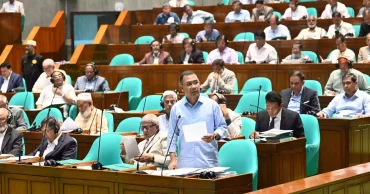
Prime Minister Tarique Rahman on Wednesday informed Parliament that the government has adopted a time-befitting seven-point plan to boost agricultural development and transform the sector into a sustainable and profitable one.
He came up with the information while replying to a starred question from treasury bench member Md Robiul Awal (Tangail-6) in the House.
The Prime Minister said Bangladesh is an agriculture-dependent country and the role of this sector is very crucial in ensuring food security, poverty reduction and overall economic growth. “But agriculture is facing various challenges, including climate change, population growth, shrinking arable land and technological limitations.”
“To face these challenges, the government is working to increase agricultural production and productivity, and turn the sector into a sustainable and profitable one,” he said.
Tarique Rahman said the government has already started distribution of “Farmers’ Card” on April 14 in line with the BNP’s electoral manifesto.
Through the card, farmers will receive 10 types of services, including fair-priced agricultural inputs, subsidies and incentives, affordable farm machinery, irrigation support, easy agricultural loans, crop insurance, fair market access, training, and digital access to weather and market information along with pest control advice, he said, adding that all farmers of the country will be brought under the scheme in phases.
The Prime Minister detailed the government’s seven-point plan, which includes expansion of modern irrigation systems, bringing fallow land under cultivation and introducing crop zoning to ensure optimal land use, diversification of agricultural products, ensuring transparent and accountable incentives through farmer cards, providing low-interest agricultural loans and crop insurance, building modern cold storage and warehouses, and promoting research for high-yielding, disease-resistant and short-duration crop varieties.
He said the government has taken plans to expand modern irrigation systems alongside the use of improved and high-yielding seeds and balanced fertiliser to increase agricultural production and productivity. In this regard, the government has already undertaken a programme to excavate 20,000 kilometres of canals, which will be implemented over the next five years.
Tarique Rahman said the current government has also planned to make various agricultural machinery, including tractors, harvesters and reapers, easily accessible to farmers by providing subsidies for agricultural mechanisation.
Govt to distribute jute school bags, uniforms among primary students
“Crop zoning” has been introduced to bring fallow land under cultivation and ensure optimal use of land, he said, adding that through this system, crops suitable for the soil, climate and environment of specific regions are determined, which helps reduce land wastage and increase production. “At the same time, various programmes have been taken to identify fallow land and bring it under cultivation,” he said.
Highlighting the government’s emphasis on diversification of agricultural products, the Prime Minister said the country’s once rice-dependent farming system is now gradually being expanded to include fruits, vegetables, pulses, oilseeds, spices and flowers.
“To ensure transparency and accountability in incentives and support programmes for farmers, subsidies will be provided through the Farmers’ Card for seeds, fertilisers, agricultural machinery and other inputs,” he said.
Besides, initiatives are being taken to introduce low-interest agricultural loans and crop insurance, Tarique Rahman said, adding that special assistance programmes are also being implemented to rehabilitate farmers affected by natural disasters.
He said modern cold storage facilities and warehouses are being constructed to preserve agricultural produce. Besides, initiatives have been taken to install mini cold storage units for fruits and vegetables and to distribute air-flow machines for onion preservation.
“There are also plans to establish agricultural export zones and procurement centres in the northern region to boost the export of agricultural products,” the Prime Minister added.
He also highlighted the government’s activities in agricultural research and innovation.
Tarique Rahman said the government has a plan to implement climate-smart agriculture to cope with the climate changes adversity as well as to promote environment-friendly farming with reduced use of irrigation, chemical fertilisers and pesticides, and introduce prepaid meters and farming apps.
Replying to a supplementary question from the same lawmaker, he said the government has taken a plan to enhance soil fertility.
“Due to the use of chemical fertilisers, soil fertility has declined. So, we want to increase the use of nano fertilisers in the country through soil testing. We aim to establish a practice so that fertiliser costs are reduced and soil fertility is not degraded,” the Prime Minister said.
In reply to another supplementary question from opposition bench member Masum Mustafa (Netrokona-5), he said agricultural labourers will also receive support. “Marginal and small farmers have been brought under the Farmers’ Card support programme. Through the support, we will also try to ensure that agricultural labourers receive support,” he said.
5 months ago
Govt to launch pre-piloting of Farmers’ Card for 21,500 farmers
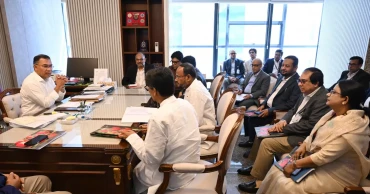
The government is set to launch the pre-piloting of Farmers’ Card scheme for around 21,500 farmers on Pahela Baishakh, marking another step in fulfilling its election pledge to support the country’s farmers.
Prime Minister Tarique Rahman will formally inaugurate the programme on April 14, the first day of the Bengali New Year, by distributing the cards among farmers in Tangail Sadar upazila.
The decision was taken at a meeting on Tuesday at the Secretariat presided over by the Prime Minister, said his Additional Press Secretary Atikur Rahman Rumon.
He said the programme will be launched simultaneously in 11 upazilas including Tangail Sadar.
In the first phase, around 21,500 farmers will receive financial support through mobile banking, he added.
“The card will be provided to farmers in the agriculture, fisheries and livestock sectors. It will work like a debit card. Each year, 2,500 taka will be given as an incentive to small, marginal and landless farmers to purchase agricultural inputs such as fertiliser, seeds, pesticides and animal feed,” Rumon said.
Apart from Tangail Sadar, the other upazilas selected for the pre-pilot phase are Panchagarh Sadar and Boda upazila, Shibganj (Bogra), Shailkupa (Jhinaidah), Nesarabad (Pirojpur), Teknaf (Cox’s Bazar), Adarsha Sadar (Comilla), Islampur (Jamalpur), Goalanda (Rajbari) and Juri (Moulvibazar).
6 months ago

PM Tarique to launch ‘Farmers’ Card’ on Pahela Baishakh
After introducing the ‘Family Card’, Prime Minister Tarique Rahman will now formally launch the government’s ‘Farmers’ Card’ pilot programme on April 14, the day of Pahela Baishakh, fulfilling his election pledge.
The decision was finalised at a meeting on the ‘Farmers’ Card’ held at Secretariat on Sunday at 11am with the Prime Minister in the chair, said PM’s Additional Press Secretary Atikur Rahman Rumon.
The ‘Farmers’ Card’ will initially be launched on a pilot basis under which marginal and most vulnerable farmers will receive certain benefits similar to those offered through the Family Card.
The card will facilitate the delivery of subsidies, fertilisers, seeds and pesticides directly to farmerrs with a planned initial subsidy of around Tk 2,500 for eligible landless, marginal and small farmers.
Agriculture Minister Aminur Rashid and State Minister for Fisheries and Livestock Sultan Salauddin Tuku were present at the meeting.
Prime Minister’s Adviser on Finance and Planning Rashed Al Mahmud Titumir, Adviser on Posts, Telecommunications and Information Technology Rehan Asif Asad, and State Minister for Local Government, Cooperatives and Rural Development Mir Shahe Alam, among others, also attended the meeting.
Before the 13th parliamentary election, BNP pledged to introduce the ‘Family Card’ aimed at empowering women by providing a monthly allowance and the ‘Farmers’ Card’ for marginalised farmers.
On March 10, Prime Minister Tarique Rahman formally launched the government’s ‘Family Card’ programme for women-led households, fulfilling his election pledge to support women’s empowerment, economic inclusion and social justice.
Just three weeks after the formation of the government following a massive election victory, the Prime Minister launched the Family Card at the T&T Playground, adjacent to the Korail Slum, in his constituency.
6 months ago