AI robot
As coding boom fades, computer science graduates turn to AI skills
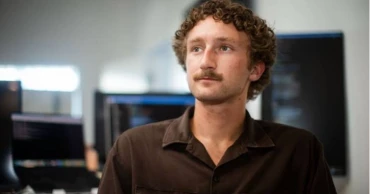
Jack Zemke sent hundreds of job applications after studying computer science, but most of them received no response.
With graduation from Tulane University just days away, the 23-year-old was considering moving back in with his parents when an opportunity came through a university group project involving an AI-powered search tool.
While showcasing the project at an engineering conference, Zemke was approached by an employee of a civil engineering company. The employee said the firm knew artificial intelligence was becoming increasingly important and needed someone to help it understand and use the technology.
“I’m your man,” Zemke recalled telling him.
Zemke’s experience highlights the challenges facing many recent graduates, particularly those seeking software development jobs as AI takes over more coding tasks.
During the recent coding boom, computer science graduates were often receiving job offers without even applying. The situation has now changed. An Associated Press analysis found that about 7.1% of recent computer science and computer engineering graduates are unemployed, while graduates in fields such as philosophy, art history and ethnic studies have lower unemployment rates.
As entry-level technology jobs become harder to find, students and universities are adapting. Colleges are adding AI training and creating internships designed around the needs of specific businesses.
Universities say most graduates eventually find work, but many of the employers hiring them are smaller companies rather than major technology firms. These businesses are increasingly looking for people who can help them understand and apply AI.
Zemke spent a year at the engineering company before joining an AI technology startup this summer.
“These jobs are expecting you to be able to jump in and kind of operate on the frontier,” he said. “There’s so much churn. People are getting laid off. People are leaving. It really feels like a total frenzy right now.”
Coding boom gives way to AI-driven hiringThe high unemployment rate among recent computer science graduates is partly linked to the large number of students who entered the field during the coding boom.
Hiring surged during the COVID-19 pandemic as businesses shifted more of their work online. Software development job postings on Indeed, a major job-search website, peaked in early 2022.
But companies such as Microsoft, Meta and Google are now using AI to handle more coding work. Amazon and other major employers have also cut jobs while increasing investment in AI.
A Federal Reserve analysis of Indeed data found that software development job postings have dropped significantly.
Among workers in their early 20s in occupations considered highly exposed to AI, including software development, employment is 19% below where it would have been if those jobs had grown at the same pace as less AI-exposed occupations, according to the Stanford Digital Economy Lab.
The U.S. Census Bureau has compared the decline with the experience of people who graduated from college during a major recession.
Employers increasingly want workers who can oversee AI tools and assess their output rather than simply accept what the technology produces, said Tracy Camp, executive director and CEO of the Computing Research Association.
The situation has raised concerns about the future of entry-level workers, prompting the association to urge companies to invest more in hiring and training young employees.
“If they don’t change how hiring is currently happening, they’re not going to have mid-level career people in a few years,” Camp said.
Students are also responding to the changing job market. The number of recent computer science and computer engineering graduates tripled over the past decade to about 362,000 in 2024.
Enrollment has since started to fall. Data from the National Student Clearinghouse Research Center showed that enrollment in computer and information science programs at four-year institutions declined 8.4% by spring this year.
International students face additional challengesThe changing job market has been particularly difficult for international students, who make up a significant portion of computer science students in the United States.
Their difficulties stem partly from changes in U.S. immigration policy and partly from the changing nature of available jobs.
Samir Khuller, chair of Northwestern University’s computer science department, said many smaller companies hiring technology workers do not have large human resources departments with experience handling H-1B work visas.
International graduates generally need an H-1B visa and employer sponsorship to remain in the United States for work. The visa program has also come under pressure from the Trump administration, which is seeking to raise the fee to more than $100,000.
Collins Kibet, a computer science graduate from Kenya, has sent hundreds of job applications but received only a few interviews, many of them with AI systems.
The Southern New Hampshire University graduate said the tone often changed during interviews with human recruiters after they learned he would need H-1B sponsorship.
“Everybody just keeps quiet,” Kibet said.
Unable to find a job, he eventually started his own software company.
Universities rethink computer science trainingThe difficulties students face in finding jobs have also concerned Nicholas Mattei, an associate professor of computer science at Tulane University.
Companies are increasingly telling universities that graduates need to be prepared to take on responsibilities beyond entry-level development, including roles closer to middle management, Mattei said.
“And it’s kind of crazy,” he said.
Many universities are now updating their computer science programs to prepare students for a job market where traditional entry-level positions are becoming harder to find.
At Georgia Tech, professors studied the needs of telecommunications company AT&T and trained students for a month before they began internships with the company.
The university plans to expand the approach through a program called “Bootcamp to Industry,” said Fisayo Omojokun, associate dean for undergraduate education at the College of Computing.
The college is also reaching out to a broader range of industries when recruiting companies for its job fairs.
“Earlier this year, we got a call from a forestry company of all things,” Omojokun said. “They’re like, ‘Hey, we are in forestry, and we know that AI can help in what we do in different ways.”
16 days ago
Robots ask for tips, but who gets the money?
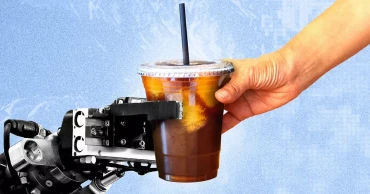
Robots are increasingly becoming part of the service industry, from making cocktails and coffee to delivering food. Now, some of them are also asking customers for tips.
That is raising a simple question: Who actually gets the money?
At The Tipsy Robot bar inside Las Vegas’ Venetian Hotel, two robotic arms prepare automated cocktails. A margarita costs $17, but customers are also asked to pay a 10% service fee.
Similar situations are appearing elsewhere. At Artly Coffee in New York, a robotic barista prompted customers for tips. At Newark Liberty International Airport, a self-checkout machine suggested a tip when customers bought a bottle of water from an unstaffed kiosk.
In Portland, Oregon, restaurant Top Burmese uses a robot to deliver meals, although human workers take customers’ orders.
While customers may willingly tip human servers for good service, tipping a machine can feel different. It is also often unclear who receives the money.
Representatives of The Tipsy Robot and Artly Coffee say all tips go to human employees and that their companies do not take any share. Artly has since removed its automatic tip prompts following complaints from customers.
But experts say the situation could be more complicated elsewhere.
Holona Ochs, an associate professor of political science at Lehigh University and co-author of the book Gratuity, said there is no clear legal standard determining who owns tips given to robots.
“We have every reason to believe that some unscrupulous employers are taking the robot tips for themselves,” Ochs said, stressing that the key issue is who benefits and who pays.
Tipping has already become a growing source of frustration for consumers, especially in the United States. Digital payment systems increasingly ask customers to choose tip percentages, sometimes even when little or no human service is involved.
The issue is particularly important in the US, where tipped workers can legally receive a much lower minimum wage. The federal minimum wage is $7.25 an hour, while the minimum cash wage for tipped workers is $2.13 an hour, provided employers make up the difference when necessary.
US law prevents companies, owners and supervisors from taking tips meant for workers. But those rules may not clearly cover money given to robots.
Still, robots do not necessarily mean fewer jobs for people.
Abigail Smathers, director of content at Artly Coffee, said the company employs people alongside its robots and does not want to replace workers simply to cut costs. She said the company removed tip prompts and increased workers’ pay partly because of customer concerns.
She also said robots can help address labor shortages in the service industry without replacing human workers.
Katerina Berezina, an associate professor at the University of Mississippi who studies hospitality technology, said it would be unfair to assume that companies use robots only to make more money.
She said service fees or tips could help cover the labor, maintenance and technology costs involved in operating robots.
However, labor advocacy group One Fair Wage argues that automation could allow restaurants to continue paying workers low wages instead of addressing the underlying problems in the industry.
Experts say customers will play an important role in determining whether robot tipping becomes common.
Michael Lynn, professor emeritus at Cornell University and author of *The Psychology of Tipping*, said people usually tip to reward good service, help workers with low wages or avoid feeling judged.
Those reasons largely do not apply when dealing with a robot, he said.
A study found that only about 11% of participants said they would tip a robot bartender. However, people who had previously interacted with robot bartenders were more likely to consider tipping.
The same study found that about 42% of participants who initially refused to tip a robot changed their minds when they were told the money would go to human workers.
Lynn believes robot tipping is unlikely to become widely accepted. Businesses may introduce the option to increase revenue, but if customers dislike it, they could simply refuse to pay.
“There is no god of tipping, no one can make you pay,” he said, arguing that tipping habits are shaped by customers themselves.
For now, robot tipping appears to be an experiment whose future may depend largely on how consumers respond.
Source: BBC
1 month ago
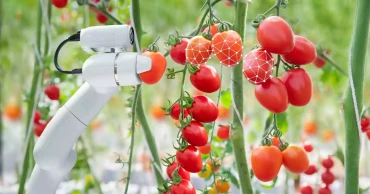
AI robot learns smarter way to harvest tomatoes
Researchers have developed an AI-powered robot that can harvest tomatoes more efficiently by deciding the best way to pick each fruit.
The robot not only identifies tomatoes but also determines the easiest way to harvest them. This comes as farm labour shortages are pushing the agriculture sector towards greater use of automation, especially in harvesting.
Tomatoes are difficult for machines to handle because they grow in clusters. A robot must carefully pick ripe ones without damaging unripe fruits nearby, which requires accuracy and smart decision-making.
To address this, Assistant Professor Takuya Fujinaga of Osaka Metropolitan University’s Graduate School of Engineering created a system that helps robots judge how easy a tomato is to pick before attempting to harvest it.
The system uses image recognition and data analysis to select the best angle for picking. It examines factors such as the position of the tomato, its stems, and whether it is hidden behind leaves or other parts of the plant.
Unlike traditional systems that only detect fruit, this method introduces “harvest-ease estimation,” which measures how likely a robot is to successfully pick a tomato.
During testing, the robot achieved an 81 percent success rate. In some cases, it adjusted its approach and successfully picked tomatoes from the side after failing to pick them from the front.
The study highlights that several factors affect robotic harvesting, including how tomatoes grow, the position of stems, and visual obstacles like leaves.
Researchers say this technology could lead to better coordination between humans and robots in farming. Robots may handle easier tasks, while humans focus on more difficult harvesting.
The findings were published in the journal ‘Smart Agricultural Technology’.
Source: Science daily
6 months ago