measles outbreak in Bangladesh
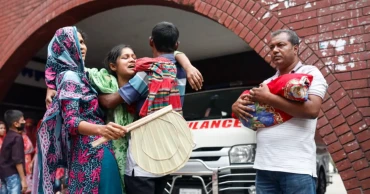
8-month-old Irfan loses fight against measles, as death count tops 250
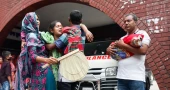
An eight-month-old boy died Sunday after battling measles, as the extent of the outbreak in Bangladesh this year kept growing.
Irfan Ahmed, son of Ishtiak Ahmed from the Noorpur area of Kushtia, died at 2pm on Sunday while undergoing treatment in the intensive care unit (ICU) at Bangladesh Shishu Hospital and Institute after a 16-day illness.
According to his family, Irfan was first treated at Kushtia Medical College Hospital for seven days before being taken to Dhaka.
He was then admitted to the DNCC Hospital, where he received treatment for five days, before being transferred to the Shishu Hospital for more advanced treatment.
He was admitted to the ICU last Thursday, but doctors were unable to save him.
Meanwhile, Bangladesh recorded eight deaths from measles or measles-like symptoms in the 24 hours leading up to 8:00 am on Sunday.
5 months ago

Steps taken to manage measles outbreak: PM
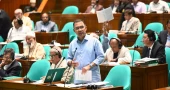
Prime Minister Tarique Rahman on Wednesday said the government has taken necessary steps to contain the measles outbreak, expressing sorrow over the deaths of children from the disease.
“Many of our children have died from measles. It is very unfortunate. We are trying to ensure that the situation can be managed in the coming days,” he told Parliament replying to a supplementary question from opposition lawmaker Salah Uddin Ahmed (Gazipur-4).
Thanking the lawmaker for raising the issue, Tarique Rahman described the situation as ‘very unfortunate’ and blamed the previous governments for the lapse.
Referring to the previous two governments, he said measles vaccines for children had not been imported for several years during both the past regime and the subsequent interim government which had been supported to ensure a free, fair and neutral election.
He said the problem became visible due to the lack of proper vaccination over the years.
Working with top priority to recover laundered assets: PM
However, the prime minister said the government moved quickly after the situation emerged, with support from Unicef Bangladesh.
“Unicef has helped Bangladesh a lot in this regard. They have quickly sent measles vaccines allowing us to begin vaccination. We have planne to vaccinate nearly two crore children,” he said.
Acknowledging a shortage of measles testing kits, he said the government is working to address the issue.
“A number of kits have already arrived. One kit can be used to conduct three tests,” he said, adding that some kits are currently at airport customs and steps are being taken to release them soon.
The House sat at around 3:00pm with Speaker Hafiz Uddin Ahmad in the chair.
The first 30 minutes of the sitting were allocated for the Prime Minister’s question time.
5 months ago
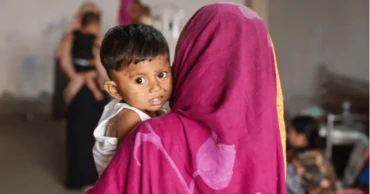
168 measles patients hospitalised in 24 hours
A total of 168 measles patients were admitted to hospitals across the country in the last 24 hours, according to the Directorate General of Health Services (DGHS).
The DGHS said in a press release that between 8:00am Thursday and 8:00am Friday, 1,177 suspected measles cases were reported nationwide during the period.
It added that so far 8,910 suspected measles patients have been hospitalised, while 6,609 have recovered and left hospitals.
No deaths were reported in the last 24 hours. However, the DGHS said that since March 15, a total of 144 suspected measles-related deaths have been recorded.
The health authorities continue to monitor the situation, according to the statement.
6 months ago
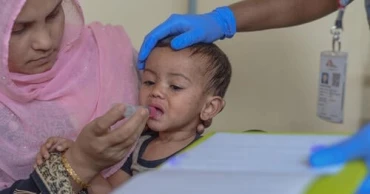
Measles outbreak raises alarm in Bangladesh: Causes, symptoms and prevention
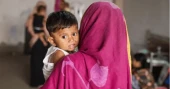
A measles outbreak in Bangladesh is triggering public health concerns, with a rising number of infections among children and dozens of deaths reported in recent weeks.
Measles cases are spreading in Dhaka, Rajshahi, Chattogram, Khulna, and other districts.
The World Health Organization (WHO) describes measles as a highly contagious viral disease that spreads through coughing, sneezing or close contact with infected individuals.
It can lead to severe complications and even death, particularly among children. Globally, an estimated 95,000 people—mostly children under five—died from measles in 2024 despite the availability of a safe and cost-effective vaccine.
Health Minister tells parliament about looting in his sector during previous 'fascist' govt
UNICEF also warns that children, especially those under five who are unvaccinated, face the highest risk due to their still-developing immune systems. Each year, around 136,000 people worldwide die from measles and its complications, most of them children.
Why children are most at risk
Concern is growing in different parts of the country as measles infections increase.
Health officials said a rising number of children are being admitted daily with symptoms of the highly contagious disease.
Sylhet Deputy Civil Surgeon Dr Janmejoy Dutta said on Sunday that some of the affected children are below nine months of age, including infants as young as five to six months, who are not yet eligible for vaccination.
In some cases, children have been infected despite receiving the vaccine.
He said the health department has launched a special investigation to determine the reasons behind such infections.
Dr Dutta noted that there had been some disruption in measles vaccine supply last year, although there is currently no shortage of the measles-rubella (MR) vaccine.
Signs and symptoms
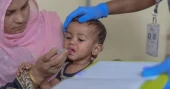
Doctors say measles is often mistaken for a common cold or flu in its early stages. Symptoms usually appear 10 to 14 days after exposure.
Common symptoms include:
· High fever
· Runny nose
· Persistent cough
· Red, watery eyes
· Small white spots inside the cheeks
Within a few days, a red rash develops—typically starting on the face and upper neck before spreading across the body, including the hands and feet. The rash usually lasts five to six days.
Health risks
Measles is not a mild illness and can lead to life-threatening complications. Most deaths are linked to complications such as:
· Pneumonia
· Diarrhoea and dehydration
· Blindness
· Brain inflammation and damage
In pregnant women, measles can result in premature birth or low birth weight. The virus can also weaken the immune system, leaving children more vulnerable to other infections.
Treatment and care
There is no specific antiviral treatment for measles. Treatment mainly focuses on managing symptoms and preventing complications.
Health experts recommend:
· Timely vaccination with MMR or MR vaccines
· Avoiding close contact with infected individuals
· Seeking medical care promptly
· Ensuring adequate fluid intake to prevent dehydration
· Maintaining a nutritious diet
Doctors may prescribe antibiotics if secondary infections such as pneumonia occur.
All infected children and adults should receive two doses of vitamin A supplements, given 24 hours apart. This helps restore vitamin A levels, prevents eye complications, and reduces the risk of death.
Prevention and awareness
Vaccination remains the most effective way to prevent measles. Children should receive two doses to ensure full protection—the first typically at nine months in high-risk countries like Bangladesh, and the second between 15 and 18 months.
Public health experts stress that awareness is crucial, as measles spreads rapidly. A single infected child can transmit the virus to multiple others, especially within families and crowded communities.
6 months ago