Bangladesh energy crisis

Bangladesh needs ‘balanced, diversified’ energy mix to address challenges: ICCB
International Chamber of Commerce-Bangladesh (ICCB) has said Bangladesh’s energy challenge cannot be solved by gas, LNG, solar or any single technology alone, but it requires a balanced and diversified energy mix, supported by efficient infrastructure, regional power trade, energy efficiency and responsible private investment.
“The roadmap has set the direction. The task now is implementation. If Bangladesh can turn its energy ambitions into reliable projects and predictable policy, energy security can become more than protection against shortages - it can become a powerful foundation for industrial competitiveness, investment and sustainable economic growth,” according to the editorial of the current news bulletin of the ICCB released on Tuesday.
The ICCB said energy security is no longer simply a question of keeping the lights on. For Bangladesh, it has become a fundamental question of economic competitiveness, industrial growth, investment and resilience.
The chamber said recent disruptions in global energy markets have demonstrated how quickly dependence on imported fuel can translate into higher production costs, pressure on foreign exchange and uncertainty for businesses.
Against this backdrop, the ICCB said, the government’s emerging energy roadmap offers an important opportunity to reshape the sector around three essential principles: security, affordability and sustainability.
Bangladesh has significantly expanded its power infrastructure over the past two decades. As of 15 September 2026, total installed generation capacity stood at 32,688 MW, including captive and renewable power, while the country’s highest recorded generation was 17,201 MW on 20 May 2026.
“The contrast illustrates an important reality: energy security cannot be measured by installed capacity alone,” ICCB said, noting that reliable fuel supply, an efficient transmission and distribution network, financial sustainability and the ability to deliver electricity where and when businesses need it are equally important.
The government’s Five-Year Strategic Framework for Reform and Development (2026–2031) therefore comes at a critical time, the chamber observed.
The framework places greater emphasis on domestic gas exploration, renewable energy, grid modernization, demand management and financial reform. It also targets 10,000 MW of solar capacity, with rooftop solar expected to play an increasingly important role.
Perhaps the most encouraging element is the renewed focus on domestic energy resources. A programme to drill and work over 150 gas wells is already under way, with another 150 wells envisaged in a subsequent phase.
By mid-September, 31 wells under the first programme had reportedly been drilled or worked over, yielding an estimated additional 286 million cubic feet per day of gas.
Accelerating exploration, particularly through a stronger BAPEX alongside capable international partners, should remain a national priority.
At the same time, Bangladesh must diversify its external energy sources, the ICCB said.
Recent volatility in LNG markets and disruption to major shipping routes have again highlighted the risks of excessive dependence on particular suppliers and routes.
The government plans to expand LNG receiving capacity, including a 600 mmcfd facility at Maheshkhali by 2028 and a 1,000 mmcfd land-based terminal at Matarbari by 2030.
“Such infrastructure can strengthen resilience, but LNG should complement not a substitute the development of domestic resources and renewable,” the ICCB said.
Renewable Energy represents the other major pillar of the transition. The government is targeting at least 20 percent of electricity from renewable sources by 2030 and 30 percent by 2040.
Achieving this will require much more than announcing capacity targets, the ICCB said, noting that Bangladesh needs bankable projects, competitive procurement, available land, stronger transmission infrastructure, energy storage, predictable regulation and easier access to long-term finance.
Rooftop solar, particularly across factories, commercial buildings and public facilities, offers an opportunity to add capacity without placing excessive pressure on scarce land.
For the private sector, however, the most important requirement is predictability.
The ICCB said energy-intensive industries cannot make long-term investment decisions without reasonable visibility over supply, tariffs and policy.
17 days ago
PM proposes 10-member joint committee to address energy challenges
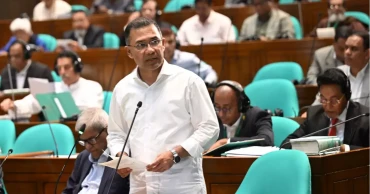
Prime Minister Tarique Rahman on Thursday proposed in Parliament the formation of a 10-member joint committee, seeking five names from the opposition to work together on finding ‘rational solutions’ to the country’s ongoing energy crisis in the national interest.
The proposed body will be headed by Power and Energy Minister Iqbal Hassan Mahmood Tuku and include five members each from the treasury and opposition benches.
“We have decided to form a five-member committee from our side. I request the Leader of the Opposition to provide five names so that the 10-member committee can sit together and discuss the issues,”the Prime Minister told the House.
He said the government will seriously consider any recommendations made by the committee and will take effective steps to implement them if they were found to be feasible.
Referring to a proposal raised by the Opposition Leader a day earlier, the Prime Minister said both sides agreed to work together to solve the country’s ongoing situation.
Describing it (energy crisis) as a global problem, he said the problem is affecting many countries.
The Leader of the House said the Opposition Leader expressed his concern about this in his speech (Wednesday) and proposed on his behalf that he has some suggestions and the government and opposition parties can work together on those issues.
“I said in my speech that the Bangladesh Nationalist Party is always ready to hold any discussion with anyone in the interest of the country and the people of the country,” he said.
From the government side, the proposed members include Power, Energy and Mineral Resources Minister Iqbal Hassan Mahmood Tuku, State Minister Anindya Islam Amit, and MPs ABM Ashraf Uddin Nizan (Laxmipur-4), Moinul Islam Khan (Manikganj-2 and Miah Nuruddin Ahmad Apu (Shariatpur-3).
In response, Leader of the Opposition Shafiqur Rahman welcomed the initiative, thanking the Prime Minister for taking the matter positively.
He said they would place their nominated names soon.
“We hope Parliament will become the centre for resolving national issues. This is a new beginning for this House,” he said adding that the opposition would soon submit its five names.
As Speaker Hafiz Uddin Ahmad asked the Leader of the House who would be the chairman of the proposed 10-member committee, Tarique Rahman proposed the name of the energy minister.
Hafiz Uddin Ahmad expressed hope that the opposition would provide the names quickly, noting that the current parliament session is set to go into recess by the end of the month.
He said the move has created optimism among people, adding that cooperation between the government and opposition can help resolve national challenges effectively.
6 months ago