farmers struggle
Low paddy prices leave Naogaon farmers reeling despite bumper yield
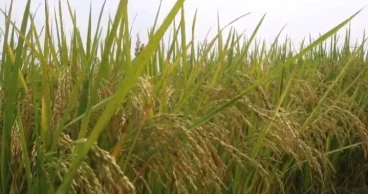
In Naogaon, one of Bangladesh’s leading rice-producing districts, a season of abundance has turned into one of distress as farmers struggle with falling paddy prices.
Despite a bumper Boro harvest this season farmers said they are incurring significant losses, with market prices dropping well below last year’s levels.
The situation has left many farmers frustrated as higher yields have not translated into better earnings.
According to the Department of Agricultural Extension (DAE), 192,500 hectares were brought under Boro cultivation across 11 upazilas in Naogaon this season. The production target has been set at 1.32 million tonnes of paddy, which would yield approximately 0.88 million tonnes of rice.
Harvesting has already begun, but only about 25–30 percent of the crop has been cut so far.
However, current market prices remain discouraging.
Farmers say paddy is now selling at Tk 1,000 to Tk 1,100 per maund—significantly lower than last year’s peak price of at least Tk 1,400.
“We are selling at a loss,” said Abul Kalam Azad, a marginal farmer from Bijoykandi village in Raninagar upazila. “After spending nearly Tk 30,000 per bigha, we are getting back only Tk 25,000 to Tk 26,000. That means a loss of Tk 5,000 to Tk 6,000 per bigha.”
Like many others, Azad cultivated paddy on leased land, paying around Tk 14,000 per bigha annually.
Total production costs—including land preparation, seedbed, transplantation, irrigation, fertilisers, pesticides, harvesting and threshing—have risen sharply this season.
Bipath Chandra Pramanik, another farmer from the same area, said a lack of sunshine has made it difficult to dry freshly harvested paddy, forcing farmers to sell their produce prematurely at lower prices.
“We took loans for cultivation. Now creditors are pressuring us and we have no option but to sell immediately,” he said. “If we could dry the paddy and wait a few days, we might get a better price.”
Farmers say a price of Tk 1,300 to Tk 1,400 per maund would at least allow them to break even.
Not all farmers, however, are rushing to sell.
Shamsur Rahman, a relatively well-off farmer from Khatteshwar village, said he has stored his harvest in hopes of better prices. He cultivated Jirashail paddy on 20 bighas of his own land.
“I will sell after the rainy spell ends and the paddy dries properly,” he said, expressing hope that prices will rise in the coming weeks.
A visit to major paddy markets including Abadpukur Hat, Lohachura Hat and Ahsanganj Hat revealed an oversupply of freshly harvested, wet paddy, which is contributing to the price slump.
“Most of the paddy arriving in the markets is still wet and buyers are limited,” said trader Enamul Haque. “On Tuesday, depending on quality, paddy was sold between Tk 1,000 and Tk 1,100 per maund.”
Traders said unsold stock from the previous season remains in storage, making buyers less interested in purchasing new supplies.
Farhad Hossain Chakdar, general secretary of Naogaon District Rice Mill Owners Group, attributed the market downturn partly to excessive imports in previous periods.
“Large traders are already facing liquidity constraints due to unsold stocks,” he said. “Without their active participation, a recovery in paddy prices is unlikely.”
He urged the government to speed up procurement and clear public food warehouses to stabilise the market. “If the government buys paddy at Tk 36 per kg, farmers will benefit and the situation may improve,” he added.
Agriculture officials, however, remain cautiously optimistic.
Homaira Mondal, deputy director of the Department of Agricultural Extension(DAE) in Naogaon, said the harvesting season has just begun and prices are expected to improve.
“Farmers are currently selling wet paddy, which affects prices,” she said. “As the peak harvesting period begins and dry paddy enters the market, prices are likely to rise.”
She added that government procurement, once started, would further support farmers.
Local stakeholders say the seasonal price drop has become a recurring problem.
“Every year during the harvest season, farmers face a price crash,” said a local rice trader. “Unless fair prices are ensured and agricultural incentives are increased, marginal farmers will continue to suffer.”
5 months ago
Broken haor roads drain profits as Sunamganj farmers struggle to move Boro paddy
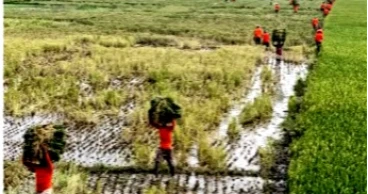
Farmers in the haor areas of Sunamganj district are facing severe difficulties in transporting harvested Boro paddy as dilapidated, earthen roads turn movement into a costly and time-consuming ordeal.
During the peak harvesting season, farmers are struggling to carry ripe paddy from deep haor fields to drying yards, often navigating broken and muddy earthen paths.
In many areas, vehicles remain stuck for hours, while accidents are also being reported, increasing transportation costs and reducing farmers’ profits.
According to the Department of Agricultural Extension (DAE), a total of 2,23,511 hectares of land across 137 small and large haors in 12 upazilas of the district had been brought under Boro cultivation this year, with production target of 12,33,517 metric tons of paddy.
Although the government spends crores of money to protect crops, farmers have expressed frustration over the lack of initiatives to repair or construct proper roads for paddy transportation.
Farmers said repeated appeals over the years to repair and pave haor roads have gone unheeded.
Even light rainfall makes the roads almost impassable for tractors, auto-rickshaws, pickup vans and other vehicles.
“Transporting paddy from deep haor areas requires proper paved roads. Due to the lack of roads, we have to spend Tk 30-40 per sack for transportation by trolleys. If the roads had been better, the cost would have been much lower,” said Jamal Mia, a farmer of Shani Haor.
Farmer Faruk Mia of Matiyan Haor said the rising transportation cost has wiped out expected profits. “We are struggling to recover costs amid harvesting cost, labour shortages and poor road conditions,” he added.
Locals said the muddy and risky roads often lead to accidents involving farmers and labourers. In many cases, paddy has to be unloaded before stuck vehicles can be freed.
Tahirpur Sadar Union Parishad Chairman Junab Ali said some temporary repairs have been carried out under TR-KABITA projects, but a permanent solution requires construction of paved roads.
Tahirpur Upazila Agriculture Officer Md Shariful Islam said this year’s paddy production is good, but farmers are facing increased costs due to the lack of durable roads. “Paved roads would significantly ease transportation,” he said.
Haor residents have urged authorities to give equal priority to building durable roads for paddy transport, similar to crop protection embankments, to ensure fair profits for farmers in future seasons.
5 months ago