Russia- Ukraine
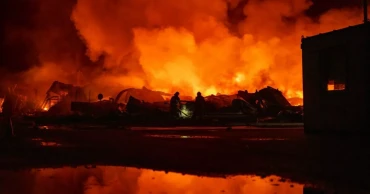
Russian retail giant's warehouse catches fire after Ukrainian drone strike
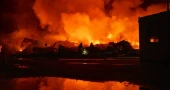
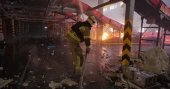
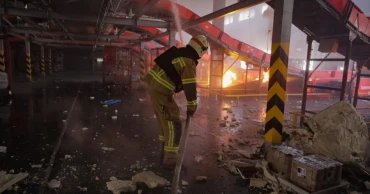
A warehouse belonging to Russia's largest online retailer caught fire after Ukrainian long-range drones struck the facility in the Ural Mountains, more than 2,000 kilometers from the countries' border, officials and the company said Friday.
Wildberries said its warehouse in Yekaterinburg, Russia's fourth-largest city, was set ablaze in the attack, although most of the goods inside were not damaged.
Regional Governor Denis Pasler said three drones struck the warehouse roof. Kremlin representative Artyom Zhoga said about 800 people were evacuated from the facility and no one was injured.
Ukraine has increasingly targeted locations deep inside Russia, including in the Urals and western Siberia. Earlier, Ukrainian forces struck a Russian oil refinery nearly 2,500 kilometers from the border.
Kyiv has made drone technology a key part of its military response to Russia's invasion, with Ukrainian officials saying the country's advances have led to drone cooperation agreements with nine countries. Talks are also underway with 15 more countries.
Ukraine pushes ahead with new weaponsUkrainian President Volodymyr Zelenskyy said Kyiv is accelerating work on new military technologies, particularly air defense systems designed to counter Russian ballistic missiles.
Ukraine has faced growing pressure from Russian missile attacks amid shortages of US-made Patriot interceptor missiles, which have been used to protect civilian areas.
Zelenskyy said a joint European anti-ballistic missile development program is already underway, involving 10 countries. He said Ukraine could produce its own missiles and launchers, while partner countries would supply key components, including radars and sensors.
He also said Ukraine is developing its own ballistic missiles for use against Russia, adding that initial tests had shown promising potential.
Eastern defenses under pressureMeanwhile, Ukrainian forces are facing continued pressure along the eastern front as Russia seeks to break through after months of limited advances.
Ukraine has been evacuating civilians, including children, from Kramatorsk, one of four major cities forming the so-called Fortress Belt in the eastern Donetsk region.
The roughly 50-kilometer line of heavily fortified cities has played a key role in preventing Russia from capturing Ukraine's industrial heartland.
Vadym Filashkin, head of the Donetsk regional military administration, said more than 800 people, including 91 children, were evacuated from the area in the previous 24 hours.
Ukraine has also been using medium-range strike drones to disrupt Russian supply routes and slow the advance of its forces.
Nightly drone attacks continueRussia's Defense Ministry said its air defenses shot down 203 Ukrainian drones between late Thursday and early Friday.
Ukraine's Air Force, meanwhile, said Russia launched 147 long-range attack drones at Ukrainian targets.
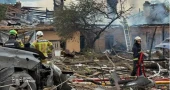
In the northern Sumy region, a Russian drone hit a busy market Friday morning, injuring 10 people, according to local authorities.
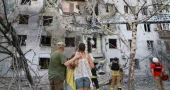
Russia also launched glide bombs and other drones against the regional capital, damaging residential buildings, transport facilities and infrastructure, regional administration head Oleh Hryhorov said. Two people were injured in those attacks.
2 months ago
Ukraine says drone attacks hit Russian warehouse as cross-border strikes kill several
Ukrainian drone attacks killed at least five people in different parts of Russia and set fire to another warehouse belonging to Russia's largest online retailer, Wildberries, Russian officials said on Sunday, as both countries continued exchanging long-range drone strikes.
Russian authorities said a Ukrainian drone hit a Wildberries warehouse in the Samara region, about 800 kilometres from the Ukrainian border, causing a fire. Regional Governor Vyacheslav Fedorishchev said there were no casualties.
Wildberries, often compared to Amazon in Russia, has come under repeated Ukrainian attacks in recent weeks. Since mid-July, Ukrainian drones have struck more than a dozen of the company's warehouses as Kyiv seeks to disrupt Russia's economy and logistics during the ongoing war.
Russia's Defence Ministry said its air defence systems shot down 635 Ukrainian drones overnight, including some over Russian-occupied Crimea and the Black and Azov seas. The ministry did not say how many drones Ukraine had launched or how many reached their targets.
Ukraine's air force, meanwhile, said Russia launched 133 drones overnight, with 24 reaching their intended targets.
In Russia's Saratov region, Governor Roman Busargin said two people were killed after a Ukrainian drone hit a residential building. The attack also damaged civilian infrastructure in the cities of Engels and Saratov.
Engels is home to a major Russian military airbase, while Saratov has one of the country's large oil refineries. Both cities have been frequent targets of Ukrainian drone attacks.
In Russia's Bashkortostan region, Governor Radiy Khabirov said air defences repelled a large-scale drone attack on industrial facilities in the city of Ufa. He said a fire broke out but did not specify which facility had been hit.
In the Udmurt Republic, acting regional head Olga Abramova said three civilians were killed and two others injured in a Ukrainian drone strike. She said Russian air defences shot down two drones but a civilian vehicle was damaged during the attack.
Meanwhile, Russian strikes also caused casualties in Ukraine.
Authorities in the southern city of Zaporizhzhia said a Russian guided bomb hit a residential building, killing one person.
In the northeastern Kharkiv region, another Russian attack killed one person and set a postal terminal on fire, according to regional officials.
The latest attacks came as both Russia and Ukraine continued to intensify long-range drone and missile strikes deep inside each other's territory.
2 months ago
Russian missile strike near Kyiv kills 10 after Zelenskyy meets Patriot maker Raytheon
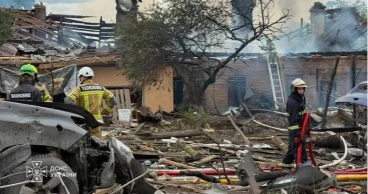
A Russian ballistic missile strike near Kyiv on Friday killed at least 10 people and injured nearly 100 others after hitting a site hosting a defence industry event, Ukrainian officials said.
The attack came a day after Ukrainian President Volodymyr Zelenskyy met in Kyiv with senior representatives of US defence company Raytheon, which manufactures Patriot air defence systems that Ukraine says are essential to counter Russia's ballistic missile attacks.
Raytheon did not immediately comment on whether any of its employees were present at the event.
"Missiles for Patriot systems are the number one priority," Zelenskyy wrote on social media while confirming the attack.
According to acting regional military administration head Ruslan Oliinyk, the missile struck the grounds of a privately operated military training facility in Bucha district, about 20 to 30 kilometres from central Kyiv. The site was hosting a defence-related gathering when it was hit.
Emergency teams rushed to the scene, where 27 houses and 44 vehicles were also damaged, officials said.
The Ukrainian Defence Industry Council, the country's largest association of private defence manufacturers, confirmed that industry representatives were attending the event, but did not disclose further details.
Prosecutor General Ruslan Kravchenko said authorities had launched a war crimes investigation into the Russian strike, along with a separate probe into possible negligence over the organisation of the event. Investigators will examine who approved the venue, timing and format of the gathering and whether sufficient safety measures had been taken.
The Ukrainian government later imposed restrictions on reporting details of the attack.
Meanwhile, Ukrainian officials said a separate strike on a military facility in Russia killed six people and injured 26 others, according to the regional governor.
Zelenskyy pushes for Patriot co-productionThe meeting between Zelenskyy and Raytheon representatives took place less than three weeks after US President Donald Trump pledged to allow Ukraine to produce Patriot systems under licence.
Zelenskyy said the company was ready to work with Ukraine on the joint production of Patriot interceptor missiles, adding that government officials and private-sector representatives would continue discussions on the project.
Ukraine has repeatedly urged its Western allies to provide more Patriot systems, which are considered one of the few effective defences against Russian ballistic missiles. While Ukraine has developed its own air defence technologies, officials say expanding domestic production remains critical, though experts caution that establishing local manufacturing could take years.
The meeting also reflected improving ties between Kyiv and Washington. Laura Loomer, a prominent Trump ally, also visited Kyiv on Thursday and criticised Russian President Vladimir Putin over missile attacks on Ukraine.
Ukraine expands drone strikes inside RussiaUkraine has continued stepping up long-range drone attacks inside Russia, targeting military and logistical infrastructure as it seeks to disrupt Moscow's war effort.
On Friday, Zelenskyy said Ukrainian forces had struck an oil facility about 1,350 kilometres from the Ukrainian border, along with a military plant in Russia's Kirov region that produces aircraft and missile components.
Regional Governor Alexander Sokolov said six people were killed and 26 injured in the attack on the military facility. Russian outlet Astra identified the site as the Avitec plant, which manufactures air defence missiles and aircraft components.
Ukraine also targeted several logistics centres belonging to Wildberries, Russia's largest online retailer. Company founder Tatyana Kim said warehouses in St. Petersburg, the neighbouring Leningrad region and Simferopol in Russian-annexed Crimea came under attack. Russian media published images showing thick smoke rising over St. Petersburg.
Ukrainian forces had struck four other Wildberries facilities earlier this week, causing major fires.
Kyiv says its campaign aims to disrupt Russia's military logistics and bring the impact of the war closer to ordinary Russians.
Russia's Defence Ministry said its air defence systems shot down 571 Ukrainian drones overnight.
3 months ago
Ukraine launches over 400 drones toward Moscow as Zelenskyy faces domestic political pressure
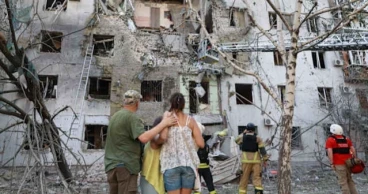
Ukraine launched more than 400 drones toward Moscow overnight in one of its largest attacks on the Russian capital, Russian officials said Monday, as both sides continued exchanging large-scale air strikes with no sign of the war easing.
The drone attack came just hours after Russia launched ballistic missiles and drones at Kyiv and other Ukrainian cities, continuing the cycle of retaliatory attacks that has marked the conflict, now in its fifth year.
At the same time, Ukrainian President Volodymyr Zelenskyy is facing growing political pressure at home following last week's government reshuffle, which triggered protests and exposed divisions within the country's military leadership.
Zelenskyy said he would hold "key talks" on Monday as he seeks to ease tensions after replacing 35-year-old Mykhailo Fedorov as defence minister while keeping Gen. Oleksandr Syrskyi, 60, as commander of Ukraine's armed forces.
The decision sparked several days of protests by supporters of Fedorov, who criticized Zelenskyy's move.
Moscow Mayor Sergei Sobyanin said more than 400 Ukrainian drones were launched toward the Russian capital between late Sunday and early Monday. He said most were intercepted far from the city, while air defence systems shot down another 85 drones near Moscow.
Andrei Vorobyov, governor of the Moscow region, said 10 people were injured and several residential buildings and civilian facilities were damaged.
The attack also caused a fire at the Yuzhnye Vrata industrial park, about 30 kilometres south of Moscow, according to local officials.
Independent Russian news outlet Astra reported that an oil depot in Podolsk, south of Moscow, also caught fire during the attack, although Russian authorities did not immediately confirm the report.
Ukraine has significantly expanded its long-range drone capabilities during the war, increasingly targeting Russian oil facilities and other strategic infrastructure deep inside Russia.
Earlier this year, Russia's Defence Ministry said it had intercepted 1,054 Ukrainian drones within a 24-hour period.
Meanwhile, Ukraine continues to urge its Western allies to provide more advanced air defence systems capable of intercepting Russian ballistic missiles, which are more difficult to shoot down than drones or cruise missiles.
Russia has increased its use of ballistic missiles in recent weeks. Ukrainian officials said a missile and drone attack on Sunday killed at least six people and injured dozens more.
The Washington-based Institute for the Study of War said Russia has launched more ballistic missiles this month than it is believed to produce monthly, suggesting Moscow is drawing from its existing stockpiles to sustain the intensified attacks.
Russia's Defence Ministry said its forces struck fuel storage facilities in the southern Ukrainian port city of Odesa overnight.
Ukraine's Air Force said Russia launched two missiles and 94 long-range drones overnight. It said Ukrainian air defences intercepted or electronically jammed 81 drones, while one missile and nine drones struck targets at nine locations, causing damage.
3 months ago
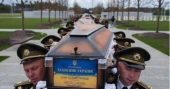
Ukraine buries unidentified soldiers as families wait years for answers
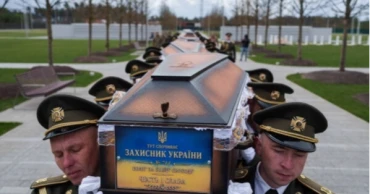
At a military cemetery in Kyiv, rows of crosses bear the words "Unknown Defender of Ukraine", each marked with an identification number and a note saying the identification process is still underway.
Among them is one grave that now carries a photograph of Ihor Yalynych, a Ukrainian soldier who went missing in the Kharkiv region in 2022. After searching for four years, his children, Stanislav and Oleksandra Yalynych, were finally able to find and identify their father's burial place.
The effort to identify thousands of soldiers killed in Russia's war is expected to continue for years, becoming one of the conflict's longest-lasting human tragedies. Many families are still waiting for confirmation, while some graves may never be identified.
For much of the war, Ukraine had no dedicated place to bury unidentified soldiers. Their bodies remained in refrigerated storage while the country's national military cemetery was under construction. Even before the cemetery officially opened in January, the first unidentified soldiers were buried there in August. Today, more than 300 graves carry only numbers instead of names, with more burials continuing.
"I was always close to my father, and losing him was very painful," said 21-year-old Oleksandra. "For four years, all I wanted was a place where I could come, sit with him and talk. Now I'm happy we found him."
A father's final mission
Ihor Yalynych was killed in eastern Ukraine in April 2022. He had served in the military since 2015, after fighting first broke out in eastern Ukraine and Russia illegally annexed Crimea in 2014.
When Russia launched its full-scale invasion in 2022, he was serving with a brigade in eastern Ukraine. He safely completed his first combat mission and even sent photos to his son. But he never returned from the second.
After weeks without contact, Stanislav posted online that his father was missing. Later, someone recognised Ihor in a photograph shared on a Russian Telegram channel showing nine dead Ukrainian soldiers lying side by side.
Ukraine's National Police in the Kharkiv region confirmed to AP that an investigation is ongoing into the deaths of the group of Ukrainian soldiers whose bodies were found there in April 2022, as well as efforts to identify them.
Although Ihor's body was recovered after Ukrainian forces retook the area in September 2022, his family spent four years dealing with official procedures, including DNA testing, before they could reclaim his remains.
Stanislav said the process was delayed because his father's case file was reportedly sent to police in Mykolaiv region, where Ihor was originally from, and remained unprocessed for more than two years.
In a written response to AP, Mykolaiv police did not comment on the family's claim that the file had been lost or delayed. They only said no criminal complaint had been filed regarding Ihor's identification.
Because of the missing file, Stanislav said he was only able to provide a DNA sample about six months ago. The match was confirmed two months later.
State keeps the flags until families are found
During military funerals in Ukraine, the national flag covering a soldier's coffin is normally folded and presented to the family.
For unidentified soldiers, however, there is no family member to receive it. Veterans Affairs Minister Natalia Kalmykova said the state accepts and keeps each flag until the soldier is identified.
She said honouring those who die defending the country is important not only for the fallen but also for those left behind, reminding Ukrainians of the price paid for their country's independence and democratic future.
Kalmykova said three of the first unidentified soldiers buried at the cemetery have since been identified.
She said one reason so many soldiers remain unidentified is that those who joined the military during the early years of the conflict were not required to provide DNA samples. Ukraine only created a DNA database later, and about half of the country's troops have now submitted samples, according to a senior military official who was not authorised to speak publicly.
When no DNA sample exists, identification depends on close relatives providing samples. Many relatives, however, remain in Russian-occupied areas, have left the country, are estranged from the soldier or cannot be located.
Since Russia's full-scale invasion began, more than 40,000 DNA samples from unidentified bodies have been registered, said Ruslan Abbasov, deputy director of the State Scientific Research Forensic Center under Ukraine's Interior Ministry. Most have now been matched with some of the 170,000 DNA samples collected from relatives.
When DNA samples are unavailable, investigators sometimes search a soldier's home or personal belongings to obtain genetic material.
Each unidentified body is buried with a unique identification number placed inside the coffin, marked on the outside and engraved on the grave's cross. Officials maintain a registry linking every number to the corresponding body, allowing graves to be located once a DNA match is confirmed.
A long process that will continue after the war
Bodies arrive from battlefields and through exchanges with Russia. Since the invasion began, Ukraine has brought home 24,805 bodies, according to the Coordination Headquarters for the Treatment of Prisoners of War.
Although many bodies are found carrying passports, military cards or driver's licences, DNA testing remains essential because investigators cannot be certain those documents belong to the deceased.
Forensic medical examiner Maksym Paziura said identification is often made more difficult because the remains of several people can sometimes be mixed together in a single bag. Most bodies are also in advanced stages of decomposition.
His office in the Kyiv region now processes between 15 and 20 bodies every day, storing them in refrigerated facilities until they are identified or buried. He said the workload has increased about five times compared with before the war.
"Even if the war ends, we will still have a huge amount of work," Paziura said. "Identification is a difficult and lengthy process that will continue long after the fighting stops."
For families, confirming a loved one's death is not only emotionally important. Without official identification, relatives cannot settle inheritance matters, remarry or receive government compensation provided to families of fallen soldiers.
Abbasov noted that countries in the Western Balkans are still identifying victims decades after their wars ended, adding that Ukraine is likely to face a similar challenge.
For Stanislav Yalynych, placing his father's photograph on the grave finally brought some peace.
"Now it won't only be us who know our father is buried there," he said. "People stop and ask about him. It means his sacrifice was not in vain, and he will be remembered."
3 months ago

Top EU official visits Kyiv, reaffirms support for Ukraine against Russia
European Commission President Ursula von der Leyen visited Kyiv on Wednesday to mark Ukraine's Statehood Day, reaffirming the European Union's continued military and financial backing for the country as it continues to resist Russia's full-scale invasion, now in its fourth year.
Ukraine has faced ongoing threats to its sovereignty since Russia occupied and illegally annexed Crimea in 2014. Eight years later, Moscow launched its full-scale invasion in February 2022. Statehood Day, observed as a national holiday, celebrates Ukraine's independence and self-determination.
The war has claimed thousands of military and civilian lives, displaced millions, devastated cities and heightened concerns that the conflict could escalate into a broader confrontation between Russia and NATO, whose members have continued to support Kyiv. Despite diplomatic efforts, there is still no sign of a peace agreement.
Senior officials from several southeastern European countries were also expected in Kyiv on Wednesday for a regional summit focused on Black Sea and broader security issues. A similar meeting held in the southern city of Odesa last year reaffirmed support for Ukraine's sovereignty and territorial integrity.
In recent weeks, Ukrainian President Volodymyr Zelenskyy has secured renewed commitments of assistance from the Group of Seven (G7) industrialized nations and the Coalition of the Willing.
Von der Leyen, making her 11th wartime visit to Ukraine, said Europe remains alert to Russia's wider ambitions and has already provided Ukraine with billions of euros in financial aid, military assistance and diplomatic support.
She said the EU would announce new measures to strengthen cooperation between European and Ukrainian defense industries and provide additional assistance to improve Ukraine's air defense systems ahead of winter, when Russia has repeatedly targeted the country's energy infrastructure.
Her visit comes as Western officials and analysts say Ukraine has stepped up long-range drone and missile strikes deep inside Russian territory, hitting strategic targets, disrupting military supply routes and contributing to fuel shortages in some areas.
"It's a special moment," von der Leyen wrote on social media. "Ukraine has built a strong military momentum. The tide is turning."
Also attending the Southeast Europe Summit in Kyiv was Serbian President Aleksandar Vucic, whose country maintains close ties with Moscow.
Although Serbia officially supports Ukraine's territorial integrity, it has declined to join Western sanctions against Russia following the invasion, largely because of its heavy dependence on Russian energy supplies.
Meanwhile, Ukrainian authorities said Russian aerial attacks killed at least eight civilians and injured 11 others on Wednesday.
In the northern Sumy region, Russian forces dropped six glide bombs, mainly targeting infrastructure, killing three people and injuring seven, according to regional military administration chief Oleh Hryhorov.
Another Russian strike on the southern city of Odesa killed three people and wounded three others, local military administration head Serhii Lysak said.
In the northern Chernihiv region, Russian drone attacks killed two people and seriously injured an 18-year-old, according to regional military administration chief Viacheslav Chaus.
Russia's Defense Ministry said its air defense systems intercepted 93 Ukrainian drones overnight over several Russian regions, as well as over Crimea, the Sea of Azov and the Black Sea.
3 months ago
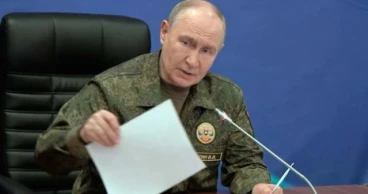
One killed in Crimea attack as Putin, Zelenskyy hold separate calls with Trump
A Ukrainian attack on Russian-occupied Crimea killed one person and injured two others early Sunday, according to Moscow-installed officials, as Russian President Vladimir Putin and Ukrainian President Volodymyr Zelenskyy held separate phone calls with US President Donald Trump on efforts to end the war.
Sergei Aksyonov, the Russia-appointed governor of Crimea, said the attack struck the northern part of the peninsula. One of the injured was reported to be in serious condition. He did not provide further details.
In recent weeks, Ukraine has intensified long-range strikes on military and infrastructure targets in Crimea as part of its efforts to isolate the strategically important peninsula, which Russia seized and illegally annexed in 2014.
Western officials and analysts say Ukraine's growing ability to strike deep inside Russian-controlled territory has increased pressure on the Kremlin, while Russia's battlefield advances have slowed in recent months.
The latest attack came shortly after Zelenskyy and Putin held separate telephone conversations with Trump.
In a post on X, Zelenskyy said he congratulated Trump on the 250th anniversary of US independence and discussed the situation on the battlefield.
"There is a real prospect of ending this war, and America's determination will be crucial," Zelenskyy wrote, adding that the two leaders agreed to continue discussions in person during the upcoming NATO summit in Ankara.
Meanwhile, the Kremlin described Putin's nearly 90-minute phone conversation with Trump on Saturday as "constructive."
Kremlin foreign policy adviser Yuri Ushakov said Putin also congratulated Trump and the American people on the 250th anniversary of US independence. The call was the fourth conversation between the two leaders this year.
According to Ushakov, Trump reaffirmed his willingness to help bring about a quick end to the fighting and support efforts to reach a peaceful settlement. He said Trump's envoys, Steve Witkoff and Jared Kushner, would continue mediation efforts and remain ready to visit Moscow.
Ushakov said Putin again stressed that Russia prefers a diplomatic solution, provided its long-standing demands are taken into account.
At the same time, Putin accused Ukraine and its European allies of trying to prolong and escalate the conflict, claiming they have misjudged the situation on the battlefield.
He also told Trump that Russian forces continue to make gains, capturing one settlement after another.
Putin specifically claimed that Russian troops had captured the Ukrainian stronghold of Kostyantynivka, describing it as an important step toward taking full control of Ukraine's Donetsk region.
Ukraine has rejected Russia's claim that Kostyantynivka has fallen.
3 months ago
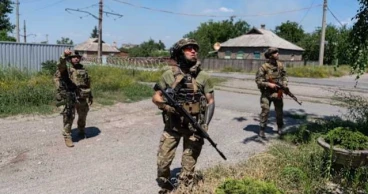
Ukraine targets oil terminal near St. Petersburg as drone strikes deepen pressure on Russia
A Ukrainian drone strike hit an oil terminal in Russia's St. Petersburg on Saturday, Russian officials said, as Kyiv continued its long-range attacks on Russia's energy infrastructure.
Ukraine has been targeting Russian oil facilities almost daily in recent months, a campaign aimed at disrupting fuel supplies and increasing pressure on the Kremlin as the war enters its fifth year.
St. Petersburg Governor Alexander Beglov said the attack struck the Kirovsky district on the Baltic Sea. He also said Russian air defenses intercepted 72 Ukrainian drones over the city and surrounding areas.
Ukrainian President Volodymyr Zelenskyy said the operation was part of Ukraine's "long-range sanctions" against Russia. In a post on Telegram, he said Ukrainian forces struck oil facilities at the port and also hit a military target on Kronstadt Island, located off the coast of St. Petersburg.
"The Ukrainian defense forces hit the port's oil infrastructure, which helps finance Russia's war, and also struck Kronstadt, an important military target," Zelenskyy said.
The Kirovsky district was also targeted in June, shortly before Russia hosted the St. Petersburg International Economic Forum.
Ukraine also continued attacks on Crimea, the peninsula Russia annexed in 2014. Moscow-installed Governor Sergei Aksyonov said a Ukrainian strike on Saturday killed one person and injured two others, including a 10-year-old child. Repeated attacks have forced local authorities to suspend gasoline sales to civilians.
Russian President Vladimir Putin has dismissed Ukraine's strikes on Russia's energy facilities as "not critical" and has insisted Moscow will continue the war until its objectives are achieved.
He has argued that the attacks are intended to shift attention away from Ukraine's battlefield losses. However, military analysts say Russia's advances have slowed in recent months.
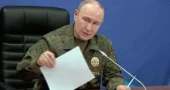
On Friday, Putin visited Russia's military headquarters overseeing the war in Ukraine, where he received a report claiming Russian forces had captured the eastern Ukrainian city of Kostyantynivka after weeks of heavy fighting. He described the development as an important step toward advancing on the nearby cities of Sloviansk and Kramatorsk, two of Ukraine's remaining strongholds in the Donetsk region.
Putin called the capture of Kostyantynivka, a major transport and industrial center, a development of "major strategic importance."
Ukraine denied the claim. General Staff spokesperson Maj. Andriy Kovalev told local media that Russian forces had not taken control of the city and accused Moscow of spreading "outright disinformation."
The ongoing drone campaign has increasingly brought the war into Russian territory. Local media reported that the border city of Belgorod was left almost entirely without electricity on Saturday following overnight Ukrainian drone attacks.
Meanwhile, Ukrainian authorities said eight people, including two children, were injured after Russian strikes hit residential buildings in the southeastern Zaporizhzhia region on Saturday.
3 months ago
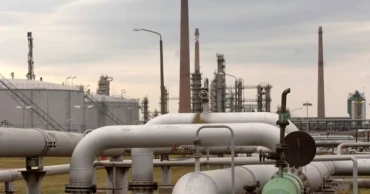
Russian oil flow to Slovakia resumes via Ukraine pipeline after three months
The supply of Russian oil to Slovakia through the Druzhba pipeline crossing Ukraine has resumed, Slovak Economy Minister Denisa Saková said on Thursday.
The flow restarted at 2 a.m. on Thursday after remaining suspended for about three months.
Hungary and Slovakia have been in an escalating dispute with Ukraine since Russian oil deliveries to both countries were halted in January.
Unlike most European Union members, Hungary and Slovakia still rely heavily on Russian energy supplies.
Both countries have accused Ukraine of not repairing damage to the pipeline. Hungary has blocked a large European Union loan intended for war-hit Ukraine, while Slovakia had refused to support new sanctions against Russia until oil supplies resumed.
6 months ago