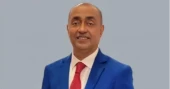
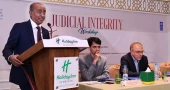
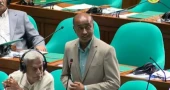
Law, Justice and Parliamentary Affairs Minister Md Asaduzzaman
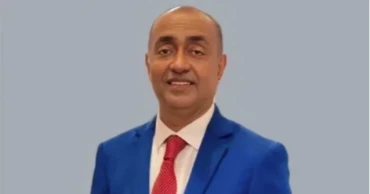
Govt creates 536 judicial posts to speed up justice delivery
The government has created 536 judicial posts and taken a series of legal, administrative and technological measures to reduce case backlogs and expedite the delivery of justice, Parliament was informed on Tuesday.
The government has also initiated steps to fill vacant posts in subordinate courts, introduce digital court services and expand alternative dispute resolution mechanisms to ease pressure on the formal judicial system.
The information was provided in a written reply by Law, Justice and Parliamentary Affairs Minister Md Asaduzzaman to a question from BNP lawmaker from Madaripur-3 Anichur Rahman.
He said the government had taken short- and long-term measures to ensure that all are equal in the eyes of the law and that citizens' constitutional right is upheld to seek legal protection.
As part of legal reforms, Parliament formulated the Code of Civil Procedure (Amendment) Act, 2026 and the Code of Criminal Procedure (Amendment) Act, 2026 during its first session.
The amendments to the Civil Procedure Code have introduced provisions for serving summons through SMS and voice calls, filing complaints and written statements through affidavits, and submitting execution applications without requiring separate applications for each step.
Changes to the Criminal Procedure Code have introduced new procedures for serving summons and are intended to reduce unnecessary delays in proceedings involving absconding accused persons.
The government has also taken steps to make proceedings under laws relating to the prevention of violence against women and children more effective.
On strengthening judicial capacity, the minister said 536 judicial posts had been created.
Under the 18th Bangladesh Judicial Service examination, 200 candidates have been provisionally selected for appointment as civil judges. Their medical examinations and other necessary procedures have been completed, while subsequent administrative formalities are underway.
The preliminary examination for the 19th Bangladesh Judicial Service recruitment process has also been completed.
The government took steps to recruit 2,081 judicial officers for subordinate courts over the past year. Recruitment initiatives are also underway to fill another 1,075 vacant posts by January 2027.
To reduce the backlog of cases, the government has introduced measures to assess the caseload of different district courts and distribute cases more evenly.
Special instructions have been issued to prioritise the disposal of old cases. Steps have also been taken to ensure the attendance of witnesses through coordination among police, prosecutors, lawyers and other stakeholders.
Witness attendance and information service centres have been established to facilitate court proceedings.
Asaduzzaman said audio-conferencing facilities were also being used to record testimony from witnesses and other relevant persons in appropriate cases, reducing the need for physical attendance and saving time and resources.
The government has also expanded alternative dispute resolution through mediation.
The Legal Aid Services (Amendment) Act, 2026, passed on April 9 during the first session of Parliament, upgraded the National Legal Aid Services Organisation to the Bangladesh Legal Aid Department.
Under the amended law, mediation through district legal aid offices has been made mandatory before filing cases involving disputes arising under nine scheduled laws.
Agreements reached through mediation and certified by the legal aid authorities have the same legal effect as court decrees.
The programme is currently operating in 30 districts, where the reported settlement rate through mediation stands at 62.03 percent. The government plans to expand the initiative to all districts in phases.
On digitalisation, the minister said e-bail bond management software had been introduced in 28 districts.
E-family courts have also been introduced in several districts, while an e-family appellate court has been established in Dhaka. The initiative is expected to be expanded to other districts in phases.
The government has also sought a review of the Development Project Proposal (DPP) for the e-Judiciary project, which is expected to facilitate the installation of e-courtrooms, video recording of proceedings and digitisation of evidence and court documents.
Besides, an initiative has been taken to prepare a 10-year integrated judicial plan based on surveys to identify infrastructure, manpower and document-management requirements in district courts.
The minister said the government remained committed to reducing the suffering of litigants and ensuring speedy, transparent and affordable justice through judicial reforms, recruitment, case management and the use of information technology.
9 days ago
Hasina is a convict, legal steps taken to bring her back: Law Minister
Law, Justice and Parliamentary Affairs Minister Md Asaduzzaman on Sunday said the government is following due legal procedures to bring ousted Prime Minister Sheikh Hasina back to Bangladesh, describing her as a convicted criminal.
“To me, she is a criminal. She is a convict, sentenced by our tribunal. That is her identity to us. Legal procedures are underway to bring her back,” he said.
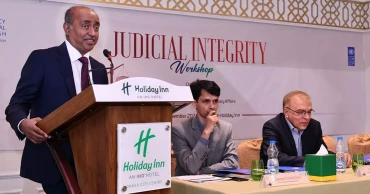
The minister made the remarks after inaugurating a workshop on ‘Integrity in Judicial Proceedings’ organised by Transparency International Bangladesh (TIB) at a hotel in Dhaka.
“Whatever needs to be done legally concerning Sheikh Hasina, we are doing that through due process. You will see how we deal with it legally when we take any steps. There is no room for emotion here. The matter is that I will enforce the law. If we fail to enforce the law properly, then you can question us,” he said.
Asked whether the government would fight a legal battle in an Indian court to bring her back, the minister said it is a matter for the Indian government.
“We have sent a request to them under the extradition treaty. If they hand her over to us, we will bring her under the law through due process in the manner required,” he said.
When a journalist questioned the extradition treaty, saying Hasina was staying in India as a state guest rather than being held as a prisoner, Asaduzzaman said her status as described by Indian authorities did not change Bangladesh’s position.
“They may say whatever they want, but that is not enough. She was tried in an open court in my country. Since you are raising this question, first consider whether 1,400 people were killed during the July Revolution and whether 30,000 people were left disabled,” he said.
He also questioned whether the trial had any shortcomings, whether it was held behind closed doors and whether witnesses had been allowed to testify.
“We have sent the request that is required under due process to bring her back. That is what I am saying,” the minister added.
12 days ago
Khokon’s conduct that led CJ to leave courtroom was not proper: Asaduzzaman
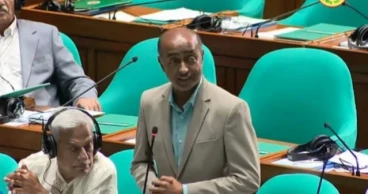
Law, Justice and Parliamentary Affairs Minister Md Asaduzzaman on Wednesday told Parliament that the conduct of Supreme Court Bar Association President AM Mahbub Uddin Khokon, MP, that prompted Chief Justice Zubayer Rahman Chowdhury and other Appellate Division judges to leave the courtroom was not proper.
“The way the Honourable Chief Justice left the court yesterday (Tuesday) has certainly made us feel that the conduct demonstrated by the lawyer was not proper,” he said while responding to an issue raised by opposition Bangladesh Jamaat-e-Islami lawmaker Muhammad Nazibur Rahman (Pabna-1).
On Tuesday, the Chief Justice along with four other judges of the Appellate Division left the courtroom after Khokon commented about lawyers’ "declining" incomes during his tenure.
Nazibur Rahman raised the issue in the House, saying an “unfortunate” and “undesirable” incident took place in the Appellate Division of the Supreme Court on Tuesday involving the SCBA president and the Chief Justice.
He said the Chief Justice and all judges of the Appellate Division left the courtroom following the incident and did not return to court that day.
Nazibur said the government should clarify its position on the incident, stressing the importance of maintaining the independence of the judiciary.
“We talk about the independence of the judiciary. The judiciary is the last resort for people to get justice. We should think about what message such an incident is sending to the people,” he said.
Responding to the issue, Asaduzzaman said the question raised by the lawmaker certainly warranted discussion, but the theory of separation of powers did not apply to the incident in the manner suggested.
“The conduct was demonstrated by one of the lawyers, who happens to be the president of the Supreme Court Bar Association,” he said.
The minister said the SCBA is not a partner or part of any of the three organs of the state --- the judiciary, the legislative and the executive.
“It is an informal body. It is an association of members who practise in the Supreme Court of Bangladesh,” he said.
Asaduzzaman said the lawyer, as a member of the public, did not represent the judiciary, legislature or executive.
“That does not mean justifying that,” he said, making clear that he did not consider the lawyer’s conduct appropriate.
The minister said there had been concern after the Chief Justice left the courtroom on Tuesday, as it was initially thought that he might initiate contempt proceedings.
“But today (Wednesday), when the Honourable Chief Justice came at 9:00am, we thought he might issue a contempt rule. But after coming, he resumed his regular work,” he said.
Asaduzzaman also said he had learnt that the lawyer concerned appeared before the Chief Justice’s court on Wednesday and conducted his case normally.
He expressed the expectation that no such incident shall occur in the future and that everyone will act as responsible citizens.
Later, Khokon, who is also a ruling party MP, wanted to talk about the issue in the House, but Deputy Speaker Barrister Kayser Kamal did not allow him.
2 months ago

Parliament scraps duty-free car import privilege for MPs
Parliament on Sunday passed a bill abolishing the long-standing provision that allowed Members of Parliament to import vehicles duty-free during their term, in a bid to align it with the electoral manifesto and remove disparity.
Law, Justice and Parliamentary Affairs Minister Md Asaduzzaman moved the bill, which was passed by a voice vote.
Speaker Hafiz Uddin Ahmad, Bir Bikram, was chairing the House.
Placing the Members of Parliament (Remuneration and Allowances) (Amendment) Bill, 2026, the minister said the existing provision was inconsistent with the commitment of Members of Parliament to serve the people and created a visible disparity between lawmakers and people who are required to pay taxes.
“In the current economic realities, continuation of such privileges is not appropriate. The amendment seeks to ensure austerity in public expenditure, enhance transparency and accountability, and establish fairness between elected representatives and citizens,” he told the House.
He said the initiative reflects the vision and policy direction of Leader of the House Prime Minister Tarique Rahman to align parliamentary privileges with broader principles of equity and fiscal responsibility.
Fuel rationing not applicable to police, emergency services: PM
According to the statement of the reasons attached to the bill, although MPs are elected with a pledge to serve people, the provision allowing duty-free import of vehicles in their own names contradicts that commitment. It also creates an imbalance between people, the rightful owners of the state and their representatives.
Under the proposed law, Article 3C of the Members of Parliament (Remuneration and Allowances) Order, 1973 has been omitted. The law will come into force immediately.
Article 3C of the existing Order states, “A Member shall be entitled to import free of customs duty, 13[value added tax], development surcharge and import permit fee during the whole of his term of office, one 14[car, jeep or microbus] of such specification, and on such conditions, as the Government may specify in this behalf.”
In this Article, “Member” shall include the Prime Minister, the Speaker, the Ministers, the Leader of the Opposition, the Deputy Leader of the House, the Deputy Speaker, the Chief Whip, the Deputy Leader of the Opposition, Ministers of State, the Whips and Deputy Ministers who are Members of Parliament.
The article also states a member shall be entitled to import another new car, jeep or microbus after expiration of a period of five years from the date of his last import at the same terms and conditions.
6 months ago