Khandakar Abdul Muktadir

Govt working to accelerate economic growth, boost investment: Muktadir
Commerce, Industries, Textiles and Jute Minister Khandakar Abdul Muktadir on Tuesday said the government is working to accelerate economic growth, expand industrialisation and increase domestic and foreign investment.
Key sectors of industry and trade will be strengthened by removing existing barriers to economic development, including the energy crisis, power management and logistics, he said while briefing journalists after attending a programme marking the 48th founding anniversary of BNP in Sylhet city.
Muktadir said BNP, founded in 1978 under the leadership of late President Ziaur Rahman, had governed the country with the support of the people through various elections.
He said former BNP Chairperson Begum Khaleda Zia had led the party and the country through difficult times and worked to protect the country's sovereignty. “At present, her eldest son, BNP Chairman and Prime Minister Tarique Rahman, is leading the country.”
The minister said addressing the challenges of nation-building is currently the government's main priority rather than celebrations.
He said Prime Minister Tarique Rahman is working round the clock to improve the country's economy and people's living standards. “The government has taken initiatives to make the industry, trade and every sector of the economy that plays an important role in national production more dynamic,” he said.
Muktadir said industrialisation is being given priority alongside developing necessary infrastructure and improving the business environment to expand investment.
As part of the initiative, the government has recently announced plans to establish a BSCIC industrial estate in Sylhet, he said.
“Such initiatives will help develop industries, create employment, accelerate the national economy and increase domestic and foreign investment,” he said.
The minister said the government will also work to improve the law-and-order situation alongside economic development.
He said the government is taking necessary steps in line with the expectations of the people.
“Our goal is to build a strong, prosperous and dynamic economy. Efforts to expand industry and trade, increase investment and remove barriers to economic development will continue,” Muktadir said.
Sylhet city BNP President Nasim Hossain, General Secretary Emdad Hossain Chowdhury, BNP Central Assistant Organising Secretary Miftah Siddiqui, National Executive Committee member Abul Kaher Chowdhury Shamim, former city BNP General Secretary Badruzzaman Selim and other party leaders were also present.
1 month ago
Halal economy can be a major area of opportunity: Commerce Minister
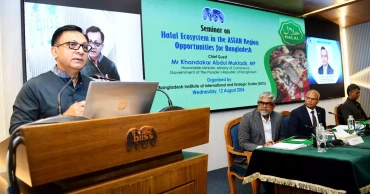
Commerce Minister Khandakar Abdul Muktadir stressed the need for reducing its reliance on traditional export products and explore emerging sectors, particularly by developing a strong and internationally competitive halal ecosystem based on the experience of ASEAN countries.
He made the call while addressing a seminar titled “Halal Ecosystem in the ASEAN Region: Prospects for Bangladesh,” organised by the Bangladesh Institute of International and Strategic Studies (BIISS).
The minister said the halal economy can no longer be viewed as being limited to food and beverages.
It has evolved into a broad global economic system covering food, pharmaceuticals, cosmetics, modest fashion, tourism, logistics, technology, finance and international certification, he said..“We must first enhance our domestic production capacity to increase exports. This requires both local and foreign investment, as well as ensuring a safe and attractive environment for investors,” he said.
Muktadir said preferential access to international markets is one of the key conditions for attracting investment.
He said the government is working to sign free trade agreements (FTAs), preferential trade agreements (PTAs) and economic partnership agreements (EPAs) with different countries to retain Bangladesh’s export advantages after its graduation from the least developed country (LDC) category.
He stressed the need for an independent, reliable and internationally recognised halal certification system to tap the growing global halal market.
Such a system would increase international confidence in Bangladeshi products and help the country enter new markets, he said.
Speakers at the seminar said Bangladesh’s export sector has long been heavily dependent on the readymade garment industry.
To remain competitive in the changing global trading environment, the country needs to diversify both its products and markets, with the halal economy offering significant potential.
They stressed that Bangladesh needs an integrated system covering production, quality control and certification to enter the global halal market.
Participants highlighted Malaysia’s halal ecosystem as a useful model for Bangladesh.
Speakers said Bangladesh has a large domestic market and strong capabilities in agriculture, food processing, pharmaceuticals, leather and garments.
These strengths could help the country become an important partner in the global halal supply chain.
The seminar identified five strategic priorities for making Bangladesh’s halal sector globally competitive: establishing an internationally recognised national halal assurance framework; developing specialised halal industrial clusters with modern laboratories and logistics facilities; upgrading existing industries to international standards; involving small and medium enterprises, researchers and young entrepreneurs; and establishing a “Bangladesh Halal” brand globally through economic diplomacy.
BIISS Director General Maj Gen A S M Ridwanur Rahman delivered the welcome address, while BIISS Research Director Dr Mahfuz Kabir presented the keynote paper.
2 months ago
Govt working to cut logistics costs to curb food inflation: Commerce Minister
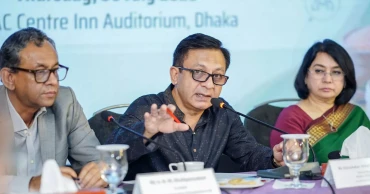
Commerce Minister Khandakar Abdul Muktadir on Thursday said the government is prioritising a reduction in logistics costs, describing them as one of the biggest obstacles to bringing down Bangladesh's persistently high food inflation.
“While logistics cost stands at around 10 percent of GDP in other countries of the world, it is 16 percent in Bangladesh. If we can rein in logistics costs, food inflation can be brought down,” the commerce minister said at an event on Bangladesh's food chain, organised by the Centre for Policy Dialogue (CPD) at the BRAC Centre in the captial.
Noting that inflation which has been rising since the post-Covid period and currently stands above 9 percent, was brought under control by other countries around six months ago but Bangladesh has failed to do so due to the complexity of its market system, he said.
“Our market system is quite complex. Alongside logistics costs, we need to bring down input costs and unaccountable financial transactions such as extortion as much as possible,” he said.=
The minister said every government in Bangladesh has focused on the agriculture sector separately, but there has been a lack of coordination among them.
“Since the famine of 1974, every government in Bangladesh has received the same message that staying in power requires paying attention to the agriculture sector. Since then, almost every government has worked for farmers. But due to a lack of coordination in this work farmers have not always received the maximum benefit,” he said.
Muktadir said accurate information does not reach farmers in Bangladesh which causes them losses.
“A farmer who cultivated potatoes extensively over the past few years and got a good yield but did not get a fair price in the market, why does he still grow potatoes in excess of demand the following year and incur losses? This is a question. The major reason is that market information does not reach the farmer. He cannot understand what would be profitable for him to cultivate,” he said.
The minister also said Bangladesh’s agriculture sector has seen very little scientific and planned work, with most agricultural activities being carried out in a “natural way,” stressing the need to bring this under a proper plan.
Muktadir stressed the need for improving farmers’ living standards and bringing the entire market system under an integrated plan.
CPD Executive Director Fahmida Khatun presided over the event.
2 months ago
Plan underway to reopen closed mills, boost industrial output: Minister
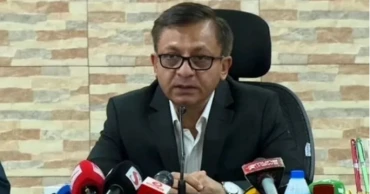
Industries, Commerce, and Textiles and Jute Minister Khandakar Abdul Muktadir on Monday said the government is moving ahead with a coordinated and timely action plan to revive the country’s industrial sector, stabilise markets and ensure uninterrupted supply of essential commodities.
“Reviving sick and closed industries to boost production and employment remains one of the government’s top priorities,” he said while talking to journalists after the fourth session of the second day of the Deputy Commissioners’ (DCs) Conference at the Osmani Memorial Auditorium in the capital.
The minister said the process of gradually handing over around 50 closed and loss-making textile and jute mills to the private sector is underway.
“This initiative will attract new investment, increase production and create large-scale employment opportunities,” he said, adding that the process is expected to be completed within a year.
Referring to proposals from deputy commissioners, Muktadir said they presented practical suggestions based on local realities, including industrial revival, development of new industrial zones, reopening of closed sugar mills and establishment of distilleries to enhance export potential.
“The government will give due consideration to these proposals,” he added.
Emphasising structural reforms in market management, the minister said the government is planning to introduce an AI-based supply chain monitoring system to reduce price gaps from producers to retail levels.
“This system will enable close monitoring of imports, stock, wholesale and retail stages, ensuring transparency and accountability in the market,” he said.
A strategic reserve for import-dependent goods is being developed to face the situation in case of any global market volatility, Muktadir said, adding that this will help prevent shortages and maintain price stability even during international supply disruptions.
Regarding the activities of the Trading Corporation of Bangladesh (TCB), he said a strong advisory council will be formed, comprising experts from both public and private sectors. “This will make TCB’s market interventions more effective, timely and targeted,” he said.
Ahead of upcoming Eid-ul-Azha, the minister outlined a special plan for proper preservation of raw hide, saying efforts are underway to ensure that no hide goes to waste.
Training will be provided through district and upazila administrations to mosque and madrasah stakeholders, he said.
Government-supplied salt, awareness leaflets and media campaigns will also be used, he said, adding that transport of hides will be regulated for seven days after Eid to ensure local preservation.
Stressing stronger roles of district administration in maintaining market stability, Muktadir said, “The administration and elected government will work together to keep supply chains active and protect consumer interests. This is our commitment.”
5 months ago