Health Minister Sardar Md. Sakhawat Husain
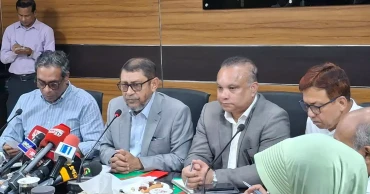
Govt orders private hospitals to reserve 10pc beds for free dengue treatment
The government has directed private hospitals across the country to provide free treatment to dengue patients in at least 10 percent of their beds, said Health and Family Welfare Minister Sardar Md. Sakhawat Husain on Tuesday.
“Under the new directive, private hospitals will reserve 10 percent of their beds for dengue patients and waive doctors' consultation fees for those receiving treatment. Patients will only have to bear the costs of medicines and meals,” the minister told reporters after a meeting on dengue prevention and preparedness.
Besides, private hospitals have been asked to offer discounts of up to 80 percent on diagnostic tests for dengue patients, he said.
Meanwhile, all private hospitals must submit detailed information to the Health Ministry within the next three days including the number of beds allocated for dengue patients, the stock of saline and other essential fluids, and their future procurement plans.
Regarding dengue vaccination, the minister said although dengue vaccines are being used in some countries they have not yet gained universal acceptance.
"Bangladesh will not launch a dengue vaccination programme immediately without consulting international organisations and experts," he said, adding that discussions will be held with the World Health Organization and UNICEF and other relevant bodies before any decision is taken in this reagard.
The minister also sought cooperation from the media and private hospitals in raising public awareness about dengue prevention.
He also urged television channels to broadcast dengue awareness messages during programme breaks and asked city corporations to intensify drives to eliminate mosquito breeding grounds in abandoned toilets and other places where water accumulates.
Punitive measures, including mobile court actions, would be taken against individuals who fail to maintain cleanliness and allow mosquito breeding, he warned.
"Dengue prevention is not the responsibility of the government alone, it is a collective responsibility. Like Covid-19 pandemic, everyone must work together to tackle the challenge,” said the minister.
Besides, coordinated efforts involving doctors, nurses, hospital owners, media outlets and local administrations would be crucial to keeping the dengue situation under control, he added.
The minister also said the government would directly contact patients to monitor whether hospitals are providing the announced facilities and services.
A nationwide awareness campaign will be held and rallies would be held simultaneously at 10 am on Saturday in Dhaka North City Corporation, Dhaka South City Corporation, all divisional headquarters and district towns, he said.
The campaign, which will continue for three months, will include public announcements, media advertisements, community meetings and courtyard gatherings aimed at mobilising public participation in dengue prevention, he added.
Bangladesh on Monday recorded a sharp rise in dengue infections, with one more death and 110 new patients admitted to hospitals across the country in the last 24 hours.
4 months ago
9.5 crore more vaccine doses to arrive in Bangladesh soon: Health Minister
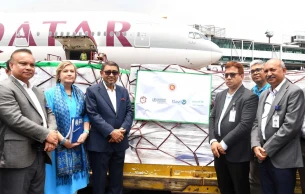
Health and Family Welfare Minister Sardar Md. Sakhawat Husain on Wednesday said 9.5 crore doses of 10 types of vaccine including MR (Measles-Rubella) vaccine will be brought to Bangladesh with support from UNICEF to strengthen the Expanded Programme on Immunization (EPI).
He made the announcement while talking to reporters at Hazrat Shahjalal International Airport after receiving a vaccine shipment.
The minister said the EPI programme launched in 1979 has been running regular vaccination activities against 12 preventable infectious diseases to protect children and women.
Bangladesh has been recognised as a “Vaccine Hero” by Gavi for the programme’s success, he added.
Citing joint research by the Ministry of Health and UNICEF, he said EPI vaccinations prevent around one lakh child deaths and nearly 50 lakh illnesses annually in Bangladesh.
The minister alleged that some wrong decisions by the previous interim government affected the internationally recognised programme, but said the current government has given top priority to EPI as it is directly linked to saving children’s lives.
He said an earlier decision to procure vaccines through open tender was cancelled within two weeks of the government taking office. Later, the government requested UNICEF to supply vaccines and promptly paid the required funds.
The minister said the government has already paid $83.6 million to UNICEF for the procurement of 95 million doses of 10 types of vaccines.
Following payments on April 9 and 17, 2026, UNICEF delivered the first shipment of 15.5 lakh doses of IPV vaccine on May 3. Another shipment of 15 lakh doses of MR and TD vaccines (90,000 vials) was delivered on May 6.
Around 1.8 crore more doses of MR, TD, BCG, TCV, bOPV and pentavalent vaccines are expected to arrive by May 10, he said.
UNICEF plans to complete full delivery by September, 2026, he added.
The minister said that the government has planned vaccine procurement for 15 months covering fiscal year 2026–27, including a three-month buffer stock, which will also be implemented through UNICEF.
He said the country currently has sufficient stock of TCV and HPV vaccines for two years, and the new supply will ensure no shortage of other vaccines for the next 8–12 months.
The cold chain system is being maintained from production to field level with technical support from UNICEF, including microplanning, training, awareness campaigns and real-time reporting, he said.
Under the ongoing Measles-Rubella Vaccination Campaign 2026, 1.68 crore children have already been vaccinated as of May 5, achieving 93% coverage, and the country is moving towards 100% coverage, said the minister.
The minister urged parents, community leaders, teachers and religious leaders to ensure that every child receives the MR vaccine to protect future generations from deadly diseases.
He expressed gratitude to development partners including Gavi, UNICEF and the Asian Development Bank (ADB), saying coordinated efforts would further strengthen Bangladesh’s routine immunisation programme and protect all children from preventable diseases.
5 months ago