Bangladesh’s Liberation War
Those who opposed Liberation War and ‘fascists’ now working together against govt: Azam Khan
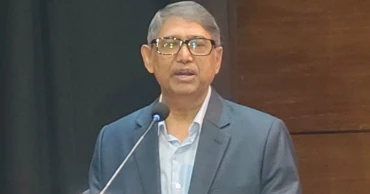
Liberation War Affairs Minister Ahmed Azam Khan on Sunday said those who opposed Bangladesh’s Liberation War in 1971 and the ‘fascist force’ who fled the country after destroying it have joined hands in a conspiracy to destabilise the country and unseat the government.
The Minister said various groups are trying to create unrest and instability despite the government’s short time in office, he said at a discussion titled “The Role of Freedom Fighters in Rebuilding the State” organised by the Bangladesh Jatiyatabadi Muktijoddha Dal and Muktijuddher Projonmo at the Institution of Diploma Engineers, Bangladesh (IDEB) in the capital.
“They are making irresponsible statements and staging protests in different places to create disorder. But can anyone show a single example of corruption by this government in its first 110–111 days? The answer is no,” he added.
The programme was held marking the 45th martyrdom anniversary of former president Ziaur Rahman.
BNP Standing Committee Member Dr Abdul Moyeen Khan attended the event as the chief guest.
Azam khan said the government, under Prime Minister Tarique Rahman, is working to rebuild Bangladesh based on the ideals of the Liberation War and the principles of Ziaur Rahman.
He urged freedom fighters to stand beside the government and support its efforts to strengthen the country’s economy and institutions.
The Minister said the government aims to build a strong and sustainable economy within the next five years and called on citizens to remain patient and cooperate with the administration.
“We want to work together with people to ensure that Bangladesh stands firmly on a strong economic foundation before the world,” he said.
Referring to Ziaur Rahman, the minister said the former president not only declared Bangladesh’s independence but also participated directly in the Liberation War and later restored multiparty democracy after assuming state power.
“He brought Bangladesh back from military rule and one-party governance to a multiparty democratic system. He reopened newspapers that had been shut down and restored democratic rights of people,” Azam said.
He said the Liberation War Affairs Ministry is undertaking various projects to ensure that freedom fighters are not deprived of their rightful benefits.
He said he recently visited Chattogram to inspect Liberation War-related facilities and ongoing restoration works neglected during the previous government’s tenure.
Ishraque Hossain, State Minister for Liberation War Affairs and president of Bangladesh Jatiyatabadi Muktijuddher Projonmo, said people who were not freedom fighters, or who were too young to have participated in the 1971 war, were included in the official list of Freedom Fighters during the Awami League government.
“Perhaps the fascist Awami League achieved its political objectives by including such people in the freedom fighter list, but in doing so it took genuine freedom fighters to the extreme point of humiliation and insult,” he said.
He said the inclusion of large numbers of ineligible individuals in the list over the past 17 years had diminished the status and dignity of freedom fighters, whom he described as the nation's greatest sons.
The state minister said the government has already initiated efforts to correct the list and around 6,000 ineligible individuals have so far been removed from the freedom fighter registry.
He said Jatiya Muktijoddha Council conducts verification and scrutiny before submitting recommendations to the ministry which are then forwarded to the relevant branch for implementation.
Bangladesh Jatiyatabadi Muktijoddha Dal President Ishtiaq Aziz Ulfat chaired the programme.
4 months ago
Algerian envoy recalls 1945 massacres, links struggle to Bangladesh’s Liberation War
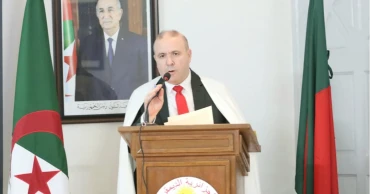
The Algerian Embassy in Dhaka on Thursday commemorated Algeria’s National Day of Remembrance, paying tribute to the victims of the May 8, 1945 massacres and drawing parallels between Algeria’s struggle for independence and Bangladesh’s Liberation War of 1971.
Speaking at the event, the Algerian ambassador said the massacres in Sétif, Guelma and Kherrata marked a turning point in Algeria’s history and exposed the harsh realities of French colonial rule.
The envoy said this year’s theme, “The Massacres of May 8, 1945: Dimensions, Visions, Impacts,” highlights both the historical significance of the events and their lasting impact on Algeria’s national identity.
Recalling the events of May 8, 1945, the ambassador said Algerians had marched peacefully demanding justice, dignity and freedom at a time when the world was celebrating the end of World War II. Many Algerians had expected political reforms and greater rights after supporting France during the war, but those hopes were shattered when promised recognition and reforms were denied.
The speech highlighted the killing of young demonstrator Bouzid Saal, who was shot after refusing to lower the Algerian flag during the demonstration. His death later became a symbol of Algeria’s struggle for freedom and self-determination, the envoy said.
According to the ambassador, the violence quickly spread across Sétif, Guelma and Kherrata as French authorities and settler militias launched a large-scale crackdown that lasted for weeks. Villages were destroyed, civilians were killed and thousands lost their lives. The speech noted that many historians estimate the death toll at around 45,000.
Despite the tragedy, the ambassador said the sacrifices of those who marched for freedom continue to inspire younger generations and remain a symbol of resilience, patriotism and dignity.
The envoy said the events of May 8, 1945 eventually led to the rise of organised resistance movements, including the Special Organization (OS), which later contributed to the formation of the National Liberation Front (FLN) that launched Algeria’s independence revolution on November 1, 1954.
The ambassador also noted that the massacres remain a sensitive issue in Algeria-France relations. While France described the events in 2005 as an “inexcusable tragedy,” Algeria continues to seek fuller recognition and accountability for what it considers crimes against humanity.
Highlighting Algeria’s independence achieved on July 5, 1962 after 132 years of colonial rule, the envoy said the country continues to draw strength from its history while working toward progress and opportunities for its youth.
The ambassador also drew similarities between the Algerian struggle and Bangladesh’s Liberation War, saying both nations experienced oppression and fought for the right to self-determination.
Calling for unity and cooperation, the envoy urged people to honour the sacrifices of freedom fighters and martyrs who gave their lives for their nations.
The programme ended with slogans celebrating Algeria, Bangladesh and the friendship between the two countries.
5 months ago