universal birth-death registration
Call for universal birth, death registration to achieve SDGs
Ensuring universal birth and death registration is crucial for protecting citizen rights and achieving the Sustainable Development Goals (SDGs), but Bangladesh continues to face significant challenges due to legal loopholes and weak implementation, resulting in a low registration rate across the country, experts have said.
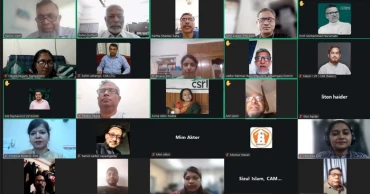
They highlighted these issues on Saturday at a webinar titled "Strong Registration System for Achieving Sustainable Development Goals: Bangladesh Perspective" organised by PROGGA (Knowledge for Progress) with support from the Global Health Advocacy Incubator (GHAI).
The webinar noted that SDG target 16.9 prioritises providing legal identity for all, including birth registration. Registration is also mandatory to access benefits from government social safety net programmes, which aligns with SDG target 1.3.
Furthermore, death registration directly helps in tracking maternal mortality (SDG 3.1), and records of births and deaths are indispensable for measuring child mortality rates (SDG 3.2).
Accurate cause-of-death data assists in combating non-communicable diseases (SDG 3.4), while timely death registration plays a crucial role in disease surveillance and emergency healthcare services (SDG 3.d).
Additionally, birth certificates facilitate school enrolment for children and serve as a protection against child marriage and child labour by verifying exact ages, thereby accelerating the achievement of SDGs 4 and 5 (Education and Gender Equality).
Consequently, achieving universal registration is absolutely vital for attaining the SDGs.
Speakers at the webinar further highlighted that the current birth registration rate in Bangladesh is only 50 percent, while death registration stands at 47 percent, figures that are significantly lower than global and regional averages.
Although around 67 percent of children are born in health facilities, the primary responsibility for registration still lies with the families, not the health facilities.
Due to the lack of a mandatory registration system following births and deaths at healthcare centres, a vast portion of the population remains excluded from official state records.
At the same time, the absence of accurate vital statistics is hampering effective planning in health sector and non-communicable disease prevention.
Nazrul Islam, Country Coordinator of Vital Strategies, said, "To support SDG achievement, along with strengthening the registration law, we must accelerate the implementation process by enhancing coordination among all relevant ministries and the Local Government Division."
Muhammad Ruhul Quddus, Bangladesh Country Lead of GHAI, stated, "Universal registration can be ensured if the Birth and Death Registration Act, 2004 is amended to shift the legal responsibility from individuals to healthcare facilities, which will ultimately contribute to achieving the SDGs."
The webinar was presided over by ABM Zubair, Executive Director of PROGGA, and moderated by Coordinator Mashiat Abedin, who also delivered the keynote presentation.
4 months ago