pigeons
Study suggests pigeons may use their liver to find their way home
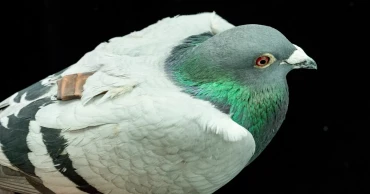
Pigeons may rely on an unexpected body part to navigate over long distances: their liver, according to a new study that sheds light on one of nature’s long-standing mysteries.
Scientists have long known that many animals use Earth’s magnetic field to help them find their way. Birds, fish and sea turtles are among the species believed to use this natural compass, but researchers have struggled for decades to understand exactly how the process works.
Pigeons are particularly famous for their navigation skills. They can travel hundreds of miles in a single day and have been used by humans for thousands of years to carry messages and important information.
Over the years, scientists have proposed several theories about how pigeons detect magnetic signals, including through special molecules in their eyes, their beaks or their inner ears. However, a new study points to a different possibility.
Researchers led by scientists in Germany found strong magnetic signals in the birds’ livers, specifically in iron-rich immune cells that help break down old red blood cells and store iron.
When scientists temporarily removed these immune cells from pigeons and then observed their flights, the birds struggled to find their way home, according to the study published in the journal Science.
“The magnetic sense has remained a mystery for nearly a century,” said Martin Wikelski of the Max Planck Institute of Animal Behavior.
Researchers believe the iron-containing cells may help pigeons detect Earth’s magnetic field and provide navigation information to the brain.
The effect was most noticeable on cloudy days. Scientists said that under clear skies pigeons can also use the sun as a guide, but when sunlight is unavailable, their magnetic sensing system becomes more important.
According to study co-author Christian Kurts of the University of Bonn, the findings suggest the liver cells may play a key role in helping birds maintain their sense of direction.
Another researcher involved in the study, Clivia Lisowski, said the immune cells are located close to nerve fibers in the liver, which could allow magnetic information to be transmitted to the brain.
Experts not involved in the research described the findings as intriguing.
Albert Kao of the University of Massachusetts Boston said he would not have expected the liver to play such a role, but the explanation appeared plausible.
The researchers believe similar mechanisms could exist in other birds and animals, including mice. However, outside experts caution that more studies are needed to confirm the theory and understand exactly how magnetic signals are processed by the brain.
Scientists also noted that magnetic-sensitive immune cells have been found in other parts of pigeons' bodies, including the beak and spleen, suggesting navigation may involve multiple systems rather than a single mechanism.
In an accompanying editorial, researchers argued that pigeons may use several methods to navigate depending on the situation, such as traveling long distances or locating a specific destination.
Having more than one way to find their way home, they noted, could be a useful advantage for birds flying in difficult conditions.
4 months ago