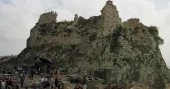
Israeli force
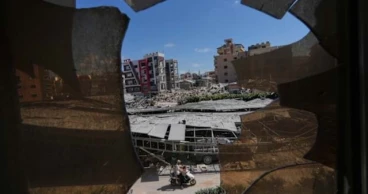
Israeli forces launch fresh strikes in southern Lebanon as US-Iran talks delayed
Israel's military said on Friday that its forces carried out overnight strikes on targets across southern Lebanon, while Hezbollah reported heavy fighting in the area.
The latest clashes came as planned talks between the United States and Iran in Switzerland, aimed at finding a lasting solution to the Iran conflict, were postponed.
Israel's presence in southern Lebanon and its continued military operations against the Iran-backed Shiite group Hezbollah have been among the key issues under discussion.
Israeli officials have argued that the military must maintain control of the area and continue operations against Hezbollah, accusing the group of launching attacks into northern Israel.
The delay in the talks followed a report by pan-Arab satellite channel Al-Mayadeen, which is politically aligned with Hezbollah, saying that Iran had postponed sending its delegation to Switzerland because of Israel's ongoing military campaign in Lebanon.
3 months ago
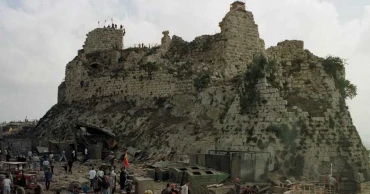
Israeli forces seize strategic Beaufort Castle in deepest Lebanon incursion in decades
Israeli troops have captured a strategic hilltop in southern Lebanon crowned by the historic Beaufort Castle, marking their deepest military advance into the country in 26 years, the Israeli army said Sunday.
The seizure of the Crusader-era fortress near Nabatiyeh came after days of heavy airstrikes and intense ground fighting with Hezbollah fighters in surrounding villages.
The advance represents a significant escalation in the ongoing Israel-Hezbollah conflict, which has seen Israel launch a ground offensive into southern Lebanon and take control of multiple border-area towns, while Hezbollah has responded with rocket and drone attacks targeting Israeli forces and northern Israel.
The Israeli military move came despite a ceasefire framework that has been in place since April 17 and ahead of planned indirect negotiations involving Lebanon and Israel in Washington.
U.S. Secretary of State Marco Rubio held separate calls with Lebanese President Joseph Aoun and Israeli Prime Minister Benjamin Netanyahu, proposing a new diplomatic framework to keep talks alive, according to a U.S. official. The proposal reportedly includes a halt to Hezbollah attacks on Israel in exchange for Israel avoiding further escalation in Beirut.
Lebanese Parliament Speaker Nabih Berri, a Hezbollah ally, said the group is prepared to fully commit to a ceasefire, but questioned whether Israel would also halt its military operations.
French Foreign Minister Jean-Noël Barrot called for an emergency meeting of the UN Security Council, describing Israel’s expanded operations as “unacceptable” and warning against deeper occupation of Lebanese territory.
Historic fortress with long military history
The Israeli military said its forces raised the Israeli flag over Beaufort Castle, a site Israel previously held during its 1982 invasion before withdrawing in 2000.
Defense Minister Israel Katz said Israel intends to maintain control of the area while continuing operations against what it describes as Hezbollah military infrastructure in southern Lebanon.
Perched above the Litani River, Beaufort Castle has long been considered a key strategic position. Built during the Crusader period in the 12th century, it has been controlled over centuries by several empires and forces, including Muslim armies, the Ottomans and later regional groups. It was also a major stronghold during Israel’s earlier occupation of southern Lebanon.
The site, known locally as Al-Shaqif, has also been given protective status by UNESCO during recent regional conflicts due to its cultural importance.
Fighting expands deeper into Lebanon
In recent days, Israeli forces have pushed beyond the Litani River, traditionally seen as a dividing line, and ordered evacuations in several areas of southern Lebanon.
Prime Minister Netanyahu said the capture of Beaufort Castle marks a “major shift” in Israel’s military approach along its borders with Lebanon, Syria and Gaza, adding that Israel has killed thousands of Hezbollah fighters since the start of the conflict. Hezbollah has not confirmed its casualties.
Israeli troops are now advancing toward areas close to Nabatiyeh and have also issued evacuation warnings for Tyre, a major coastal city in southern Lebanon.
Lebanese officials and Hezbollah have not immediately commented on the latest advance.
Analysts say the expanded Israeli presence could strengthen its position in upcoming negotiations in Washington.
“We are at a turning point,” said Beirut-based analyst Joe Macaron, adding that territorial gains could shape future ceasefire terms.
Continued cross-border fighting
Despite diplomatic efforts, fighting has continued along the border.
Lebanese health authorities reported casualties from recent Israeli strikes near Tyre and Nabatiyeh, while Hezbollah said it had carried out attacks on Israeli troops and military vehicles near the border and deeper inside northern Israel.
The Israeli military said it has issued multiple alerts to civilians in northern Israel over drone and missile threats.
Since the latest escalation began, more than 3,000 people have been killed in Lebanon and over 1 million displaced, according to Lebanese figures. Israel says dozens of its soldiers and civilians have also been killed in the conflict.
4 months ago