smart card holders
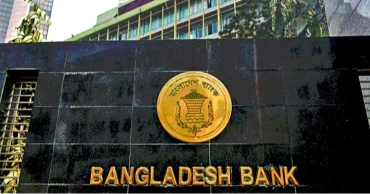
BB directs banks to prioritize smart card holders, rain-hit farmers for agro-loans
In a major boost to financial inclusion and disaster recovery, Bangladesh Bank (BB) on Tuesday directed all scheduled banks to prioritize marginal and landless farmers holding
"Farmer Smart Cards" and those recently hit by pouring summer rains for low-interest loans.
The central bank issued a comprehensive circular on the matter to the managing directors and chief executive officers of all commercial banks. The directive, signed by Md. Iqbal Mohsin, Director of the Financial Inclusion Department (FID) of BB, aims to streamline the disbursement of credit under the central bank's ongoing refinancing scheme tailored for low-income professionals, marginal farmers, and small businesses holding Tk 10, Tk 50, or Tk 100 bank accounts.
The central bank's move aligns with the government’s recent "Farmer Smart Card Policy-2025," an initiative spearheaded by the Department of Agricultural Extension (DAE) to bring the nation's farmers under an integrated digital database.
According to the new circular, banks must offer preferential treatment to card-holding marginal and landless farmers when opening Tk 10 bank accounts and processing loans under the refinancing framework. Financial analysts note that blending this digital database with the formal banking system will significantly enhance transparency in targeted agricultural subsidies, incentives, and government aid, making it easier to weed out middlemen and identify genuine smallholders.
However, the regulator cautioned banks against creating an artificial barrier, explicitly stating that eligible, impoverished farmers who are yet to receive their smart cards must not be excluded from the credit facility.
The central bank’s directive also addresses immediate climate vulnerabilities following abnormal summer downpours that decimated standing crops across the country, particularly the ripe Boro paddy in wetland ecosystems.
Recognizing the severe financial shock to rural households, the central bank ordered immediate, hassle-free credit flows to help affected farmers recover and prepare for the upcoming cropping cycle.
The circular placed a special emphasis on the hard-hit ‘haor’ (wetland) districts, explicitly naming Sylhet, Sunamganj, Habiganj, Kishoreganj, Netrokona, and Mymensingh for immediate rehabilitation assistance, while keeping the window open for affected smallholders in other districts. Central bank officials warned that any delay in credit deployment could jeopardize national agricultural productivity, trigger rural distress, and impact food security.
The specialized refinancing scheme serves as a crucial regulatory bridge for populations traditionally locked out of commercial banking due to a lack of collateral. By offering low-interest funds to banks, the central bank effectively absorbs sectoral risks, incentivizing financial institutions to cater to small-ticket borrowers.
Policy experts view this latest double-barreled policy modification—linking digital identity cards to agro-credit and mandate-driven climate resilience funding—as a mature milestone in Bangladesh's financial inclusion journey, vital for maintaining macroeconomic stability amid growing environmental challenges.
4 months ago