Budget 2026-27
IBFB heaps praise on proposed budget, expects it to spur investment, jobs
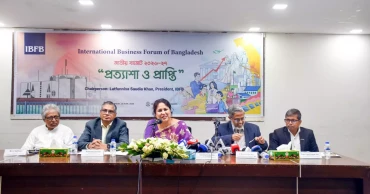
The International Business Forum of Bangladesh (IBFB) on Thursday welcomed the proposed national budget for the fiscal year 2026-27, describing it as 'a positive and pragmatic roadmap' aimed at driving economic recovery, industrial expansion, and long-term structural reforms.
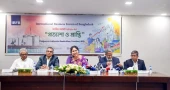
Speaking at a press conference titled “Proposed Budget 2026-27: Expectations and Outcomes” at the National Press Club, IBFB President Lutfunnisa Saudia Khan noted that the budget sends highly encouraging signals to the business community.
She lauded the government's strategic focus on boosting investment, industrialisation, Small and Medium Enterprise (SME) development, supporting women and youth entrepreneurs, expanding the digital economy, promoting renewable energy, and raising the tax-free income threshold.
"The successful implementation of these targeted initiatives will play a critical role in attracting both domestic and foreign direct investment, creating new avenues of employment, and accelerating macroeconomic growth," the IBFB Chief said.
While praising the budget's forward-looking direction, the forum underscored that the state must remain vigilant against major impending challenges.
The IBFB president emphasized the need for prompt, effective policy interventions to manage ambitious revenue collection targets, tackle ongoing inflationary pressures, fix underlying structural weaknesses in the banking sector, and overcome state implementation capacity constraints.
To guarantee smooth economic execution, the IBFB reiterated its core set of recommendations to the policymaking authorities, which include-complete digitalisation of the tax administration, sweeping structural reforms within the National Board of Revenue (NBR), lowering bureaucratic hurdles to drastically improve the ease of doing business, expanding accessible financing channels for the SME sector and accelerating the development of the local capital market while ensuring absolute policy continuity.
During the question-and-answer session with journalists, former NBR Chairman and IBFB Life Member Dr. Muhammad Abdul Mazid pointed out that policy predictability and consistency are absolute prerequisites for maintaining an investment-friendly climate and ensuring long-term financial stability.
The forum expressed its firm belief that with rigid implementation, adherence to good governance, and the execution of necessary fiscal reforms, the FY2026-27 budget will successfully fortify Bangladesh's journey toward sustainable development.
Former IBFB President Humayun Rashid, Director M.S. Siddiqui, and Vice President Engr. Utpal Kumar Das were also present at the press briefing.
3 months ago
Revenue target, inflation control biggest hurdles in proposed budget: CPD
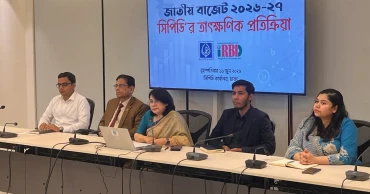
The Centre for Policy Dialogue (CPD) has identified the target to achieve the proposed revenue collection of Tk 695,000 crore and bringing inflation down to 7.5 percent as the biggest challenges in implementing the national budget for fiscal year 2026-27.
Finance Minister Amir Khosru Mahmud Chowdhury on Thursday unveiled a record Tk 938,000-crore budget, the largest in Bangladesh's history.
Giving instant reaction to the budget at a press briefing at CPD’s Dhanmondi office later in the day, CPD Executive Director Fahmida Khatun said budget targets must be realistic to ensure effective implementation. “If the targets are not realistic, it will be difficult for the government to implement the budget, which could undermine economic discipline.”
She described the revenue target as particularly ambitious, noting that Bangladesh has historically struggled to meet its revenue collection goals.
“Although high revenue targets are regularly set, they often remain unattained. The proposed target requires a significant jump in revenue mobilisation, which will be a major challenge for the government,” Fahmida said.
She warned that failure to achieve the revenue target could make it difficult to contain inflation within the projected 7.5 percent level. “Average inflation in the current fiscal year is around 9 percent. Bringing it down by about 1.5 percentage points within a year will be challenging. If the government falls short in revenue collection and resorts to increased bank borrowing, the task will become even more difficult.”
The CPD executive director said inflation control would require a stable exchange rate, improved food and energy supply systems, and prudent monetary management. “Bangladesh is currently pursuing a contractionary monetary policy. In this context, policymakers will need to strike a careful balance to stimulate investment. Greater coordination between fiscal and monetary policies is also necessary.”
While describing the proposed GDP growth target as ambitious, she said it was not unattainable given the size of Bangladesh’s economy and population.
The budget projects economic growth at 7.5 percent, compared to an estimated 6.5 percent growth in the current fiscal year. “To achieve this target, private investment and productivity must increase, while exports need fresh momentum. At the same time, ongoing reforms must continue. Given the current investment climate, the condition of the financial sector and persistent energy challenges, achieving the target will be quite difficult,” Fahmida said.
She also observed that the budget could have placed greater emphasis on economic stability rather than growth.
However, the CPD executive director welcomed tax incentives for solar panels and electric vehicles, as well as the budget's focus on skills development, agriculture, and small and medium enterprises (SMEs), describing them as positive measures for the economy.
CPD Distinguished Fellow Mustafizur Rahman was also present at the briefing.
4 months ago

Budget business-friendly but hinges on implementation, revenue targets: DCCI
The proposed national budget for FY2026-27 is business and investment-friendly but its real test lies in achieving ambitious revenue targets and translating announced reforms into action, the Dhaka Chamber of Commerce & Industry (DCCI) said on Thursday.
"The actual success will depend on achieving the ambitious revenue targets and ensuring the effective implementation of the announced reforms," DCCI President Taskeen Ahmed said at the chamber's initial reaction programme on the proposed budget, held at the DCCI Auditorium.
The Tk 9,38,000 crore budget, 19.04% larger than the previous fiscal year, targets 30.34% revenue growth, which Taskeen described as "highly challenging under the current economic circumstances."
He also cautioned that heavy reliance on borrowing to finance the deficit could strain the banking sector and crowd out private-sector credit.
The proposed Annual Development Programme (ADP), set at BDT 3,00,000 crore, a 30% jump over last year, drew measured praise, though the DCCI flagged that the current fiscal year's ADP implementation rate of just 36.19% exposed deep execution weaknesses.
Emphasis should be placed not only on larger allocations but also on ensuring effective implementation, the chamber said.
On taxation, DCCI welcomed several measures, including the treatment of withholding tax as advance tax, a longstanding business demand, the reduction of withholding tax on industrial raw materials to 4%, a 0.5% withholding tax on 60 essential commodities, and a five-year advance tax structure for healthcare, renewable energy and electric vehicle sectors.
However, the chamber expressed disappointment that the tax-free income threshold remained unchanged despite persistent inflation and took issue with the top personal income tax rate being set at 35%.
DCCI called on the government to raise the tax-free threshold to Tk 5,00,000.
For smaller businesses, the chamber praised the exemption of turnover tax for SME entrepreneurs with annual turnover up to BDT 50 lakh, extendable to Tk 70 lakh for women entrepreneurs and persons with disabilities, along with the introduction of e-loans of up to Tk 50,000 under Bangladesh Bank's Tk 60,000 crore stimulus package.
On energy, DCCI welcomed EV-related incentives, including VAT exemption until 2030 and zero-duty import facilities for EV charging equipment, but said measures for gas exploration and well drilling fell short of the country's growing demand.
It urged the government to develop a long-term energy pricing framework through stakeholder consultation, warning that short-term subsidies without a clear pricing structure could encourage inefficiency over investment.
Other measures drawing DCCI's appreciation included mandatory single-window service implementation, seven-day work permit issuance, 10-day investor visas, and the halving of withholding tax on foreign loan interest payments from 20% to 10%.
DCCI Senior Vice President Razeev H. Chowdhury, Vice President Md. Salem Sulaiman and other board members were present at the event.
4 months ago
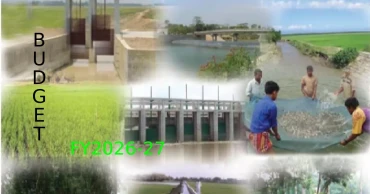
Budget 2026-27: Govt unveils Tk 10,533 cr plan to boost water resources sector
Finance Minister Amir Khosru Mahmud Chowdhury on Thursday said the government is implementing a wide range of projects on irrigation, flood management, riverbank protection, waterlogging mitigation, drainage improvement and salinity control as part of its sustainable water resources management strategy.
He said special initiatives have been taken to restore at least one river in each division by removing illegal encroachments to maintain ecological balance.
Under seven ongoing projects, measures are being implemented to clear encroachments and restore the natural flow of several rivers including Dhaleshwari, Louhajang, Alaikuri, Mogra, Salta, Sutang, Bakkhali and Barnai, the Minister said while placing budget in Parliament.
The minister said a Water Quality Index (WQI) has been developed for rivers surrounding Dhaka, while an AI and deep learning-based real-time dashboard has been introduced to monitor groundwater levels, aiming to strengthen data-driven water governance.
He further informed the House that the Ministry of Water Resources is implementing a nationwide programme titled “Excavation and Re-excavation of Rivers, Canals and Water Reservoirs,” under which 20,000 kilometres of canals, rivers and drainage channels are planned to be excavated over the next five years by relevant ministries.
In FY 2026–27 alone, the ministry plans to excavate and re-excavate 680 kilometres of canals, irrigation canals and drainage channels. A GIS-based national canal database will also be developed under a separate project to identify and classify canals across the country.
For flood protection, the government has set a target to construct, reconstruct and rehabilitate embankments and flood walls and improve river navigability over a total of 309 kilometres, while 484 kilometres of submerged shoals will be removed.
Additionally, 292 kilometres of embankment and flood wall works are currently underway under a 180-day flood protection programme.
He also highlighted impacts of upstream dams on the Teesta and Padma rivers, saying reduced water flow has affected agriculture, irrigation, fisheries and biodiversity in Bangladesh’s river basins.
In this context, the “Padma Barrage (Phase-I)” project has been approved by the Executive Committee of the National Economic Council (ECNEC).
The project, to be implemented from July 2026 to June 2033, includes construction of a 2.1-kilometre main barrage and a hydropower plant at Pangsha in Rajbari.
Once completed, the project is expected to enable storage of 2,900 million cubic metres of water, prevent salinity intrusion in the Padma basin including the Sundarbans, support irrigation for 2.88 million hectares of land, and significantly boost agricultural and fish production.
The government is also moving ahead with the “Comprehensive Management and Restoration of the Teesta River Project,” commonly known as the Teesta Master Plan, aimed at improving livelihoods in northern Bangladesh.
4 months ago
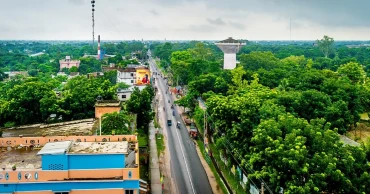
Govt allocates Tk 100cr for climate change fund with green Bangladesh in focus
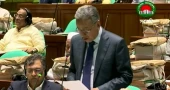
Finance Minister Amir Khosru Mahmud Chowdhury has proposed an allocation of Tk 100 crore for the Climate Change Trust Fund in the national budget for the fiscal year 2026-27 to implement necessary climate-related activities as part of efforts to build a green and sustainable Bangladesh for future generations.
He made the announcement while unveiling the budget in Parliament on Thursday.
Finance minister unveiling FY27 budget in Parliament
In the proposed budget for FY27, the Ministry of Environment, Forest and Climate Change has been given Tk 2,240 crore, up from Tk 2,144 crore in FY26 and Tk 1,837 crore in the revised budget of the same fiscal year.
The finance minister said one of the key objectives of the government is to address the challenges of climate change and to build a green and sustainable Bangladesh for future generations.
“Special emphasis has been placed in the budget on maintaining ecological balance through environmental conservation and afforestation,” he said.
“The government will implement a nationwide programme to plant 25 crore trees over the next five years,” Khosru said, adding that afforestation activities will be strengthened across marginal lands, including roads, highways, embankments, riverbanks and canal banks.
He said the government forest areas will be restored and mangrove afforestation will be undertaken in coastal char areas. Besides, afforestation in institutions and homesteads, agroforestry and urban forestry programmes will be further intensified.
Degraded sal forests in the hilly regions (Chattogram, the Chittagong Hill Tracts and Sylhet) as well as in the central region will be restored, the minister said.
He said digital technologies will be used to make afforestation activities more transparent and accountable. GPS and GIS-based databases of afforested areas will be maintained, while a Tree Monitoring App is being developed for digital monitoring and maintenance of plantations.
The initiatives are expected to generate around 350,000 green jobs, both directly and indirectly, Khosru said.
As part of the government's "One Child, One Tree” programme, an action plan has been finalised to facilitate the planting of one crore trees at the homes of students enrolled in government primary schools.
In line with the government’s nationwide tree plantation programme, the ministry has set targets for FY 2026-27 to plant 42,897,000 saplings in 25,960 hectares of block plantations, 3727000 saplings along 3,727 kilometres of strip plantations, 17776000 saplings in 4,000 hectares of mangrove plantations and 56 lakh saplings under homestead afforestation programmes.
To strengthen climate resilience, 50 percent of coastal mangrove forests will be brought under carbon trading mechanisms. The government will also update the national wildlife Red List and assess 2,200 wildlife species, including marine species, to safeguard the country’s rich biodiversity, the minister said.
Under Article 6 of the Paris Agreement, the government has initiated 11 new carbon trading projects. It is also moving towards a "Circular Future Model" in waste management, with plans for energy generation from waste, production of organic fertilisers and plastic recycling, he said.
Addressing air pollution, the minister said air quality is currently monitored through 15 Continuous Air Monitoring Stations (CAMS) and 16 Compact Continuous Air Monitoring Stations (C-CAMS).
“To control vehicular emissions, 10 modern Vehicle Inspection Centres will be established under the Bangladesh Road Transport Authority (BRTA), alongside plans to introduce electric bus services,” he said.
Continuous online stack emission monitoring systems will also be introduced in major polluting industries, including power plants, while new guidelines will be formulated for environmentally sound e-waste management, Khosru added.
He said the government has already banned 17 single-use plastic items identified as harmful to the environment and aims to reduce plastic waste by 30 percent over the next five years through the 3R policy—Reduce, Reuse and Recycle.
The minister said 2,700 of the country's 3,260 industrial establishments required to install Effluent Treatment Plants (ETPs) have already done so, while 820 factories now have IP camera-based monitoring systems for wastewater treatment.
In FY 2026-27, initiatives will be undertaken for sustainable forest management, conservation of endangered forest species, expand afforestation activities and research activities to ensure the innovative technologies reach to the doorstep of the people, he said, adding that priority is being accorded to research, innovation and training activities to address the risks associated with climate change.
Besides, canals adjacent to rivers in the southern region of the country will be excavated to reduce soil salinity in agricultural land, Khosru said.
“As part of a long-term strategy, financing will be provided for projects focused on the development of new crop varieties through organic agriculture, safe fertilisers and environmentally sustainable production practices,” he said.
4 months ago
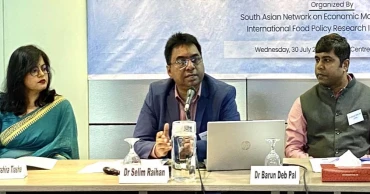
Budget 2026-27: SANEM chief sees positive signals for investors, lauds recognition of logistics
The investment incentive package proposed in the national budget for the 2026-27 fiscal sends a generally positive signal to both local and foreign investors, prominent economist Dr Selim Raihan said today.
Dr. Raihan, Executive Director of the South Asian Network on Economic Modeling (SANEM), noted that the fiscal measures could provide crucial stability at a time when private investment remains sluggish and business confidence is fragile.
“Keeping corporate tax rates unchanged may help reduce policy uncertainty at a time when private investment remains weak, financing costs are high, external sector pressures persist, and business confidence is fragile,” Dr. Raihan said while sharing his immediate reactions to the proposed budget.
The economist termed the proposed reduction in withholding taxes on interest payments for foreign loans and machinery leases a "sensible move."
He noted that this measure is poised to lower the cost of capital for industrial firms, making foreign-funded investments significantly more attractive.
Dr. Raihan also lauded the budget's focus on modernizing trade infrastructure. In this connection, he held up the proposals for Free Trade Zones, higher caps on foreign ownership in off-docks and inland container depots (ICDs), and new frameworks for private investment in ports, terminals, and air cargo facilities as part of a growing recognition of logistics in international trade.
“For an economy seeking export diversification and deeper integration into global value chains after graduating from the Least Developed Country (LDC) category, efficient customs services, warehousing, ports, and logistics are critical to competitiveness,” he emphasized.
4 months ago

Cars, washing machines, cigarettes among other items set to get costlier
A range of everyday products – from mid-range passenger cars and cigarettes to washing machines and imported paper – are likely to become more expensive as Finance Minister Amir Khosru Mahmud Chowdhury on Thursday proposed higher taxes, duties and regulatory charges on various imports and consumer goods in the national budget for fiscal year 2026-27.
In a bid to curb the use of fossil fuel-powered vehicles and promote electric alternatives, the minister in his budget speech proposed raising the overall tax burden on imported internal combustion (IC) engine cars with 1200 to 1600cc capacity from the existing 132.36 percent to 155.88 percent, a significant jump that industry insiders say will push up showroom prices for popular mid-range models.
Household washing machines will also face a new 20 percent supplementary duty under the proposal, a measure aimed at protecting domestic manufacturers.
Similarly, a fresh 20 percent regulatory duty on imported gypsum boards and sheets is expected to raise construction and interior fitment costs.
Smokers will face a steeper bill as well. The proposed budget sets new minimum retail prices for cigarettes across all tiers, Tk 62 per 10 sticks at the lowest tier, Tk 92 at the medium tier, Tk 160 at the high tier and Tk 210 at the premium tier.
Printing and packaging costs could climb after the minister proposed raising import duties on greaseproof and glassine paper from 10 percent to 25 percent, along with a new 5 percent regulatory duty on both products.
Import duties on PVC and PET resin, key raw materials for plastic manufacturing, are also proposed doubling from 5 percent to 10 percent, a move likely to ripple into a range of consumer goods.
The import duty on bicycle freewheel components is proposed rising from 15 percent to 25 percent, with an additional 5 percent regulatory duty.
Importers of copper tubes will face a duty increase from 15 percent to 25 percent, with copper wire imports attracting a new 10 percent regulatory duty, changes that could affect electrical installation costs.
Transformers up to 1 KVA capacity will see import duties jump from 10 percent to 25 percent, plus a new 5 percent regulatory duty.
Cold-rolled steel coils and sheets, widely used in manufacturing, will face an additional 10 percent regulatory duty to shield domestic producers, while maize starch imports would carry a higher duty of 25 percent, up from the current 15 percent.
The finance minister framed many of the increases as protective measures for nascent domestic industries, while the fossil fuel vehicle surcharge was explicitly tied to an environmental rationale.
The proposed budget sets total expenditure at Tk 9,38,000 crore, equivalent to 13.7 percent of GDP and Tk 1,48,000 crore higher than the previous fiscal's budget.
4 months ago
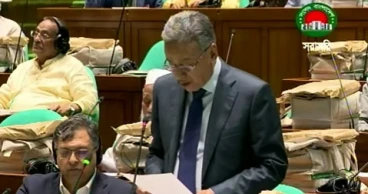
Govt proposes Tk 31,099cr allocation for Home Ministry in budget, up over 10%
The government has proposed an allocation of Tk 31,099 crore for the Ministry of Home Affairs in the national budget for t5he fiscal year 2026–27, marking an increase of Tk 3,098 crore from the outgoing fiscal year.
Finance Minister Amir Khosru Mahmud Chowdhury announced the proposed allocation while presenting the national budget in Parliament on Thursday.
The ministry received an allocation of Tk 27,001 crore in the budget for FY2025–26.
The increased allocation reflects the government's continued focus on strengthening law enforcement, public security, border management and other home affairs-related services.
The detailed breakdown of the proposed expenditure is expected to be provided in the budget documents.
The proposed budget will be placed before Parliament for discussion and approval in the coming weeks.
4 months ago
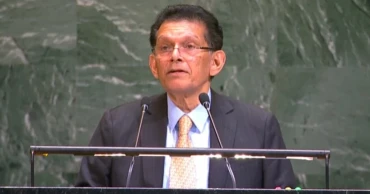
Algeria greets FM Khalilur on his election as UNGA President
Algerian Foreign Minister Ahmed Attaf has described Foreign Minister Dr Khalilur Rahman's election as President of the 81st session of the United Nations General Assembly (UNGA) as a testament not only to his exemplary leadership and distinguished diplomatic service, but also to the increasingly important role of Bangladesh in promoting international cooperation and strengthening multilateralism.
In a warm message of congratulations, Minister of State, Minister of Foreign Affairs, National Community Abroad and African Affairs of the People's Democratic Republic of Algeria Ahmed Attaf conveyed his most sincere felicitations to Dr Khalilur on his election as the UNGA President.
Expressing his confidence in Dr Khalilur’s vision and leadership, Minister Attaf assured him of Algeria’s full support and cooperation throughout his tenure and reaffirmed his country's readiness to work closely with him in upholding the principles and purposes of the United Nations Charter and advancing effective multilateralism for the benefit of all nations.
“Algeria warmly welcomes this well-deserved success and looks forward to continued cooperation with Bangladesh in support of shared international aspirations and a stronger multilateral order,” said the Algerian Foreign Minister.
4 months ago
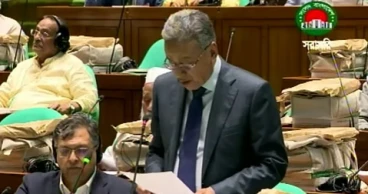
Budget 2026-27: Tk 500cr fund for startups aimed at young tech entrepreneurs
The government on Thursday proposed an allocation of Tk500 crore to encourage new entrepreneurs, considering the potential of the information technology sector.
Finance Minister Amir Khosru Mahmud Chowdhury made the announcement while presenting the national budget for FY2026–27 in Parliament.
He said the government envisions that young people will take the lead in creating new employment opportunities.
“New employment opportunities will be created in the country through the expansion of the ICT- and automation-based economy. To this end, initiatives have been undertaken to formulate a timely and modern startup policy. Steps have also been taken to consolidate various startup funds into a unified startup financing mechanism," Amir Khosru said.
"The government believes that with adequate support, the talented and creative youth of Bangladesh will be capable of establishing world-class technology hubs in the country, comparathey ble to those in Silicon Valley in the United States, Shenzhen in China, Singapore, and United Arab Emirates (particularly Dubai) in the future,” he added.
4 months ago